Best way to clean muddy tent stakes after a rainy weekend camping trip outdoors

You’ve returned from a rainy camping trip with memories of a great adventure—and a bag full of mud-caked tent stakes. It’s tempting to toss them into your gear box and deal with them later, but ignoring them is a recipe for rust, corrosion, and a frustrating experience on your next outing.
At besttentstakes.com, we know that the longevity of your gear depends on proper maintenance. Clean stakes are not only easier to drive into the ground, but they also protect your tent fabric from abrasion and prevent the degradation of your high-performance gear.
The Core Expert Verdict
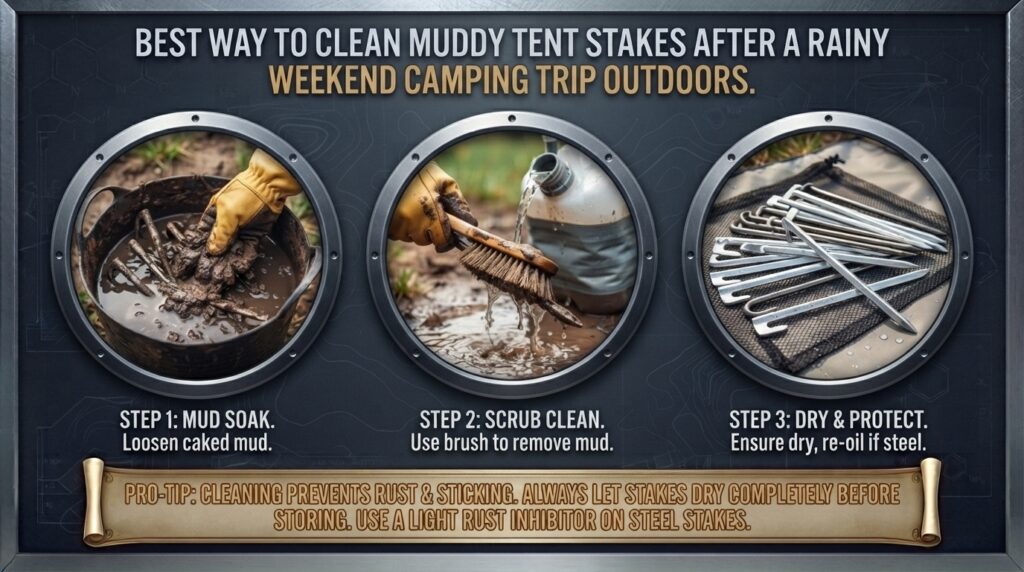
The best way to clean muddy tent stakes is to soak them in warm water with a mild, pH-neutral soap, scrub away debris using a medium-bristle nylon brush, and—most importantly—ensure they are completely bone-dry before storage. Avoid using harsh chemicals or metal-on-metal scrubbing, as these can strip protective coatings like anodization or galvanization, leaving your stakes vulnerable to rust.
1. Why Cleaning Your Stakes Matters
While tent fabric gets all the attention, your stakes are the foundation of your shelter.
- Prevent Corrosion: Whether you’re camping in the humid forests of Washington or the rocky terrain of New York, soil contains minerals and organic matter that react with metal. Left unchecked, this moisture-trapping debris accelerates oxidation, especially on steel and aluminum alloys.
- Protect Your Tent: Dried mud is essentially fine-grained sandpaper. If you pack muddy stakes into your tent bag, the vibration during transit will grind that grit into your tent’s floor, fly, or storage sack, potentially causing punctures or wearing down waterproof coatings.
- Maintain Performance: A buildup of debris can alter the weight and balance of your stakes and make them harder to insert or extract from the ground.
2. Step-by-Step Cleaning Protocol
Follow this simple, effective process to keep your stakes in peak condition.
Step 1: The Initial Knock-Off
At the campsite, before you even pack them away, knock your stakes against each other or a flat rock to dislodge large clumps of dirt. If you’re at home, take a moment to scrape off any heavy debris that dried during the ride back.
Step 2: The Warm Soak
Fill a basin or utility sink with cool to lukewarm water and a small amount of mild dish soap. Submerge your stakes and let them soak for 15–20 minutes. This softens the mud trapped in the “heads,” “hooks,” or internal channels of Y-beam and V-shaped stakes.
Step 3: Targeted Scrubbing
Use a medium-bristle nylon brush to scrub each stake.
- Focus Areas: Pay special attention to the hook area, pull-loops, and any internal channels (common in Y-beam or V-shaped designs) where mud loves to hide.
- Tool Tip: A nylon-bristled toothbrush or a bottle brush works wonders for clearing debris from complex stake geometries without scratching the finish.
Step 4: The Rinse
Rinse your stakes thoroughly under clean, running water to ensure all soap residue is removed. Soap residue can attract dust or potentially interfere with the stake’s grip in the ground later.
3. The Crucial Final Step: Drying and Storage
Many campers ruin their gear not by failing to clean it, but by failing to dry it.
- Air Drying: Spread your stakes out on a clean towel in a well-ventilated area. Do not pack them away until they are 100% dry. This usually takes about 24 hours.
- Moisture Check: Don’t forget the pull-loops or paracord attachments! These absorbent materials hold onto water longer than the metal itself. Squeeze them out and make sure they are dry to the touch.
- Storage: Store your stakes in a breathable mesh bag. Never store them in a sealed plastic bag or a tightly closed gear bin if there is even a hint of residual moisture, as this creates a “greenhouse” for rust.
4. Troubleshooting Specific Issues
| Problem | Treatment |
| Light Rust | Gently scrub with a nylon pad (avoid steel wool, which can scratch protective coatings). |
| Stubborn Tree Sap | Dab with a small amount of rubbing alcohol on a cloth, then rinse immediately. |
| Corroded Pull-Loops | If the loops are frayed or moldy, replace them with new paracord. |
| Dull Finish | A light wipe with a silicone-based protectant can help prevent future oxidation. |
5. Comprehensive FAQ Engine
Q1: Can I put my tent stakes in the dishwasher?
No. Dishwasher detergents are often too harsh and abrasive, and the high heat can damage coatings on aluminum or steel stakes. Stick to hand-washing.
Q2: Is it okay to use steel wool to scrub off rust?
Avoid it. Steel wool is often harder than the coatings on your stakes and can scratch off the protective anodized or zinc layer, making your stake more prone to rust in the future.
Q3: How do I get mud out of the deep channels of my Y-beam stakes?
Use a narrow bottle brush or a small nylon pipe cleaner. These tools are designed to reach into the internal flanges where mud hides.
Q4: Do titanium stakes need to be cleaned?
Yes. While titanium is highly resistant to rust, mud and grit can still act as an abrasive. Keeping them clean ensures your gear bag stays grit-free.
Q5: Can I use oil to keep them from rusting?
You can apply a very light film of food-grade mineral oil or a dry silicone lubricant, but avoid heavy grease, which will attract dirt and make your tent gear messy.
Q6: My tent bag is muddy too—how do I clean it?
Shake it out and hand-wash it in the same soapy water basin you used for the stakes. Hang it to dry completely.
Q7: What if I have to pack them wet because I’m on the road?
If you must pack them wet, wrap them in a spare towel to soak up excess water and make it your first priority to unpack and dry them as soon as you get home.
Q8: Should I use a pressure washer to clean my stakes?
No. A pressure washer is too aggressive and can easily damage the finish or even bend thin stakes.
Q9: How can I tell if a stake is too damaged to use?
If you see deep structural rust (pitting) or if the stake has significantly bent and cracked, it is time to replace it. A failed stake in a storm can lead to a collapsed tent.
Q10: Does it matter if I live near the coast?
Yes. Salt spray is incredibly corrosive. If you camp near the ocean, rinse your stakes thoroughly with fresh water to remove salt ions, or they will rust much faster.
Conclusion
Cleaning your tent stakes after a rainy weekend is a small investment of time that pays off in gear longevity. By soaking, scrubbing, and ensuring complete dryness, you protect your investment and ensure that your next camping trip starts with a perfect, hassle-free pitch.
For more tips on choosing the right gear for your next adventure in Texas, New York, California, or the Pacific Northwest, stay tuned to besttentstakes.com.