Why plastic tent stakes are a bad choice for camping in hot Texas weather

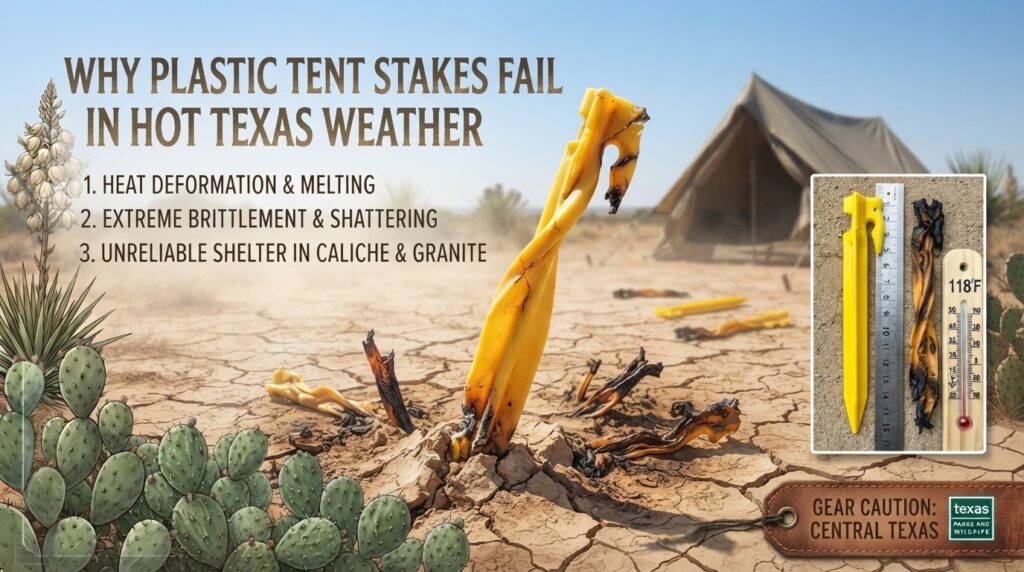
Camping in Texas offers incredible diversity, from the piney woods of East Texas to the desert expanses of Big Bend and the limestone hills of the Texas Hill Country. However, Texas heat poses a serious challenge for outdoor gear—especially plastic tent stakes.
While plastic tent pegs are widely sold in budget camping kits due to their lightweight nature and low cost, they are prone to failure under the hot Texas sun. High ambient temperatures, intense solar UV radiation, and baking-hot soils degrade plastic, making it brittle, flexible, and prone to breaking.
This guide explains the material science behind plastic failure in hot climates, evaluates the impact of sun-baked Texas ground on tent pegs, compares alternative stake materials, and outlines reliable ground anchor solutions for hot-weather camping.
1. Material Physics: How High Heat Degrades Plastic Tent Stakes
To understand why plastic stakes fail during Texas summers, it helps to examine how high temperatures affect synthetic polymers.
                  TEXAS SOLAR HEAT & UV DEGRADATION
 ┌─────────────────────────────────────────────────────────────────┐
 │ AIR TEMPERATURE: 100°F–108°F  │  SOIL TEMPERATURE: 130°F–155°F  │
 └────────────────────────────────┬────────────────────────────────┘
                                  │
         ┌────────────────────────┴────────────────────────┐
         ▼                                                 ▼
┌─────────────────────────────────┐       ┌─────────────────────────────────┐
│     THERMAL SOFTENING / FLEX    │       │     PHOTO-OXIDATION (UV)        │
├─────────────────────────────────┤       ├─────────────────────────────────┤
│ • Polymer chains slide freely   │       │ • UV rays break carbon bonds    │
│ • Stakes bend under drive force │       │ • ABS & polypropylene embrittle │
│ • Holds deform under line tension│      │ • Head/hooks snap on impact     │
└─────────────────────────────────┘       └─────────────────────────────────┘
1. Thermal Softening and the Glass Transition Threshold
Most low-cost plastic tent stakes are manufactured from ABS (Acrylonitrile Butadiene Styrene), polypropylene (PP), or high-density polyethylene (HDPE). These polymers have relatively low heat deflection temperatures.
When ambient summer temperatures in Texas reach 100°F to 105°F, direct solar radiation can heat the dark surface of topsoil and sand to 130°F to 150°F (54°C to 65°C). At these temperatures, plastic stakes soften significantly. When hit with a mallet, the softened plastic bends and deforms rather than driving into the ground.
2. UV Photo-Oxidation and Embrittlement
Texas receives high levels of solar ultraviolet (UV-A and UV-B) radiation. When plastic stakes are left exposed to direct sunlight at a campsite, UV photons break down the polymer’s carbon-carbon molecular bonds—a process known as photo-oxidation.
Over just a few days of sun exposure, plastic loses its elasticity, fades in color, and becomes extremely brittle. When you attempt to remove a UV-degraded plastic stake with a puller or hammer claw, the head or top hook frequently snaps off, leaving the plastic shaft buried in the ground.
2. Texas Ground Conditions: Plastic vs. Unyielding Soil
Heat is only half of the problem. The geology and soil structure across Texas create additional resistance for plastic stakes.
       SOIL DENSITY VS. PLASTIC STAKE PENETRATION
 ┌─────────────────────────────────────────────────────────┐
 │ Top Layer: Sun-Balked Hardpack Silt / Baked Clay        │
 ├─────────────────────────────────────────────────────────┤
 │ Sub-Base: Calcified Caliche / Dense Gravel / Limestone   │
 └─────────────────────────────────────────────────────────┘
                            ▲
                            │
               [ PLASTIC STAKE IMPACT ]
                            │
              ┌─────────────┴─────────────┐
              ▼                           ▼
    ┌───────────────────┐       ┌───────────────────┐
    │ SHAFT BUCKLING    │       │ HEAD SHATTERING   │
    ├───────────────────┤       ├───────────────────┤
    │ Bends under 10 lbs│       │ Striking head     │
    │ driving pressure  │       │ breaks on impact  │
    └───────────────────┘       └───────────────────┘
- Sun-Baked Blackland Clay: Clay soil across Central and North Texas bakes into a brick-like consistency during dry summer months. Driving a soft plastic point into sun-baked clay requires significant force—far more than thin plastic shafts can absorb without buckling.
- Caliche & Limestone (Hill Country & West Texas): In regions like Garner State Park, Enchanted Rock, or Palo Duro Canyon, a thin layer of dusty topsoil sits over dense caliche clay and limestone rock. Plastic points turn blunt instantly upon hitting caliche, turning the stake into a bent piece of waste.
- Loose Coastal & Desert Sand: While soft plastic stakes might penetrate loose sand in Padre Island or Big Bend, their smooth surfaces lack the surface area and grip needed to hold against high coastal or desert wind gusts.
3. Comparing Tent Stake Materials for Hot-Weather Camping
Selecting the right stake material requires matching tensile strength, heat resistance, and ground penetration capabilities to the environment.
| Stake Material | Heat Resistance (Up to 150°F) | Impact Resistance in Hard Ground | Hold Strength in High Winds | Weight per Stake | Recommended Use Case |
| Standard Plastic (ABS/PP) | Poor (Softens/Melts) | Very Low (Bends/Snaps) | Low | Light (1.0 oz) | Emergency backup only on soft grass |
| Forged S45C Carbon Steel | Exceptional | Maximum (Pierces rock) | High–Exceptional | Heavy (6–10 oz) | Best Overall for Texas Car Camping |
| 7075-T6 Aluminum (Y-Beam) | Excellent | High | High | Light (0.5–0.7 oz) | Best for Backpacking |
| Grade 5 Titanium (Nail Peg) | Exceptional | High | Medium–High | Ultralight (0.4 oz) | Best Ultralight for Rocky Soil |
| Galvanized Steel Lag Screws | Exceptional | Unbeatable (Drill-in) | Exceptional | Heavy (4–8 oz) | Best for Wind & Hardpack Sites |
4. Why Plastic Failure Creates Safety and Environmental Hazards
Using plastic tent stakes in extreme heat leads to several practical, environmental, and safety issues:
┌─────────────────────────────────────────────────────────────┐
│                 CONSEQUENCES OF PLASTIC STAKE FAILURE       │
├─────────────────────────────────────────────────────────────┤
│                                                             │
│  [ 🏕️ TENT COLLAPSE IN HIGH WINDS ] ──► Broken flexed heads release guy lines
│                                                             │
│  [ 🚮 MICROPLASTIC POLLUTION ]     ──► Shattered stakes left in park soils
│                                                             │
│  [ ⚠️ INJURY HAZARDS ]            ──► Sharp plastic shards cut hands & tarps
│                                                             │
└─────────────────────────────────────────────────────────────┘
Sudden Tent Collapse During Storms
Texas summer weather is known for sudden afternoon heat thunderstorms, which can bring wind gusts of 30 to 50 mph. When heat-softened plastic stakes deform or snap under line tension, the tent loses structural support and can collapse or blow away.
Non-Biodegradable Ground Litter
When plastic stakes shatter underground, campers often leave the broken shards buried in the dirt. Over time, these pieces break down into microplastics that contaminate soil and harm local wildlife in state parks and natural preserves.
Equipment Damage
When a plastic stake head breaks under a mallet strike, sharp plastic shards can fly off, posing an eye hazard or puncturing tent rainflies, sleeping pads, and footprints stored nearby.
5. Better Alternatives for Hot-Weather Texas Camping
Switching to durable, heat-resistant metal ground anchors ensures your tent stays secure regardless of soil temperature.
                   FORGED STEEL VS. PLASTIC STAKE

    PLASTIC STAKE (Fails in Heat)      FORGED STEEL STAKE (Heat-Proof)
          ┌──────────┐                        ┌──────────┐
          │ Soft Head│                        │ Flat Head│  ◄── Withstands mallet
          └────┬─────┘                        └────┬─────┘
               │ (Bends in heat)                   │ (Solid forged shaft)
               ▼                                   ▼
          \──────────/                        │──────────│
          (Deformed)                          (Pierces caliche)
Option 1: Forged S45C Carbon Steel Nails
Forged carbon steel stakes are built for hard ground and hot climates. Manufactured under high heat and pressure, they act like masonry nails that can pierce caliche, clay, and limestone without bending. Their flat striking heads handle heavy steel mallet strikes easily.
Option 2: 7075-T6 Aircraft-Grade Aluminum Y-Beam Stakes
For backpackers who need to keep weight down, Y-beam 7075-T6 aluminum stakes offer a great balance of strength and weight. The three-blade design distributes driving force evenly, while 7075-T6 aluminum retains its structural rigidity even on hot ground.
Option 3: Heavy-Duty Threaded Steel Lag Screws
For car campers, rooftop tent setups, and shade canopy tie-downs, 8-inch galvanized steel lag screws driven into the ground with a cordless impact driver provide incredible holding power. They bite directly into sun-baked clay and hardpack, making tent setup quick and secure.
6. Essential Tips for Pitching a Tent in Sun-Baked Soil
When camping on hot, hard ground in Texas, follow these practical pitching techniques:
1.Assess Soil Density and Temperature:10 Minutes.
Inspect your pitch area for underlying limestone or sun-baked clay. Avoid hammering blindly into rock ledges; probe the soil first with a steel stake tip.
2.Set Stakes at a 45-Degree Angle:15 Minutes.
Drive your metal stakes at a 45-degree angle pointing away from the tent. This orientation uses soil resistance to counteract the upward tension on guy lines.
3.Use a Heavy Steel Hand Sledge:15 Minutes.
Replace plastic mallets with a 2-lb steel hand sledge hammer. The extra mass drives heavy steel stakes into hard ground cleanly with fewer hits.
4.Use Rock Anchors for Extra Support:10 Minutes.
If a stake hits solid bedrock just a few inches down, drive it as far as possible, then stack heavy, flat limestone rocks directly over the exposed shaft to secure the guy line.
5.Leverage Stakes Out Safely:15 Minutes (Teardown).
Use a dedicated stake puller tool or hook another steel stake through the eyelet hole to twist and pull the stake straight out.
7. Frequently Asked Questions (FAQ)
1. Why do plastic tent stakes turn yellow and brittle when left outside?
Yellowing and embrittlement are caused by UV photo-oxidation. Ultraviolet radiation from sunlight breaks down the carbon polymer chains within ABS and polypropylene plastics, making them fragile over time.
2. Can high ground temperatures really weaken plastic tent pegs?
Yes. Direct summer sunlight can heat dark topsoil to over 140°F (60°C). At these temperatures, many commercial plastics reach their heat deflection point, causing them to bend easily under pressure.
3. Are heavy-duty ABS plastic stakes acceptable for soft sandy beaches?
While wide plastic snow/sand pegs perform adequately in loose, cool sand, they remain vulnerable to UV degradation and can bend if they hit buried rocks or coral beneath the surface.
4. What is the best all-around tent stake material for Texas State Parks?
Forged S45C carbon steel stakes are the best choice for car camping in Texas. They can be driven through hardpack clay, caliche, and rocky limestone without bending or breaking.
5. What weight hammer should I use for driving steel stakes into sun-baked clay?
A 2-lb steel hand drilling hammer (short sledge) is ideal. It provides enough force to drive steel stakes through hard ground without causing excessive arm strain.
6. Can 7075-T6 aluminum stakes withstand Texas heat?
Yes. 7075-T6 aircraft-grade aluminum retains its strength and structural rigidity at ground temperatures well above 150°F, making it a reliable lightweight choice for backpackers.
7. How do I remove a metal stake that is stuck in sun-baked clay?
Insert another metal stake or a stake puller tool through the eyelet hole at the top of the stuck stake. Twist it 360 degrees to loosen the soil seal before pulling straight up. Pouring a small amount of water around the stake base can also help soften dry clay.
8. Why do the heads of plastic tent stakes break off when struck with a mallet?
Plastic stake heads break because the material absorbs the impact force across a small surface area. If the stake tip encounters hard soil or rock, that kinetic energy reflects back into the neck of the stake, snapping brittle plastic.
9. Are drill-in steel lag screws safe to use as tent anchors?
Yes. Galvanized steel lag screws (3/8-inch diameter, 8 inches long) driven with a cordless impact driver provide exceptional holding power in sun-baked clay and hardpack gravel.
10. How can I safely dispose of broken plastic tent stakes?
Pack out all broken plastic shards from your campsite and dispose of them in dedicated recycling or waste bins at the park exit to prevent environmental contamination.
Conclusion
Plastic tent stakes are poorly suited for hot Texas weather. High summer temperatures cause plastic to soften and bend, while UV radiation renders it brittle and prone to shattering upon impact with sun-baked clay and caliche.
Upgrading your gear to forged S45C carbon steel stakes, 7075-T6 aluminum Y-beams, or threaded steel lag screws ensures your tent remains securely anchored across any Texas campsite, regardless of heat or weather conditions.