

Picture this: You are setting up camp at a remote site in the Pacific Northwest forests near Seattle, navigating a windy coastal ridge in California, or pitching a shelter during an unexpected downpour on a backcountry trip in Texas or New York. Suddenly, you realize you’ve lost, bent, or broken your factory metal tent stakes. With high winds picking up, your shelter’s structural integrity depends entirely on your ability to improvise.
Can you just grab any random stick off the forest floor? Not if you want your tent to stay anchored.
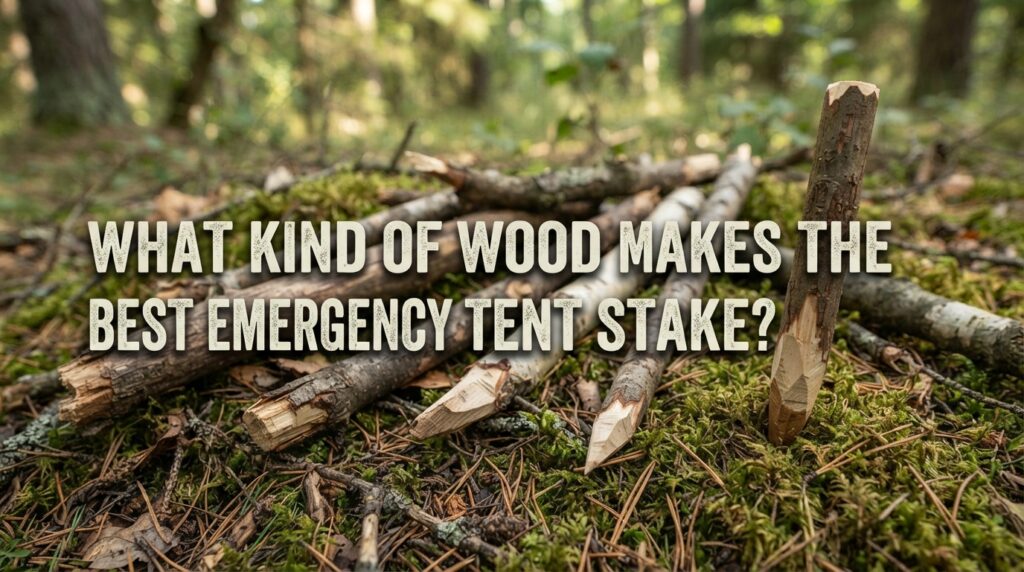
So, what kind of wood makes the best emergency tent stake?
The short answer is: Hardwoods with high impact-resistance and flexibility—such as white ash, hickory, oak, and hazel—make the absolute best emergency tent stakes. Softwoods like pine or dry deadwood will snap the moment you try to hammer them into rocky or compacted ground.
Below is an exhaustive, deep-dive guide detailing wood mechanics, wood types, step-by-step crafting techniques, comparison tables, expert survival tips, and 10 detailed FAQs to ensure you are never left out in the cold.
1. The Physics of an Emergency Tent Stake
An emergency tent stake faces extreme physical stress. When high winds buffet your tent, the guyline exerts three distinct forces on your stake:
- Shear Stress: The sideways pull attempting to snap the stake in half underground.
- Withdrawal Force: The upward tension trying to pull the stake straight out of the earth.
- Impact Shock: The blunt-force trauma of being hammered into rocky, frozen, or root-bound soil using a rock or heavy mallet.
Because of these factors, green wood (living wood freshly cut) is often superior to dry, dead fallen wood. Dead wood is frequently brittle, dry-rotted, or compromised by internal fungal decay, causing it to shatter instantly under a hammer stone.
2. Ranking the Best Woods for Makeshot Tent Stakes
Depending on the region you are camping in—whether the hardwood-rich forests of New York and Texas or the conifer-dominant landscapes of Washington and California—certain tree species stand out.
Tier 1: The Gold Standard (Hardwoods)
- White Ash: Historically used for tool handles, baseball bats, and traditional bows. Ash is remarkably tough, absorbs shock without shattering, and splits cleanly along the grain.
- Hickory: Unmatched in tensile strength and impact resistance. If you find hickory, it will drive into hardpan soil like a steel nail.
- Oak (White or Red): Dense, heavy, and incredibly strong. White oak is particularly rot-resistant if left in damp ground.
- Hazel / Birch: Flexible, springy, and grows in straight, slender poles that can be easily fashioned into stakes with a bushcraft knife.
Tier 2: Acceptable Alternatives (Softwoods & Semi-Hardwoods)
- Maple: Strong and rigid, though slightly more prone to snapping under heavy hammering than ash or hickory.
- Pine / Fir / Cedar (Living or Sound Green Branches): While softwoods lack the brute strength of hardwoods, live branches from conifers can work in a pinch if you select thicker diameters ($1\text{ to }1.5\text{ inches}$) and taper them carefully. Cedar has the added benefit of natural rot resistance, though it is softer.
3. Comparative Analysis: Wood Performance Matrix
| Wood Species | Hardness & Strength | Shock Resistance | Rot Resistance | Ease of Carving | Best Regional Availability |
| White Ash | Exceptional | High | Moderate | High (Splits straight) | Eastern US, NY, Texas |
| Hickory | Maximum | Maximum | Low to Moderate | Low (Very hard to carve) | Eastern & Central US, Texas |
| White Oak | Very High | High | High | Moderate | East Coast, Texas, California |
| Hazel / Birch | Moderate-High | High | Moderate | High | Pacific Northwest, NY, Northern CA |
| Pine / Fir | Low-Moderate | Low | Low (Cedar excepted) | High (Soft) | Washington, California mountains |
4. How to Craft a Survival Tent Stake: Step-by-Step
Finding the right wood is only half the battle. Crafting it correctly prevents your guyline from slipping and keeps the stake from splitting when driven into the ground.
- Select the Right Branch: Look for a live or freshly fallen green branch roughly the thickness of a broom handle ($1\text{ to }1.5\text{ inches}$ in diameter) and about $8\text{ to }12\text{ inches}$ long. Avoid dead, punky wood.
- Cut the Ground Tip (The Chisel or Pencil Point): Use a sturdy knife to carve a clean, sharp conical point or a flat single-bevel chisel point. A chisel point is often better in rocky ground because it deflects around stones rather than getting stuck.
- Carve the Guyline Notch: About 1 to 2 inches below the top end, carve a deep, downward-sloping notch or collar all the way around the circumference. This prevents the tent cord from slipping up and off the top when the wind pulls on it.
- Leave a Hammer Head: Do not sharpen both ends. Leave a flat, thick top head on the stake to absorb the blows of your hammering stone. To prevent the top from mushrooming or splitting apart when struck, you can score a shallow ring around the top and wrap it tightly with cordage or wire (a technique known as whipper-in binding).
5. Pro Tips for Emergency Anchoring in Extreme Conditions
- The Deadman Anchor Variation: If the ground is solid rock, frozen solid, or pure sand where wooden stakes will not hold, abandon the stake concept entirely. Tie your guyline to a heavy log, a bundle of rocks, or bury a thick piece of wood horizontally underground as a deadman anchor.
- Soak the Tip in Water: If you are using slightly dry wood, soaking the pointed tip in water for 30 minutes before driving it into dry, abrasive soil can temporarily swell the fibers and increase holding friction.
- Angle the Stake Correctly: Always drive your emergency stake into the ground at a 45-degree angle pointing away from the tent, exactly opposite the pull of the guyline. Driving it straight down at 90 degrees cuts your holding power in half.
6. 10 Large Frequently Asked Questions (FAQs)
1. Can I use dry dead wood found on the ground for tent stakes?
You can, but it is risky. Dead wood on the ground is often compromised by internal rot, fungi, or moisture, making it brittle. It will likely snap the moment you strike it with a heavy rock. Always look for living green branches or sturdy, seasoned fallen limbs that still ring solid when tapped.
2. Is green wood better than dry wood for emergency stakes?
Yes. Green wood (freshly cut from a live tree) contains moisture, which gives it cellular elasticity and flexibility. It bends slightly under impact rather than shattering, making it much easier to hammer into tough ground.
3. What is the ideal length and thickness for a makeshift wooden tent stake?
An effective emergency stake should be between 8 and 12 inches long and roughly 1 to 1.5 inches thick. Anything thinner will snap under tension; anything shorter will pull right out of loose soil.
4. How do I stop the top of my wooden stake from splitting when I hammer it?
When driving a wooden stake with a rock, the top often “mushrooms” or splits apart. To prevent this, carve a slight shoulder at the top, or wrap the upper collar with paracord, duct tape, or wire to bind the wood fibers together.
5. What tree species should I actively avoid?
Avoid soft, weak, or spongy woods like willow, poplar, cottonwood, and rotten pine. These woods lack structural density, crush easily under pressure, and offer zero holding power in windy storms.
6. Should I carve a sharp point or a flat chisel point?
A sharp conical point is great for soft, loamy soil. However, if you are camping in rocky terrain (common in parts of Texas, California, and Washington), a chisel point (flat on one side) is superior because it helps the stake wedge past rocks rather than getting wedged dead-center against a boulder.
7. How do I keep the tent cord from slipping off a wooden stake?
You must carve a distinct, downward-sloping notch or groove near the top of the stake. Tying a taut-line hitch or wrapping the cord tightly into the carved notch ensures the wind cannot bounce the loop off the top.
8. What should I do if the ground is too hard or rocky to drive a wooden stake?
If the earth is impenetrable, do not force it or your wooden stake will splinter. Instead, construct a surface anchor by piling heavy rocks or logs over a wide base platform and tying your guyline securely to that weight.
9. Can I use bamboo as an emergency tent stake?
Yes! If bamboo is available (often found in southern regions or Asian gardens), it makes an incredible emergency stake. Its hollow tubular structure provides an exceptionally high strength-to-weight ratio. Just cut it right below a node so the top doesn’t split open when hammered.
10. Do bushcraft wooden stakes damage the environment?
When harvesting wood for emergency survival, always practice Leave No Trace principles. Never strip bark from a living rare tree or fell a healthy tree just for tent stakes. Take small, fallen branches or prune single lateral branches from abundant, hardy species like oak or ash without killing the main plant.
7. Conclusion
When you find yourself miles from civilization with broken gear and a looming storm, knowing how to select and carve the right emergency tent stake is a vital survival skill. By prioritizing tough, resilient hardwoods like white ash, hickory, or hazel, carving a secure guyline notch, and driving your stakes at a proper 45-degree angle, you can keep your shelter secure against the harshest elements—whether you’re camping in the rugged mountains of California and Washington or the unpredictable weather corridors of Texas and New York.