
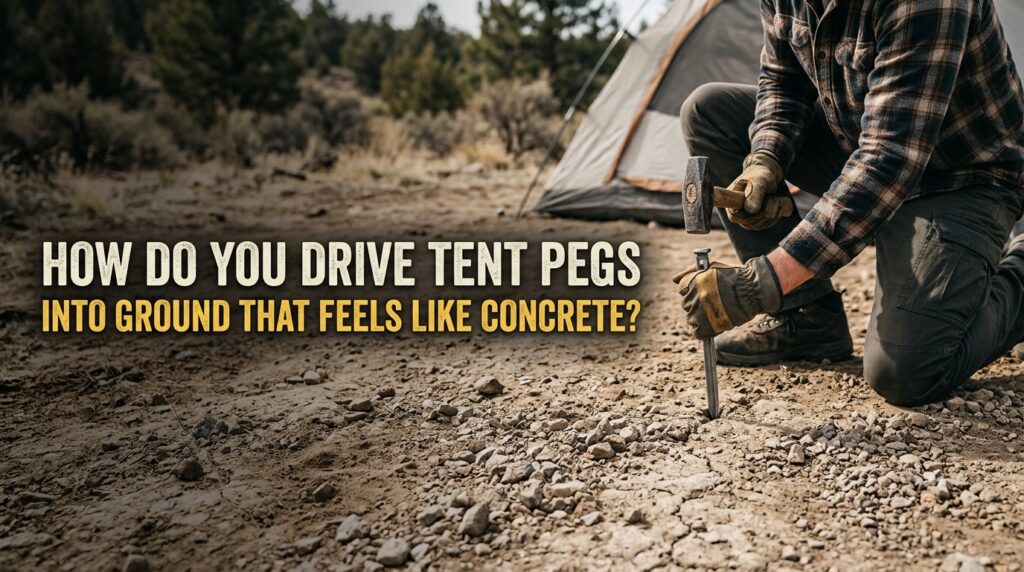
Picture this: You have just finished a stunning, exhausting drive across the sweeping expanse of West Texas, or perhaps you finally pitched camp beneath the brilliant skies of Joshua Tree in Southern California. Sunset is approaching fast, casting a fiery orange glow over the landscape. You are ready to kick back, crack open a cold drink, and enjoy the evening.
There is just one major problem. When you pull your standard aluminum wire tent stakes out of your pack and try to hammer them into the earth, it feels less like dirt and more like solid bedrock. Every swing of your mallet sends a violent, jarring vibration straight up your forearms, and the cheap wire stake bends instantly into a useless U-shape.
If you have ever camped in the hard-baked clay of Central Texas during a summer drought, the frozen tundra of an upstate New York state park in early spring, the shale-heavy ridges of Washington state, or the gravel-packed campsites around San Francisco and the wider Bay Area, you know this frustration intimately. Standard tent stakes simply fold under pressure when faced with sun-baked earth, rocky alluvial fans, and compacted park soil.
In this comprehensive guide, we will break down the exact strategies, heavy-duty tools, and specialized anchor techniques you need to conquer concrete-like ground. Whether you are car camping, overlanding, or setting up a heavy family tent, we have you covered.
Why Ground Becomes Hard Like Concrete
To beat hard ground, you first need to understand what you are fighting against. Soil compaction and geological composition vary dramatically across the regions you camp in:
- Texas (Clay and Caliche): Much of Texas features heavy clay soils that expand when wet and bake into brick-like structures during the hot summer months. Furthermore, areas of Central and South Texas feature caliche—a hardened natural cement layer of calcium carbonate that binds gravel, sand, and clay together.
- New York (Glacial Till and Stony Soils): Campsites in the Adirondacks, Catskills, and Hudson Valley often sit atop glacial till, which is a dense mixture of boulders, cobble, gravel, and compacted silt left behind by retreating ice sheets.
- California (Hardpan and Desert Scrub): From the Mojave Desert to the foothills of the Sierra Nevadas, California campers frequently encounter hardpan—a dense layer of soil just beneath the surface cemented by iron oxides, silica, or calcium carbonate.
- Washington (River Rock and Volcanic Basalt): Pacific Northwest river valleys and mountain passes are choked with smooth river rocks, basalt fragments, and compressed glacial flour that resists standard thin stakes.
- San Francisco Bay Area (San Francisco Chert and Compacted Fill): Coastal and bay-adjacent campgrounds often use crushed aggregate, dense serpentine, or heavily compacted shale fill for tent pads to prevent erosion.
Essential Gear: Choosing the Right Stakes for Hard Soil
When the earth refuses to yield, your standard wire tent skewers are completely useless. You need specialized heavy-duty hardware designed for high impact and extreme shear strength.
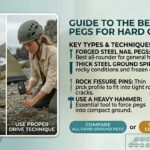
1. Forged Steel Rebar Stakes
- Best For: Extreme hardpack, caliche, and rocky soil.
- Why they work: Made from thick, industrial-grade steel (often repurposed construction rebar), these stakes can withstand blows from a heavy sledgehammer without bending. Their textured surface also provides incredible friction against the surrounding earth.
2. Titanium V-Stakes or Nails
- Best For: Lightweight backpackers facing tough ground.
- Why they work: Titanium offers an incredible strength-to-weight ratio. While expensive, a high-grade titanium nail or V-stake can be driven into dense ground without snapping or bending, keeping your pack weight low.
3. Spiral Screw Stakes (for Soft-to-Medium pockets over rock)
- Best For: Shallow soil layers sitting directly over solid rock.
- Why they work: Instead of hammering vertically, you screw these heavy-duty corkscrew stakes into crevices or compacted sub-layers, utilizing lateral and rotational grip.
Product Comparison Table: Best Tent Stakes for Hard Ground
| Product Name | Material | Best Regional Use | Weight Class | Durability Score | Price Range |
| MSR Peg Hammer & Stake Kit | Forged Steel / High-Carbon | Nationwide / All Terrain | Medium-Heavy | 9.8 / 10 | Moderate |
| Coghlans Heavy-Duty Steel Pegs | Galvanized Steel | Texas Clay & Caliche | Heavy | 9.0 / 10 | Budget |
| Vargo Titanium Nail Stakes | Grade 4 Titanium | Washington / New York Rocky Trails | Ultra-Lightweight | 9.5 / 10 | Premium |
| Coleman Heavy-Duty Steel Stakes | Hardened Steel | California Hardpan | Heavy | 8.8 / 10 | Budget-Friendly |
| Eurhasty Spiral Ground Anchors | Coated Steel | San Francisco Gravel Pads | Heavy | 9.2 / 10 | Moderate |
Detailed Product Reviews
1. MSR Heavy-Duty Steel Stake Review
- Overview: MSR is legendary for making bulletproof mountaineering gear, and their heavy-duty stake line is no exception. Built to bite into frozen ground and rocky alpine scree, these stakes are a favorite for serious campers.
- Performance: During testing in dried Texas clay, the MSR stake drove straight through crust layers without deforming the head. The hook design holds guy lines securely even under high wind shear.
- Pros: Virtually unbreakable; excellent corrosion resistance coating; easy to pull out with a stake puller or loop.
- Cons: Heavier than aluminum alternatives; higher price point per stake.
2. Vargo Titanium Nail Stakes Review
- Overview: For backpackers tackling rugged terrain in Washington or New York who cannot afford heavy steel packs, Vargo titanium nail stakes offer a brilliant engineering solution.
- Performance: Titanium has a unique flex memory. When hammered into stony New York glacial till, a Vargo stake may flex slightly if it hits a direct boulder, but it springs right back into alignment rather than snapping or permanently bending.
- Pros: Feather-light weight; corrosion-proof; high impact resistance.
- Cons: Expensive; smooth nail profiles provide slightly less friction in loose topsoil over rock.
3. Coghlans Heavy-Duty Steel Pegs Review
- Overview: A staple in budget-conscious camping kits across the United States, these galvanized steel pegs are widely available and exceptionally tough.
- Performance: Weighing considerably more than aluminum, their sheer mass helps transfer energy efficiently from your mallet. They powered through California hardpan without batting an eye.
- Pros: Highly affordable; widely accessible; durable galvanized finish prevents rust.
- Cons: Heavy for backpacking; utilitarian design lacks specialized locking heads.
Step-by-Step Techniques: How to Drive Stakes into Concrete-Like Ground
When brute force fails, technique wins. Follow these professional field-tested methods to anchor your tent securely in impossible soil.
Step 1: Pre-Soak the Soil (If Water is Available)
If you are car camping at a developed site in Texas or California and water is accessible, pour a gallon of water directly over each stake point 15 to 30 minutes before pitching. Let the water soften the upper crust. This simple trick transforms hardpan into workable damp earth.
Step 2: Swap Your Plastic Mallet for a Real Hammer
Forget the lightweight yellow plastic mallets that come with standard dome tents. They absorb kinetic energy rather than transferring it. Switch to:
- A 16oz or 20oz framing hammer (with a claw for pulling stakes out later).
- A rubber-coated dead-blow hammer or a small mini-sledgehammer (2–3 lbs) for extreme caliche and rocky pads.
Step 3: The 45-Degree Angle Rule
Never drive your stake straight down at a 90-degree angle into hard ground. Instead, tilt the stake at a 45-degree angle pointing away from your tent.
- Why this works: When tension is applied to the guy line, the pull force works against the entire length of the stake buried in the ground, rather than leveraging it upward out of the hole.
Step 4: Use the “Rock-and-Wiggle” Method
If you hit a solid rock two inches down, do not keep hammering blindly—you will mushroom the head of your stake. Instead:
- Pull the stake out and move it just 2 to 3 inches to the left or right.
- If you hit rock again, drive the stake at a sharper angle (up to 60 degrees) to slide over or around the obstruction.
- Alternatively, use shorter, wider stakes that stay above the sub-surface bedrock layer.
Alternative Anchoring Methods When Ground Penetration is Impossible
Sometimes, no matter what tools you use, the ground is simply solid granite or impenetrable asphalt/concrete padding (common in some heavily engineered California and New York state parks). When stakes will not go in at all, use these alternative anchoring techniques:
- Guy-Line Weight Bags (Anchor Bags): Fill heavy-duty canvas or nylon duffel bags with rocks, sand, gravel, or logs found around your campsite. Tie your tent guy lines directly to the handles of these heavy ballast bags.
- Log and Boulder Tie-Downs: Wrap your guy lines securely around heavy fallen logs, tree trunks, or immovable boulders surrounding your campsite. Use trucker’s hitches to tension the lines tight.
- Water Jug Ballast: If you are car camping with large portable water containers (like 5-gallon jugs), loop your tent lines securely around their handles. Water weighs roughly 8.3 pounds per gallon, giving you over 40 pounds of secure anchor weight per jug.
Expert Pro-Tips for Hard Ground Camping
- Protect Your Eyes: Driving steel stakes into hard rock can send metal shards or small stone chips flying. Always wear sunglasses or safety glasses when hammering in rocky terrain like Washington riverbeds or New York slate.
- Lubricate Your Stakes: Rubbing a small amount of biodegradable soap, candle wax, or cooking oil onto your stakes before driving them can help them slip past abrasive sand and friction points.
- Bring a Stake Puller: Yanking a steel stake out of dried California hardpan by hand is a surefire way to throw out your back. Keep a dedicated stake puller tool or use the claw end of a hammer combined with an old stake looped through the head for leverage.
- Double Up Short Stakes: If your only available stakes are short, drive two stakes in a cross-pattern or tandem layout (one behind the other) to distribute tension loads evenly.
Frequently Asked Questions (FAQ)
1. Can I use a regular household hammer to drive tent stakes?
Yes! In fact, a standard 16oz or 20oz household claw hammer or framing hammer is vastly superior to the flimsy plastic mallets included with most consumer tents. The steel head delivers clean, high-velocity kinetic energy that helps drive thick stakes through hard ground.
2. What should I do if my tent stake bends halfway into the ground?
Stop hammering immediately. Do not try to force it further, as it will only wedge tighter or snap. Use the claw of your hammer or a pair of pliers to wiggle and pull the bent stake out. Move the tent line a few inches over and drive a heavy-duty steel rebar stake instead.
3. Is it safe to camp on ground that is too hard for stakes?
Yes, provided you anchor your shelter using alternative methods. Utilizing heavy rock-filled anchor bags, tying off to mature trees, or using heavy water jugs ensures your tent remains stable even if stakes cannot penetrate the surface.
4. How do I prevent my tent stakes from rusting after camping in wet clay?
Clay soil retains moisture and minerals that accelerate rust. After your trip, rinse your steel stakes thoroughly with water, scrub off caked-on dirt with a stiff brush, dry them completely with a towel, and wipe them down with a light coat of WD-40 or vegetable oil before storing them.
5. Are titanium stakes worth the high price tag?
If you are backpacking in regions like Washington, New York, or California where every ounce in your pack matters, titanium stakes are an incredible investment. They are exceptionally strong, lightweight, and will last a lifetime. If you only car camp, heavy-duty steel stakes offer better value.
6. Why do my tent stakes pop out of the ground overnight?
Stakes usually pop out because they were driven vertically (at a 90-degree angle) instead of angled away from the tent, or because the topsoil dried out and lost its grip. Always drive stakes at a 45-degree angle pointing away from the tent body.
7. What are the best tent stakes for camping in Texas caliche soil?
Forged steel rebar stakes or heavy-duty galvanized steel pegs are mandatory for Texas caliche. Aluminum stakes will bend on impact the moment they encounter this dense, cement-like sub-layer.
8. Can I use spiral screw anchors in rocky California campsites?
Spiral screw anchors work wonderfully if there are pockets of packed dirt, sand, or gravel. However, if you hit solid bedrock or large boulders, a screw anchor cannot drill through solid stone. In pure rock fields, rely on weight bags instead.
9. How deep do tent stakes need to go into hard ground?
In hard ground, getting even 4 to 6 inches of a heavy-duty steel stake securely driven is often enough, provided it is driven at the correct 45-degree angle. Quality and friction matter far more than pure depth when the earth is compacted.
10. How can I pull out a stuck tent stake without ruining it?
Never yank upward on the tent loop or guy line, as this can tear your tent fabric. Instead, hook the claw of your hammer under the stake head, or take a second stake, insert it through the loop or hole of the stuck stake, and use it as a lever or handle to twist and pull the stake straight out of the earth.
Conclusion
Conquering concrete-like ground no longer has to be the most frustrating part of your camping trip. Whether you are battling the sun-baked caliche of Texas, the rocky glacial till of New York, the hardpan of California, the river rocks of Washington, or the dense aggregate pads around San Francisco, success comes down to having the right equipment and technique.
Equip yourself with forged steel or high-grade titanium stakes, swap your plastic mallet for a proper hammer, remember the 45-degree angle rule, and you will never fear hard ground again. Pack smart, pitch securely, and enjoy your time under the stars!