
Best tent pegs for hard ground – Ultimate guide September 2026

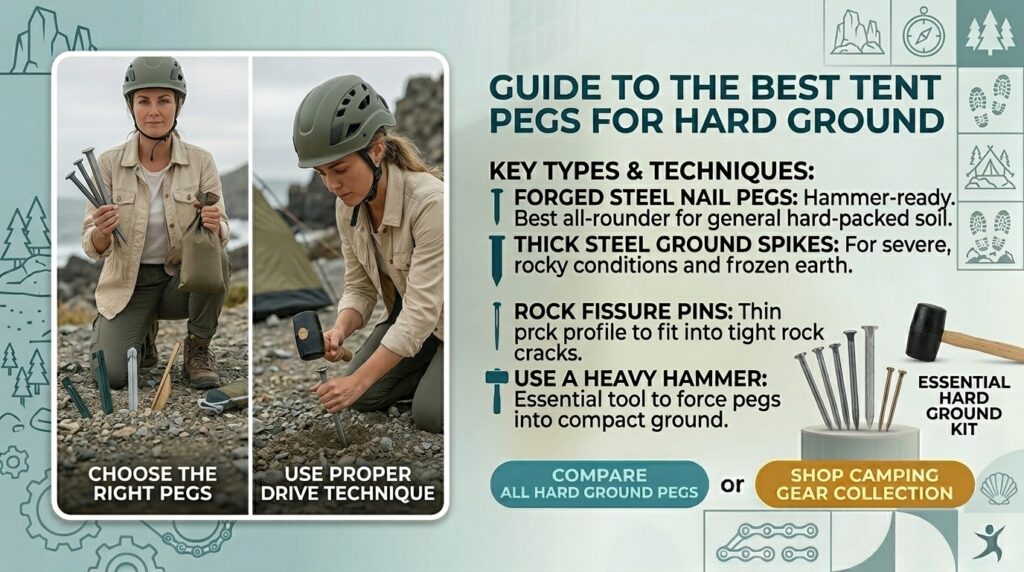
Camping throughout the United States is an unforgettable experience, whether you’re exploring the towering cliffs of the Grand Canyon, camping beside alpine lakes in the Rocky Mountains, or hiking along the scenic Appalachian Trail. However, one of the most common frustrations campers face is trying to drive weak, low-quality tent stakes into hard, unforgiving ground.
Many tents come with lightweight aluminum hook stakes intended for soft, forgiving soil rather than demanding terrain. They may perform adequately on grassy campsites, but they frequently bend, twist, or break when driven into compacted dirt, gravel, rocky ground, or dry clay. The result is often wasted time, damaged equipment, and a tent that may not remain securely anchored in strong winds or heavy rain.
Hard-packed campsites require more durable gear. Whether you are camping in desert environments, mountainous areas, rocky national park campgrounds, or on frozen ground, you need tent pegs made from high-strength materials with excellent impact resistance and aggressively shaped tips that can penetrate difficult soil without deforming.
Choosing the best tent pegs for hard ground can greatly improve both convenience and safety. Heavy-duty steel, forged aluminum, and titanium stakes are designed to deliver exceptional holding power in challenging conditions, giving campers greater confidence that their shelter will stay stable and secure throughout the night.
In this in-depth 2026 buying guide, we’ll review the best tent pegs for hard and rocky ground available today, compare the strengths and weaknesses of different materials and stake designs, and share practical camping tips to help you choose the right pegs for your next outdoor adventure anywhere in the United States.
Why Hard Ground Requires Special Tent Pegs
Hard-packed soil, rocky terrain, gravel, and root-filled ground offer poor holding power for regular stakes. Common issues include:
- Stakes bend or break when hammered
- Shallow penetration due to rocks and dense soil
- Reduced grip once inserted
- High risk of tent failure in wind
The right pegs are longer, stronger, and designed to either penetrate deeply or find gaps between rocks.
Key Features to Look for in Tent Pegs for Hard Ground
- Material: Titanium or high-carbon steel for strength and durability
- Length: 8–12+ inches for better leverage and hold
- Shape: Nail-style, shepherd’s hook, or reinforced Y-stakes
- Tip Design: Sharp, pointed, or chisel tips for penetration
- Weight: Balance between strength and packability
- Head Style: Large, flat, or looped heads that accept hammering
This comprehensive, data-driven guide analyzes the absolute best tent pegs for hard ground available on the US market, explains the metallurgy behind why stakes bend, and delivers fail-safe installation tactics to protect your gear. How to stake a tent in the snow?
The 30-Second Verdict: Best Hard Ground Stakes
- Best Overall for Extreme Rocky Ground: Snow Peak Solid Stake (~$6–$11 per stake). Forged in Japan using a specialized heating process, these solid-steel stakes are practically indestructible. You can literally hammer them straight through asphalt or subterranean rocks without bending the shaft.
- Best Heavy-Duty Option on a Budget: All-Steel 10-Inch Camping Tent Pegs (T-Top Style) (~$15 for a 10-pack). Featuring a heavy galvanized steel rod construction and a high-impact plastic T-stopper, these offer the best cost-to-performance ratio for car campers and festival goers facing hard-packed dirt.
- Best Lightweight Option for Backpackers: MSR Groundhog or Easton7075 Aluminum Nails (~$4–$6 per stake). Crafted from elite, aircraft-grade 7075-T6 aluminum, the Groundhog’s tri-beam design provides exceptional structural rigidity and torsional strength while weighing a fraction of an ounce.
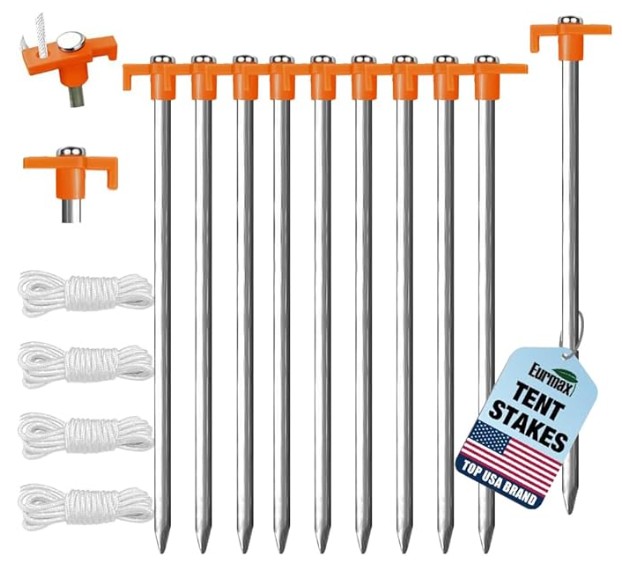
Eurmax USA 10-Pack Secure Tent Stakes – Best tent pegs for hard ground
CHECK ON AMAZON >>
When it comes to anchoring commercial pop-up canopies, heavy gazebos, or family camping tents in the unpredictable climates of the United States, your choice of ground anchor determines whether your event succeeds or ends in a costly structural collapse.
Cheap wire pegs lack the tensile strength and surface area required to fight back against intense wind shear. If a sudden coastal gust or mountain squall hits your canopy, low-grade metal stakes will simply warp, buckle, or pull cleanly out of the soil.
The Eurmax USA 10-Pack Secure Protection Galvanized Tent Stakes are explicitly engineered to address the critical failure points of standard stakes. By combining hardened, zinc-coated structural steel with high-impact polymer drive heads, these 10-inch heavy-duty stakes deliver commercial-grade stability across diverse American terrains—from compacted woodland dirt to loose riverside gravel.
Technical Specifications: At a Glance
| Parameter | Specification Profile | Engineering Benefit |
| Material Composition | Forged Structural Steel | Resists bending under extreme hammer impact |
| Surface Finish | Hot-Dipped Galvanized Zinc Coating | Absolute protection against oxidation and rust |
| Length | 10 Inches (25.4 cm) | Penetrates deep into stable, compressed soil layers |
| Head Design | Oversized High-Impact PVC T-Top | Expands striking zone; simplifies extraction |
| Tip Geometry | Milled, Tapered Sharp Point | Concentrates kinetic force to pierce hard terrain |
| Included Accessories | 4x 10-foot pre-cut heavy utility ropes | Complete out-of-the-box structural rigging kit |
4 Core Engineering Features of the Eurmax USA Anchor System
1. Galvanized Non-Rust Structural Steel Construction
The core of the Eurmax USA peg is forged from high-tensile structural steel designed to withstand intense lateral load forces. Unlike standard raw iron or basic steel pegs that begin to degrade the moment they encounter wet ground, these stakes undergo a galvanization process.
This hot-dipped zinc finish creates an impenetrable physical barrier against moisture and atmospheric oxygen. Even after weeks of burial in damp seaside sand, waterlogged grass turf, or muddy festival grounds, the underlying steel remains entirely free of rust and structural oxidation, ensuring the peg maintains its yield strength for years.
[ HAMMER IMPACT ] ──────> Oversized PVC T-Head (Absorbs Misplaced Blows & Protects Guyline)
                             │
                             ▼
[ SOLID STEEL ROD ] ────> Galvanized Zinc Layer (Blocks Rust & Corrosion)
                             │
                             ▼
[ MILLED TAPERED TIP ] ──> Cleaves Through Rocks, Hard Clay, and Subterranean Roots
2. Milled Tapered Tips for Effortless Ground Penetration
Driving a blunt peg into sun-baked clay or rock-strewn gravel pads is a recipe for bent gear and frustration. Eurmax resolves this by utilizing a machine-milled, precision-tapered tip.
This sharp point focuses the kinetic energy of your hammer strike onto a microscopic surface area. This concentration of force allows the steel rod to slice cleanly through tightly packed dirt, small subterranean stones, and thick tree roots rather than deflecting or warping under pressure.
3. High-Impact PVC T-Head and High-Visibility Stopper
One of the primary causes of stake failure is hitting the peg off-center with a heavy mallet, which twists the shaft. The Eurmax stake features an oversized, rugged PVC driving cap that significantly expands your striking zone. This allows for clean, perpendicular force distribution even in low-light conditions or during a rushed storm setup.
Furthermore, this bright orange stopper serves two vital safety and operational purposes:
- Site Safety: It acts as a clear visual marker, drastically reducing the risk of kids or campers tripping over guyline points in the dark.
- Secure Fastening: The cap features an integrated eyelet hole and a physical hook, ensuring that tied lines cannot accidentally slip or unhook when the tent fabric shakes violently in high winds.
4. Simple, Fast Mechanical Extraction
Packing up a campsite when pegs are locked firmly into compacted earth can be incredibly difficult. The dual-purpose design of the Eurmax PVC head simplifies extraction. The molded hook provides a perfect lever point; you can slide a secondary tent stake, a stick, or the claw of a carpenter’s hammer underneath the cap and lift upward using clean vertical leverage, breaking the ground’s friction lock without straining your back.
Step-by-Step: How to Rig the Eurmax System for High Winds
To secure a heavy pop-up gazebo or family tent during high-wind storms, proper rigging angles are just as important as having strong stakes. Follow this procedural sequence for maximum security:
1.1. Identify stable ground and clear loose debris:Clear the surface footprint.
Before driving your stakes, scrape away any loose surface mulch, leaf litter, or dry top-sand. You want the main 10-inch shaft of the steel peg to anchor directly into the dense, compressed, underlying soil layer.
2.2. Drive the peg at a strict 45-degree angle:Angle the stake against the wind load.
Position the sharp tip pointing directly toward the center of your canopy or tent, with the top of the stake leaning 45 degrees away from the shelter. This positioning ensures that the tension from the guyline pulls perpendicularly against the wide profile of the buried steel rod rather than pulling it straight out of its track.
3.3. Hammer the PVC head completely flush:Eliminate leverage weak points.
Using a heavy steel hammer or camp mallet, drive the peg down until the orange PVC stopper sits entirely flush with the ground. Leaving several inches of the steel rod exposed creates a dangerous lever arm, allowing shifting winds to rock the stake back and forth until the soil loosens.
4.4. Secure and tension the included 10-ft utility lines:Establish balanced structural tension.
Thread the pre-cut utility ropes through the integrated eyelet on the orange cap. Loop the other end to your canopy’s upper frame corner or tent guyout point. Tighten the line firmly using a taut-line hitch knot or an inline tensioner to distribute the wind load evenly across all four corners of your shelter.
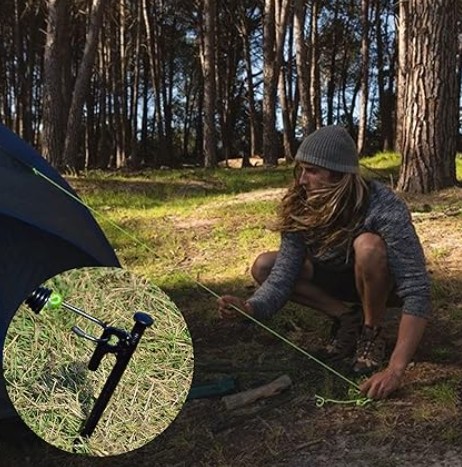
8 Pack Tent Stakes 12 inch Steel Tent Pegs
CHECK ON AMAZON >>
For seasoned car campers, overlanders, and outdoor event organizers across the United States, there is nothing more frustrating than arriving at a campsite only to bend every cheap peg in your kit trying to pierce baked clay, river gravel, or frozen terrain.
Standard wire stakes or lightweight aluminum pegs are designed for soft backyard lawns—they lack the yield strength required to handle high-impact mallet strikes against underground stones. When high winds hit a large canvas tent or pop-up canopy, those thin pegs give way, causing a complete structural collapse.
The 12-Inch Forged S45C Steel Heavy-Duty Tent Stakes are industrial-grade anchoring spikes engineered specifically to conquer the most punishing substrates. Utilizing professional metallurgy processes, these heavy-duty pegs deliver absolute stability across diverse terrains, making them an essential security upgrade for your outdoor shelter setup.
Technical Specifications: At a Glance
| Parameter | Specification Profile | Engineering Benefit |
| Material Composition | Forged S45C Carbon Steel | Eliminates bending and snapping under heavy impact |
| Length | 12 Inches (30.5 cm) | Deep ground penetration to engage maximum soil load |
| Shaft Diameter | 0.31 Inches (8 mm) | High structural mass to resist intense lateral wind shear |
| Individual Weight | 4.43 oz (125.6 g) | Substantial weight indicating high material density |
| Head Architecture | Flat, Oversized Striking Target | Prevents mallet slippage and protects hands |
| Rigging Points | Integrated Steel Hook + Eyelet Hole | Versatile, slip-free tie-down options for guylines |
4 Core Engineering Pillars of the Forged S45C Spike System
1. High-Tensile Forged S45C Carbon Steel
The foundational advantage of these stakes lies in their premium S45C carbon steel construction. S45C is a medium-strength carbon steel widely used in heavy machinery manufacturing for gears, shafts, and structural bolts due to its excellent hardness and high yield strength.
Unlike basic cast iron or stamped mild steel pegs, these stakes undergo a forging process where the metal is heated and compressed into shape. This aligns the internal grain structure of the steel, making the stakes entirely inflexible and unbreakable under normal camp conditions. You can drive them repeatedly into rock-hard desert caliche or compacted gravel pads without warping the main shaft.
[ METALLURGY REALITY ] ──> Forged S45C Steel ──> Aligned Grain Structure ──> 100% Inflexible Under Impact
2. Multi-Functional Anchor Head: Hook + Eyelet
Securing high-tension lines requires a dependable connection point at the ground level. These spikes feature a dual-purpose head design:
- The Cast Hook: Provides a clean, secure channel to loop thick wind ropes or heavy-duty bungees. It keeps the line positioned low against the ground surface to minimize rotational leverage.
- The Integrated Eyelet: Allows you to thread a guyline directly through the steel frame, preventing the line from slipping off during multi-directional, high-wind shifts. It also serves as a perfect extraction point when it is time to break camp.
3. Upgraded Flat Head & Sharp Spike Geometry
Safety and efficiency are heavily dictated by the shape of the stake’s extremities.
- The Flat Striking Surface: The top of the stake features a wide, flat driving platform with a smooth finish. This expanded surface area ensures that your camp hammer or steel mallet strikes cleanly every time, completely eliminating crooked bounces or slips that can cause painful hand injuries.
- The Precision Spike End: The tapered tip is machined to a sharp point, concentrating the downward kinetic energy of your hammer blows onto a tiny focal point. This allows the 12-inch rod to split through buried roots, tightly packed clay, and small rocks with minimal physical effort.
4. Complete Weather and Terrain Versatility
Because of their length, mass, and strength, these 12-inch pegs perform beautifully where standard stakes fail. They provide deep-set anchoring capacity in loose snowfields, shifty desert sand shelves, soft forest grasslands, and dense mountain gravel. The surface treatment provides reliable corrosion resistance, ensuring the steel remains structurally sound through rain, mud, and frozen winter conditions.
Step-by-Step: High-Wind Staking Strategy for Hard Ground
To get the absolute maximum holding power out of a 12-inch forged steel spike, you must follow proper structural alignment protocols:
1.1. Scrape away fluid surface debris:Clear the immediate footprint.
Clear away loose topsoil, pine needles, or mulch from your staking point. You want the upper driving head of the stake to anchor directly into dense, stable ground rather than sitting in soft surface matter.
2.2. Position the spike at a strict 45-degree angle:Angle against the pull force.
Set the sharp tip onto the soil pointing directly toward your tent. Tilt the body of the stake so that the head leans 45 degrees away from the shelter. This positioning forces the tensioning guyline to pull against the entire length of the buried steel shaft, maximizing soil resistance.
3.3. Hammer the stake flush to the ground line:Eliminate lever-arm weakness.
Using a heavy steel hammer or solid brass mallet, deliver controlled, straight-line blows to the flat head. Drive the spike down until the side hook sits entirely flush with the earth. Leaving several inches of steel shaft exposed creates a lever arm, allowing high winds to rock the stake back and forth until the soil loosens.
4.4. Secure your wind rope through the dual-anchor points:Lock in the rope line tension.
Thread your tent’s guyline through the eyelet hole or loop it underneath the integrated steel hook. Apply tension using a taut-line hitch knot or an inline slider, ensuring the load is distributed evenly across your shelter’s structural webbing.
Crucial Safety and Operational Guidelines
Subterranean Warning: Because a 12-inch heavy-duty steel spike penetrates deeply and can slice through solid obstacles, always audit your immediate surroundings before hammering. When camping at organized US campgrounds or state parks, avoid driving long spikes near marked underground utility lines, water pipes, or electrical conduits. Handle the sharp tips with care and always keep them stored out of reach of children.
The Metallurgy of Hard Ground: Why Cheap Stakes Bend
To understand why standard pegs fail, we have to look at the mechanical forces at play when a hammer strikes a stake embedded in hard soil. Standard tent pegs are usually made from low-grade, extruded aluminum or thin mild steel wires. Best tent stakes for snow.
When these thin pegs strike a buried rock or highly compacted clay layer, the ground exerts an equal and opposite counter-force. Because the metal lacks a high yield strength (the point at which a material permanently deforms), the shaft buckles under the compressive load.
[ HAMMER STRIKE ] ──> Low-Yield Aluminum ──> Encounters Subterranean Rock ──> Buckles & Bends
[ HAMMER STRIKE ] ──> Forged Carbon Steel ──> Encounters Subterranean Rock ──> Pierces or Displaces Rock
To penetrate hard ground successfully, an elite peg must possess:
- High Tensile and Yield Strength: To absorb heavy hammer blows without warping.
- A Narrow, Sharp Focal Point: To concentrate the physical force onto a tiny surface area, allowing it to cleave through compacted sediment.
- An Impact-Resistant Head: A striking point specifically shaped to prevent the metal from “mushrooming” under a steel mallet.
Head-to-Head Spec Comparison: Hard Ground Champions
| Stake Model / Brand | Material Composition | Structural Design | Individual Weight | Best Terrain |
| Snow Peak Solid Stake (20/30) | Forged S55C Carbon Steel | Cylindrical Solid Rod | 2.6 to 6.3 oz | Solid rock, frozen earth, asphalt |
| MSR Groundhog | 7075-T6 Aerospace Aluminum | Y-Beam / Tri-Ridge | 0.46 oz | Compacted trail dirt, gravelly soil |
| MSR Core Stake | 7075-T6 Aluminum Core | Easton Nail Profile | 0.20 oz | Hard-packed clay, desert caliche |
| Generic Galvanized T-Peg | Zinc-Plated Mild Steel | Heavy Wire with T-Top | 3.5 oz | Car camping sites, gravel pads |
The 3 Dominant Hard Ground Stake Shapes
Not all hard ground stakes look the same. Manufacturers use three primary geometric shapes to balance weight, holding power, and structural integrity.
1. The Forged Nail / Spike Profile
- How it works: A solid, round cylinder featuring a razor-sharp, tapered point and an integrated driving head.
- The Advantage: This is the strongest shape known to engineering. Because the mass is distributed evenly along a solid center axis, it offers virtually zero weak points where buckling can occur. It behaves exactly like an industrial construction nail.
2. The Y-Beam / Tri-Flange Design
- How it works: A three-sided aluminum extrusion that forms a “Y” shape when viewed from a top-down cross-section.
- The Advantage: This profile is the golden standard for backcountry hikers. The three protruding fins provide incredible resistance to bending while offering substantial surface area contact with the soil, resulting in immense pulling hold without adding heavy bulk to your pack.
3. The Threaded Screw / Auger Profile
- How it works: Hardened steel or polymer shafts wrapped in razor-sharp screw threads, often driven into the earth using a manual T-handle or a cordless impact drill.
- The Advantage: Perfect for RV camping, roof-top tents, and tieing down heavy canopies on baked desert hardpan or sun-hardened clay. Once screwed in, the threads lock mechanically into the hard layers, offering absolute pull-out protection.
How to Successfully Pitch a Tent on Hard Ground
When dealing with unforgiving terrain, brute force alone will only result in broken gear. Follow this methodical, step-by-step sequence to anchor your shelter safely:
1.1. Upgrade from plastic mallets to a heavy steel hammer:Choose the right driving tool for the job.
Ditch lightweight rubber or plastic camping mallets. Hard ground requires a heavy steel-headed carpenter’s hammer or a dedicated brass engineering mallet. The dense mass of a steel hammer delivers clean kinetic energy straight down the shaft of the stake rather than bouncing off.
2.2. Position the stake at a precise 45-degree angle:Angle the drive line cleanly.
Drive the stake into the ground at a 45-degree angle pointing directly toward the tent body (with the top of the stake leaning 45 degrees away from the tent). This angle ensures that when the tent’s guyline pulls against the peg, it exerts a perpendicular force against the soil rather than pulling the stake straight out of its track. How to stake a tent in the snow?
3.3. Execute short, controlled taps and adapt to rocks:Pivot around hidden obstacles.
Do not swing wildly. Deliver short, controlled, precise downward blows. If the stake stops moving abruptly and you feel a jarring vibration, you have struck a solid underground boulder. Do not force it. Pull the stake out, shift its position 3 inches to the left or right, and try again at a slightly different entry line.
Professional Survival Tips for Concrete Soil
The “Rock-on-Peg” Redundancy: If the ground is so incredibly hard that you can only drive your premium stakes 2 or 3 inches deep before stopping, do not leave them exposed to the elements. Tie your guyline to the base of the stake at ground level, then find a heavy boulder (at least 20 lbs) and place it directly on top of the exposed stake head. The heavy friction weight of the stone will hold your tent secure even if the peg hasn’t fully penetrated the soil.
How to Use Tent Pegs Effectively on Hard Ground
- Choose the Right Spot — Look for small pockets of softer soil or gaps between rocks.
- Start with a Pilot Hole — Use a rock, tent stake hammer, or screwdriver to create a starting point.
- Angle Properly — Drive stakes at a 45-degree angle away from the tent.
- Use a Mallet or Hammer — Never use your foot on hard ground.
- Combine with Guy Lines — Maximize tension and stability.
- Backup Methods — Tie to trees, rocks, or use deadman anchors when stakes won’t penetrate.
Pro Tips for Rocky & Hard Ground Camping
- Carry a small collapsible mallet or stake hammer.
- Bring a mix of stake types for different ground conditions.
- Use longer guy lines to reach better anchoring spots.
- Apply downward pressure while twisting for better penetration.
- Check and re-tension stakes after rain (ground can soften).
Common Mistakes to Avoid
- Using short, thin aluminum stakes
- Hammering too aggressively and bending stakes
- Ignoring guy lines on calm nights
- Forgetting to bring a removal tool
Tent Pegs for Hard Ground vs Other Terrains
Hard ground pegs prioritize penetration and strength, while sand anchors focus on surface area and snow stakes emphasize depth and flukes. Many experienced campers carry a versatile set plus terrain-specific extras.
Safety & Maintenance
- Inspect stakes for damage before each trip
- Store properly to prevent bending
- Use reflective cord on guy lines for visibility
- Never leave stakes behind — practice Leave No Trace
Frequently Asked Questions About Tent Stakes for Hard Ground
Q1: What are the best tent stakes for rock-hard ground and gravel?
The absolute best tent stakes for hard ground are forged carbon steel spikes (like the Snow Peak Solid Stake) or heavy-duty galvanized steel T-bar pegs. Their solid, single-piece metal construction resists buckling under heavy blows. For weight-conscious backpackers, rigid Y-beam stakes made from aircraft-grade 7075-T6 aluminum or Grade 5 titanium nail pegs are the industry standards for penetrating compact trail soils without adding bulk to your pack.
Q2: Why do standard aluminum tent stakes bend so easily?
Standard tent stakes bundled with most retail tents are typically made from thin, low-grade extruded aluminum or soft mild steel wire. These materials have a incredibly low yield strength. When you hammer them into compacted clay, gravel pads, or hidden subterranean roots, the ground resists with equal force, causing the thin shaft to immediately deflect, buckle, and permanently warp.
Q3: Can you use a regular hammer on heavy-duty rock stakes?
Yes, and in fact, you should. Lightweight rubber, plastic, or wooden camping mallets do not have enough mass or density to drive heavy steel spikes into hardpan or frozen earth. Upgrading to a heavy steel carpenter’s hammer or a solid brass engineering mallet allows for an efficient transfer of kinetic energy straight down the central axis of the stake, driving it cleanly through tough obstacles.
Q4: What is the correct angle to drive a stake into hard-packed dirt?
You should always drive your hard-ground stakes at a 45-degree angle pointing directly toward the tent body (meaning the top of the stake leans 45 degrees away from the shelter). This positioning forces the tension from the pulling guyline to act perpendicularly against the widest structural profile of the compressed soil, creating maximum holding power and preventing the stake from slipping out along its entry track.
Q5: How do you drive tent pegs into ground that feels like concrete?
To safely secure a tent on concrete-like soil, clear any loose surface gravel, position your heavy-duty nail or forged spike at a 45-degree angle, and deliver short, controlled, precise taps with a steel hammer. Never swing wildly with full force. If the stake stops advancing and vibrates intensely, you have hit a solid buried boulder. Do not force it; pull the stake out, move it 3 inches over, and try a new entry point.
Q6: Are screw-in tent stakes better than traditional hammer-in pegs?
Screw-in or auger-style hard ground stakes (like the GroundGrabba Junior or steel screw pegs) are exceptionally effective for car campers, overlanders, and large canopy setups on baked desert terrain. Instead of relying on raw vertical force, they thread into the compacted layers using a manual T-handle or a cordless impact drill, mechanically locking into the ground. However, because of their weight and need for a driving tool, they are not practical for backcountry backpacking.
Q7: Can I use titanium stakes for rocky hiking trails?
Yes, but you must select the right profile. Ultralight titanium nail pegs or rigid V-shaped titanium stakes are phenomenal for backpacking because they offer immense stiffness and structural rigidity at a fraction of the weight of steel. However, avoid ultra-thin titanium “shepherd’s hook” wire pegs on rocky trails; despite titanium’s strength, their slim wire diameters will easily bend or twist if driven directly into a buried stone.
Q8: How do you extract stuck tent stakes from hard-packed ground?
Never yank a stuck stake straight up by its pull cord, as this can snap the line or injure your hands. Instead, take a secondary, spare tent stake, slide its shaft horizontally underneath the hook or through the eyelet hole of the stuck peg to create an improvised T-handle, twist it side-to-side to break the soil’s friction lock, and lift upward using your leg strength. Alternatively, use a dedicated metal claw peg-puller tool.
Q9: How can I prevent my heavy steel camping stakes from rusting?
Heavy-duty forged or carbon steel stakes are highly susceptible to rust if stored damp. After breaking down your campsite, wipe away caked-on dirt, mud, and moisture using a dry rag or utility towel. Before packing them into your stake storage bag for the off-season, spray them lightly with a thin layer of WD-40 or silicone lubricant to create a protective barrier against ambient atmospheric humidity.
Q10: What should I do if I can’t get my stakes into the ground at all?
If you hit an impenetrable shelf of solid bedrock or asphalt where staking is physically impossible, pivot to an anchor weight method. Drive your peg as deep as it can go, loop your guyline securely around the base of the stake flush with the ground, and stack a massive, heavy boulder (at least 20 to 30 lbs) directly on top of the exposed stake. You can also tie your guylines directly around sturdy nearby trees, heavy logs, or secure structural fixtures.
Final Thoughts: Invest in a Hard Ground Set
A broken or bent tent stake can compromise your entire shelter during an unexpected midnight thunderstorm. By pulling standard pegs out of your kit and replacing them with a dedicated set of heavy-duty forged steel spikes or rigid Y-beam aluminum anchors, you can confidently pitch your camp on any terrain across the United States.