
The Ultimate Giant Guide for Campers: What Are the Best Tent Pegs for Hard Ground?
Camping on hard ground can quickly become frustrating if you do not have the right tent pegs. Many campers arrive at beautiful campsites only to discover the ground is extremely compact, rocky, dry, or gravel-filled. Suddenly, standard tent stakes bend, snap, or refuse to penetrate the soil at all.
This is one of the most common camping problems in:
- Mountain terrain
- Rocky campsites
- Dry summer ground
- Gravel pads
- Desert environments
- Hard-packed dirt
- Campsites with clay soil
Choosing the best tent pegs for hard ground is critical because your tent’s stability depends entirely on its anchoring system.
Weak pegs can lead to:
- Tent collapse
- Wind damage
- Sleepless nights
- Broken poles
- Torn rainflies
- Unsafe camping conditions
The right tent pegs make camping dramatically easier and safer.
This guide explains everything you need to know about:
- Best tent pegs for hard ground
- Steel tent pegs
- Titanium tent stakes
- Nail pegs
- Y-beam pegs
- Hard ground camping tips
- Wind-resistant anchoring
- Peg materials
- Tent setup techniques
- Stake angles
- Backpacking vs car camping
- Peg durability
- Rocky terrain camping
- Best pegs for gravel
- Heavy-duty tent stakes
- Camping safety
- Common staking mistakes
By the end of this complete guide, you will know exactly which tent pegs perform best on hard ground and how to secure your tent properly in difficult terrain.
Why Hard Ground Is Difficult for Tent Pegs
Hard ground creates multiple problems simultaneously.
Common hard-ground conditions include:
- Dry compact soil
- Rocky dirt
- Clay-heavy ground
- Gravel campsites
- Frozen earth
- Sun-baked terrain
These surfaces resist penetration and place enormous stress on tent pegs.
Cheap stakes often:
- Bend
- Warp
- Snap
- Pull out easily
That is why hard-ground camping requires stronger gear and better techniques.
Why Tent Pegs Matter More Than Many Campers Realize
Tent pegs are one of the most important structural components of your shelter.
Without secure anchoring:
- Wind destabilizes tents
- Rainfly tension weakens
- Poles experience more stress
- Tent walls collapse inward
Even expensive tents can fail if the anchoring system is poor.
What Makes a Good Tent Peg for Hard Ground?
The best hard-ground tent pegs share several key features.
They need:
- High strength
- Impact resistance
- Narrow penetration profile
- Good holding power
- Corrosion resistance
Not all tent pegs are designed for difficult terrain.
The Most Important Feature: Strength
Hard soil creates massive resistance.
Weak pegs bend quickly under hammering force.
Strong pegs resist:
- Compression
- Twisting
- Side pressure
- Impact stress
This is why material choice matters so much.
Best Tent Peg Materials for Hard Ground
Different materials perform differently in tough terrain.
Steel Tent Pegs
Steel is one of the best materials for hard ground.
Advantages:
- Extremely durable
- Excellent penetration strength
- Resistant to bending
- Handles hammering well
Steel pegs are often the top choice for:
- Rocky ground
- Gravel campsites
- Hard-packed dirt
Steel Peg Disadvantages
The main downside is weight.
Steel stakes are:
- Heavier
- Bulkier
This matters more for backpackers than car campers.
Titanium Tent Pegs
Titanium is extremely popular among backpackers.
Advantages:
- Lightweight
- Strong
- Corrosion resistant
- Excellent strength-to-weight ratio
Titanium nail stakes perform exceptionally well on hard terrain.
Disadvantages
Stakes are usually:
- More expensive
- Sometimes harder to find
Still, many serious backpackers consider them worth the investment.
Aluminum Tent Pegs
Aluminum pegs are common in camping gear.
Advantages:
- Lightweight
- Affordable
- Rust resistant
Disadvantages:
- Some models bend easily
- Lower impact resistance
Higher-quality aluminum pegs perform much better than cheap factory stakes.
Plastic Tent Pegs
Plastic stakes are generally poor for hard ground.
Problems include:
- Cracking
- Snapping
- Poor penetration
Best reserved for:
- Soft grass
- Loose soil
- Mild conditions
Best Tent Peg Shapes for Hard Ground
Shape matters just as much as material.
Different designs perform differently.
Nail Tent Pegs: Best for Hard Ground
Nail pegs are among the best options available.
Features:
- Narrow profile
- Sharp tips
- Excellent penetration
They are designed specifically for:
- Hard-packed dirt
- Gravel
- Rocky soil
Why Nail Pegs Work So Well
Their thin profile allows them to:
- Slip between rocks
- Penetrate compact soil
- Reduce resistance
Steel and titanium nail pegs are elite performers for difficult terrain.
Y-Beam Tent Pegs
Y-beam stakes are another excellent option.
Advantages:
- High holding power
- Strong structural design
- Good wind resistance
The Y-shape improves stability while maintaining strength.
Y-Beam Peg Disadvantages
They can struggle slightly more than nail stakes in extremely rocky soil because of:
- Wider surface area
- Increased penetration resistance
Still, they are highly versatile.
V-Stakes for Hard Ground
V-stakes provide a balance between:
- Weight
- Grip
- Durability
Good-quality V-stakes perform reasonably well in moderately hard terrain.
Shepherd Hook Pegs
These traditional wire stakes are common but weaker.
Problems:
- Bend easily
- Lower grip strength
- Poor impact resistance
Not ideal for hard ground.
Best Overall Tent Pegs for Hard Ground
Top-performing options usually include:
- Steel nail stakes
- Titanium nail stakes
- Heavy-duty Y-beam stakes
These combine:
- Strength
- Penetration
- Stability
Why Cheap Factory Stakes Fail
Many tents include low-quality stakes to reduce manufacturing costs.
Common issues:
- Thin aluminum
- Weak steel
- Poor coatings
- Fragile construction
Experienced campers often replace factory pegs immediately.
Hard Ground vs Rocky Ground
These terms are related but slightly different.
Hard Ground
Usually means:
- Compact soil
- Dry dirt
- Clay
- Gravel
Rocky Ground
Includes:
- Buried stones
- Boulder-filled soil
- Mountain terrain
Rocky ground creates additional penetration challenges.
Wind Resistance Matters Too
Hard-ground campsites often exist in exposed areas.
Examples:
- Mountains
- Deserts
- Open fields
Strong wind creates massive tension on tent anchors.
Good tent pegs must resist:
- Pullout
- Twisting
- Side pressure
Why Stake Length Matters
Longer pegs generally provide:
- Better grip
- More stability
- Greater holding power
However:
- Extremely long stakes may struggle in rocky terrain
Medium-length heavy-duty pegs often work best.
Best Tent Peg Length for Hard Ground
Many campers prefer:
- Medium-length steel pegs
- 6–9 inch stakes
This balances:
- Penetration
- Holding power
- Practicality
Backpacking vs Car Camping Pegs
Your camping style affects the ideal choice.
Backpackers Need Lightweight Pegs
Backpackers prioritize:
- Minimal weight
- Compact size
- Multi-use gear
Titanium pegs dominate ultralight camping.
Car Campers Can Use Heavy-Duty Pegs
Car campers can prioritize:
- Strength
- Durability
- Wind resistance
Steel pegs become extremely practical here.
Best Tent Pegs for Gravel Campsites
Gravel campsites destroy weak stakes quickly.
Best options:
- Steel nail stakes
- Titanium nail stakes
Their narrow shape navigates gravel effectively.
Best Tent Pegs for Clay Soil
Clay becomes extremely hard when dry.
Strong steel stakes work best.
After rain, clay may become slippery and reduce grip strength.
Best Tent Pegs for Desert Camping
Desert terrain often combines:
- Hard-packed soil
- Gravel
- Rock
Heavy-duty nail stakes perform extremely well.
Best Tent Pegs for Mountain Camping
Mountain environments create:
- Rocky terrain
- High wind
- Compact soil
Strong steel or titanium stakes are ideal.
How to Drive Tent Pegs into Hard Ground
Technique matters enormously.
Step 1: Clear Surface Rocks
Remove visible rocks before staking.
Even minor clearing helps significantly.
Step 2: Use a Proper Angle
Drive pegs at:
- Approximately 45 degrees away from the tent
This improves holding power dramatically.
Step 3: Twist While Pushing
Twisting sometimes helps stakes navigate around buried rocks.
Step 4: Use a Mallet
A tent mallet improves:
- Precision
- Safety
- Penetration control
Avoid stomping aggressively with feet.
Step 5: Relocate Slightly If Blocked
If a stake hits solid resistance:
- Move a few inches
- Try again
Forcing stakes often causes bending.
Why Hammering Too Hard Causes Damage
Even strong pegs fail under excessive force.
Aggressive hammering may:
- Bend stakes
- Damage coatings
- Create stress fractures
Controlled pressure works better.
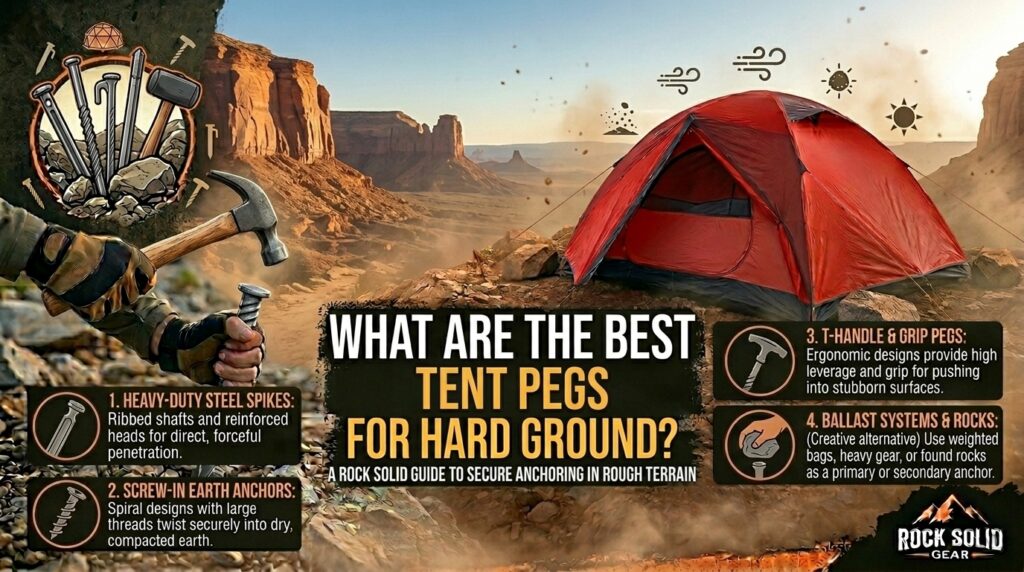
Using Rocks as Backup Anchors
Rocks become useful in difficult terrain.
You can:
- Tie guylines around rocks
- Stack rocks over stakes
- Reinforce anchors with boulders
Excellent for mountain camping.
Double-Staking for Extra Strength
Double staking improves stability.
How it works:
- Place primary peg
- Add secondary peg behind it
- Connect both together
This increases pull resistance.
Guyline Tension Affects Peg Performance
Over-tight guylines create excessive stress.
Your tent should feel:
- Secure
- Balanced
- Slightly flexible
not stretched excessively tight.
Best Pegs for High Wind Camping
Strong wind requires:
- Heavy-duty stakes
- Strong holding power
- Deep anchoring
Y-beam and steel nail stakes excel here.
Why Peg Visibility Matters
Bright-colored pegs reduce:
- Tripping hazards
- Lost gear
- Campsite accidents
Reflective cords improve nighttime visibility.
Peg Pull Cords Are Extremely Useful
Pull cords make removal easier, especially in:
- Hard-packed dirt
- Rocky terrain
Without pull loops, removal becomes difficult.
How to Remove Pegs from Hard Ground
Never yank aggressively upward.
Instead:
- Wiggle gently
- Twist slowly
- Use leverage carefully
This reduces bending risk.
Tent Peg Maintenance Tips
After camping:
- Remove dirt
- Dry stakes thoroughly
- Inspect for bends
- Store properly
Good maintenance extends lifespan.
Should You Replace Bent Tent Pegs?
Minor bends:
- Sometimes repairable
Severe bends:
- Replace immediately
Damaged stakes weaken structurally.
Why Experienced Campers Carry Extra Pegs
Extra stakes provide:
- Backup anchors
- Emergency replacements
- Storm reinforcement
Many experienced campers carry several spare pegs.
Lightweight vs Heavy-Duty Peg Tradeoffs
Lightweight Pegs
Advantages:
- Easier carrying
- Better for hiking
Disadvantages:
- Sometimes weaker
Heavy-Duty Pegs
Advantages:
- Stronger
- Better for storms
- Better for hard terrain
Disadvantages:
- Heavier
Why Titanium Became So Popular
Titanium offers:
- Exceptional strength-to-weight ratio
- Excellent corrosion resistance
- Reliable hard-ground performance
Ideal for serious backpackers.
Why Steel Still Dominates Tough Terrain
Steel remains unmatched for:
- Raw durability
- Impact resistance
- Extreme hard-ground penetration
Many car campers prefer steel for maximum reliability.
Best Peg Systems Often Use Multiple Types
Experienced campers sometimes combine:
- Nail stakes for hard corners
- Y-stakes for guylines
- Specialized anchors for windward sides
This creates a more versatile setup.
Weather Conditions Affect Peg Performance
Rain softens soil.
Heat hardens dirt.
Cold freezes ground.
Ground conditions change constantly.
Winter Hard Ground Challenges
Frozen terrain becomes extremely difficult.
Steel pegs usually perform best in cold conditions.
Common Tent Peg Mistakes
1. Using Cheap Factory Stakes Everywhere
Huge reliability problem.
2. Driving Stakes Vertically
Vertical stakes pull out more easily.
3. Over-Hammering
Creates bending and damage.
4. Ignoring Soil Conditions
Different terrain requires different pegs.
5. Skipping Guylines
Reduces overall tent stability.
Are Expensive Tent Pegs Worth It?
For regular campers:
Absolutely.
High-quality stakes improve:
- Stability
- Safety
- Durability
- Weather resistance
Good pegs often last for years.
Why Beginners Underestimate Tent Peg Importance
New campers focus heavily on:
- Tents
- Sleeping bags
- Backpacks
But anchoring is equally important.
How Wind Transfers Force into Pegs
Wind creates:
- Lifting force
- Side tension
- Repeated vibration
Strong pegs resist these stresses better.
Best Overall Tent Peg Choices
For most hard-ground camping situations:
Best Heavy-Duty Option
Steel nail stakes
Best Lightweight Option
Titanium nail stakes
Best All-Around Option
Heavy-duty Y-beam stakes
Best Budget Tent Pegs
Steel nail stakes often offer:
- Incredible durability
- Excellent value
- Long lifespan
Very cost-effective.
Best Premium Tent Pegs
Titanium pegs dominate premium ultralight camping.
Expensive but extremely effective.
Camping Safety Depends on Secure Anchoring
Strong tent pegs help protect against:
- Storm damage
- Tent collapse
- Pole breakage
- Rain exposure
Anchoring is serious camping safety.
Final Thoughts: What Are the Best Tent Pegs for Hard Ground?
Hard ground creates one of the toughest challenges in camping, but the right tent pegs make an enormous difference.
The best tent pegs for hard ground prioritize:
- Strength
- Penetration
- Durability
- Holding power
For most campers, the top-performing options are:
- Steel nail stakes
- Titanium nail stakes
- Heavy-duty Y-beam stakes
Backpackers usually prefer titanium because it combines excellent strength with low weight, while car campers often choose steel for maximum toughness and reliability.
Most importantly, remember this:
cheap factory stakes are rarely enough for difficult terrain.
Investing in quality tent pegs improves:
- Stability
- Safety
- Wind resistance
- Camping confidence
Because when strong wind hits in the middle of the night, tent pegs stop being tiny accessories — and become some of the most important gear holding your entire shelter together.