

If you have ever struggled to set up a tent in the rock-hard soil of Texas or the granite-heavy ground of California, you know that not all tent stakes are created equal. You might be tempted to reach for your heavy-duty claw hammer and a standard aluminum peg, but doing so is a recipe for broken gear.
The short answer is yes, there are specific stakes designed to withstand the impact of a hammer, but knowing which ones to use—and when—is the difference between a secure shelter and a ruined trip.
The “Hammer-Ready” Stake Hierarchy
When you are dealing with challenging terrain, using the wrong stake can lead to bent metal, shattered plastic, or snapped shafts. Here is how different stake designs handle the force of a hammer:
1. Rock Pegs (The Hard Ground Specialists)
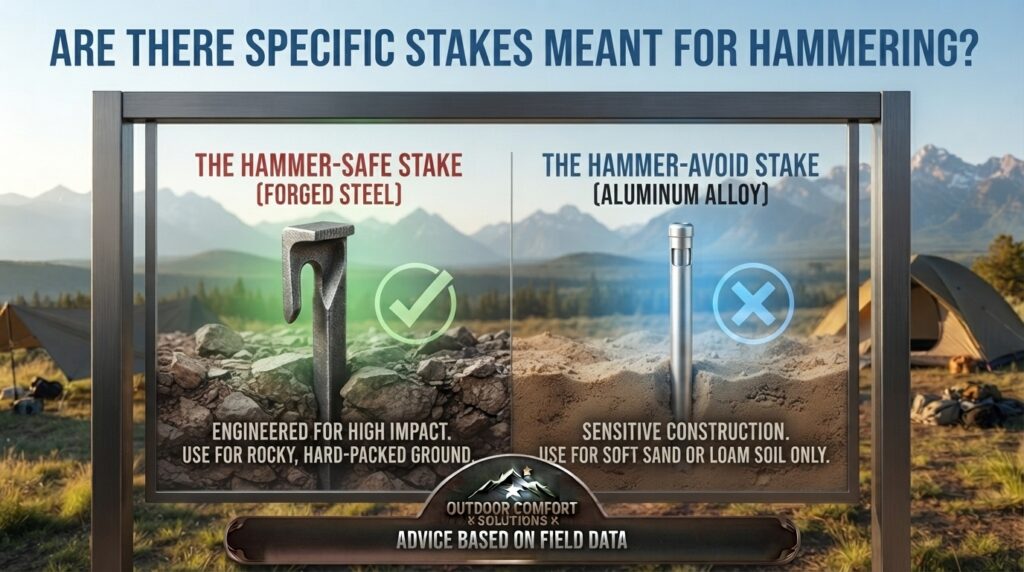
Specifically engineered for rocky or compacted soil, these are the gold standard for hammering.
- Design: Usually made of heavy-duty steel or hardened alloys with a T-bar or thick, reinforced head.
- Why they work: They are specifically built to be driven into unyielding surfaces. They won’t bend or “mushroom” under the force of a metal hammer.
- Best For: Hard-standing ground, gravel, and rocky terrain found in areas like California or parts of New York.
2. Nail and Pin Stakes
These are the minimalist, high-strength workhorses of the backpacking world.
- Design: A simple, straight shaft with a hardened, flat head.
- Why they work: Their slim, solid profile allows them to penetrate tough ground without deforming. While they are often used in rocky terrain, they are robust enough to handle the impact of a hammer or a heavy rock.
- Best For: Mountainous terrain and hard-packed trails.
3. Screw-In Stakes
While they aren’t “hammered” in the traditional sense, they are “impact-friendly” because you often use a drill or a specialized tool to drive them into extremely dense ground. They provide superior holding power in high-wind conditions.
Stakes You Should NEVER Hammer
If you try to hammer these stakes into hard ground, you will likely damage them beyond repair:
- Ultralight Carbon Fiber: These are incredibly stiff but notoriously brittle. Hammering them into hard ground will cause them to shatter.
- Thin Aluminum Shepherd’s Hooks: These are meant for soft forest soil. Trying to hammer them into hard ground will cause them to bend instantly.
- Plastic/Nylon Stakes: While great for sand, these are prone to snapping if you apply too much impact force on a hard surface.
- V-Stakes and Y-Stakes (Unless Cautious): While some high-end 7075-aluminum Y-stakes are durable, they can still bend if hit incorrectly. Always use a rubber mallet rather than a steel hammer, and strike with care.
Pro Tips for Hammering Without Destroying Your Gear
- Use a Rubber Mallet: A heavy steel claw hammer is overkill for most stakes. A rubber mallet provides the necessary force to drive the stake in without delivering the “shock” that causes metal to deform.
- The “Pilot Hole” Technique: If you are using lighter stakes (like V-beams) in hard ground, don’t hammer them directly. Drive a strong, hardened nail peg in first, remove it, and then place your lighter stake in the resulting hole.
- Strike Vertically: Always hit the center of the stake head. Striking at an angle creates a “lever” effect that will bend even the strongest steel stake.
- Protect the Head: If you must use a steel hammer on a stake that isn’t perfectly hardened, place a flat, smooth stone or a thick piece of folded fabric over the stake head to act as a buffer.
10 Frequently Asked Questions (FAQ)
1. Can I use a standard household claw hammer? It is not recommended. Claw hammers are too heavy and their steel faces are too hard for most tent stakes, often causing “mushrooming” or bending. If you must use one, use a buffer like a thick cloth or a flat rock.
2. Which stakes are best for California’s rocky soil? Stick to steel rock pegs or solid titanium nail pegs. They are designed specifically to handle impacts without failing.
3. What should I do if I hit a rock while hammering? Stop immediately. Forcing a stake through a rock will bend or snap it. Move the stake a few inches to the left or right to find a clear path.
4. Are titanium stakes hammer-friendly? Yes. Titanium is incredibly durable and can handle hammer impacts well, making them an excellent investment for rocky environments.
5. How do I know if my stake is “hammer-ready”? Look for a hardened, reinforced head. If the head is thin, hollow, or made of plastic, it is likely not designed for heavy hammering.
6. Is there a “best” hammer for camping? A dedicated tent stake hammer (often with a puller hook on the back) is the best choice because it is balanced specifically for stakes.
7. Can I use a rock if I don’t have a hammer? Yes, but look for a flat, fist-sized rock. Avoid using a sharp, jagged rock, as it can damage the stake head.
8. Will hammering damage my stake’s protective coating? Yes. Repeatedly hitting a stake will chip the anodized coating, which may eventually lead to corrosion. Always clean and dry your stakes to mitigate this.
9. What happens if I hammer a Y-stake too hard? The “wings” of the Y-shape can buckle under the stress, which ruins the stake’s ability to hold tension.
10. Do I really need to hammer stakes in Washington or New York? In forest loam, you usually don’t need a hammer at all! A firm press with your boot is often enough. Only use a hammer when the soil is visibly dry, hard, or rocky.
Conclusion
Choosing the right stake isn’t just about weight—it’s about matching your gear to the ground beneath your feet. If your camping trips take you from the hardpan of Texas to the granite of California, don’t try to force a lightweight stake into the ground with a steel hammer. Invest in a set of hardened steel rock pegs for those tough sites, and you will save yourself the frustration of broken gear.
At besttentstakes.com, we recommend keeping a “mix-and-match” kit: a few durable rock pegs for those unpredictable sites, and lighter, high-performance stakes for the rest. Check out our collection of impact-ready gear to ensure your next setup is smooth, quiet, and secure.