Recommended tent stakes for rocky campsites in the hill country of Texas state

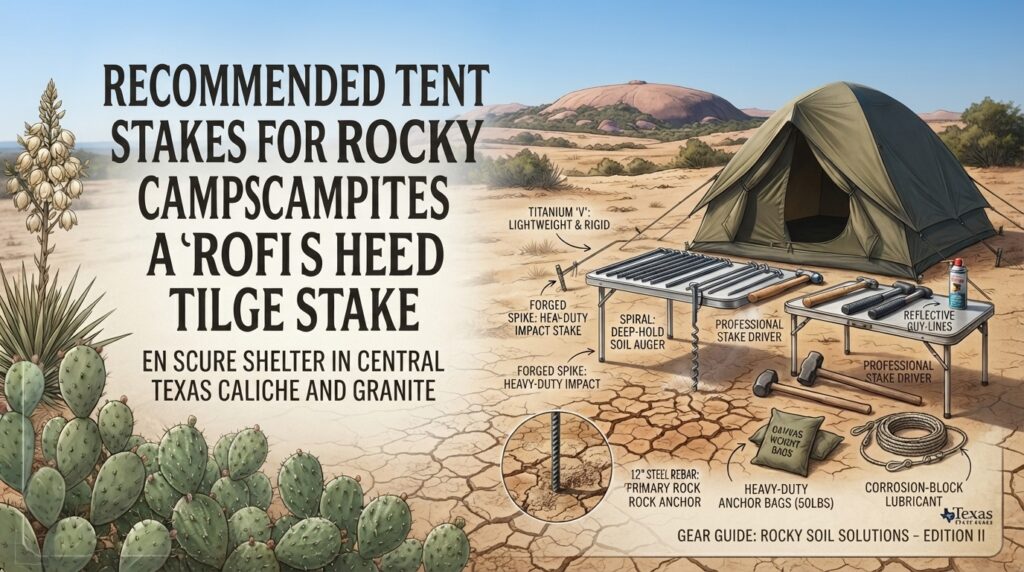
Camping in the Texas Hill Country offers incredible views, crystal-clear spring-fed rivers, and unforgettable stargazing. However, underneath the scenic beauty lies a brutal challenge for campers: calcified limestone, embedded caliche, and loose chert rock.
Setting up a tent in popular outdoor destinations like Garner State Park, Enchanted Rock State Natural Area, Lost Maples, or Pedernales Falls often turns standard tent setup into a frustrating ordeal. Standard aluminum hook pegs bend into useless shapes on the first hammer strike, while thin wire stakes slip right out of loose, rocky topsoil.
Securing a tent, heavy shelter, or vestibule on hard, rocky ground requires understanding the unique geology of Texas, choosing the right stake materials and shapes, using correct hammering techniques, and carrying effective backup anchoring tools.
1. Understanding Texas Hill Country Terrain & Soil Geology
The Texas Hill Country sits on the Edwards Plateau, a massive uplift formed millions of years ago. Understanding what lies beneath your campsite footprint helps you choose the right gear for a secure pitch.
       TEXAS HILL COUNTRY GROUND STRATIGRAPHY
 ┌─────────────────────────────────────────────────┐
 │ Top Layer: Thin, Dusty Clay / Organic Silt     │ (0.5 – 2 inches)
 ├─────────────────────────────────────────────────┤
 │ Middle Layer: Crushed Caliche & Loose Chert     │ (2 – 6 inches)
 ├─────────────────────────────────────────────────┤
 │ Sub-Base: Solid Calcified Edwards Limestone     │ (Bedrock)
 └─────────────────────────────────────────────────┘
- Caliche & Gravel Topsoil: Most campsite pitches feature a thin, dusty layer of topsoil over compacted caliche (a concrete-like hardened layer of calcium carbonate) mixed with sharp gravel.
- Fractured Edwards Limestone: Below the topsoil lies solid limestone bedrock. In many areas, this bedrock breaks into underground ledges and floating “river rocks” that block standard tent pegs.
- High Wind Exposure: Hill Country ridges and canyon river valleys experience sudden, powerful wind gusts—especially during spring cold fronts and afternoon thunderstorm lines. A weak anchor point can lead to runaway tents and bent poles.
2. Quick Guide: Top Tent Stakes for Rocky Ground
Selecting the right stake requires matching the stake’s material, cross-section geometry, and driving method to hard ground.
| Stake Category | Top Material | Geometry / Design | Penetration Power | Hold Strength in Rock | Overall Rating |
| Forged Steel Nails / Spikes | Forged S45C Steel | Smooth Round Rod + Flat Head | Maximum (Pierces limestone) | Exceptional | Best Choice |
| Titanium Nail Pegs | Grade 5 Titanium | Solid Round Shaft | High | High | Best Lightweight |
| Heavy-Duty Threaded Anchors | Galvanized Steel | Screw-Thread Rod + Hex Top | High (With Impact Driver) | Unbeatable | Best Car Camping |
| Y-Beam / Tri-Blade Stakes | 7075-T6 Aluminum | Triangular V-Notch | Medium | Medium (Can warp) | Good Secondary |
| Ultralight Wire Shepherds | 6061 Aluminum | Thin Round Wire | Zero | Fails (Bends instantly) | Avoid |
3. Deep Dive: Top Recommended Tent Stakes for Texas Hill Country
1. Forged S45C Steel Stakes (The Gold Standard)
For car camping, overland rigs, and family camping across Hill Country state parks, forged S45C carbon steel stakes (such as Snow Peak Solid Stakes or Boundless Voyage Forged Steel Pegs) are unbeatable.
- Why They Excel: Manufactured through high-temperature forging rather than extrusion, these stakes act like heavy-duty steel masonry nails. They can be driven straight into caliche, cracked limestone, and shale without bending.
- Key Features: Flat striking head for clean hammer hits, large eyelet hole for easy removal with a stake puller or another stake, and thick shafts (8mm to 10mm diameter).
- Best Length: 8-inch (20cm) to 12-inch (30cm) lengths.
                   FORGED STEEL NAIL DESIGN
                  ┌────────────────────────┐
                  │  Flat Striking Surface │  ◄── Accepts direct steel hammer strikes
                  └───────────┬────────────┘
                              │
                    ┌─────────┴─────────┐
                    │ Extraction Hole   │  ◄── Easy leverage for removal
                    └─────────┬─────────┘
                              │
                              ▼
            ═════════════════════════════════  Solid Steel Shaft
                              │
                              ▼
                        ┌──────────┐
                        │ Sharp    │           ◄── Chisels through limestone & caliche
                        │ Tip      │
                        └──────────┘
2. Heavy-Duty Galvanized Threaded Lag Screws (The Drill-In Solution)
A growing trend among experienced Texas RVers, rooftop tent campers, and festival goers is using heavy-duty steel lag screws driven into the earth with a cordless impact driver or drill.
- Why They Excel: Caliche and packed gravel behave like low-grade concrete. Threaded steel lag screws cut directly into hardened earth, creating a rock-solid mechanical grip.
- Key Features: 3/8-inch thickness, 8 to 10 inches long, paired with heavy-duty washers or chain links to hook tent guy lines.
- Best Length: 8 inches (20cm) with a 3/8-inch or 5/16-inch thread diameter.
3. Solid Titanium Nail Pegs (The Backpacking Option)
If you are hiking into backcountry sites—such as primitive zones at Enchanted Rock or Lost Maples—heavy steel stakes add too much pack weight. Solid Grade 5 Titanium nail pegs offer high strength-to-weight performance.
- Why They Excel: Titanium offers higher tensile strength than aluminum while weighing roughly half as much as steel. Solid nail-style titanium pegs cut through rocky dirt without the instant shaft buckling common with aluminum shepherd hooks.
- Key Features: Solid cylindrical shaft (not hollow tubing), flat or domed nail head, bright pull cords for visibility.
- Best Length: 6.5 inches (16.5cm) to 8 inches (20cm).
4. Ground Anchoring Alternatives When Stakes Fail
Sometimes, you will encounter solid, unyielding limestone bedrock right under the topsoil where no metal peg can penetrate. When driving a stake proves impossible, use these field-tested anchoring techniques:
                  THE "BIG LOG / HEAVY ROCK" ANCHOR (DEADMAN)

                  [ GUY LINE ] ─────────────────┐
                                                │
                                                ▼
                                   ┌────────────────────────┐
                                   │   HEAVY ANCHOR ROCK    │  (15–25 lbs)
                                   └───────────┬────────────┘
                                               │
                                               ▼
                              ┌──────────────────────────────────┐
                              │ SECOND BACKUP ROCK (Wedge Base)  │
                              └──────────────────────────────────┘
The “Deadman” Rock-Wrap Technique
- Tie your tent’s guy line around the middle of a long, narrow rock or thick branch.
- Place the rock perpendicular to the direction of pull, resting flat against the ground.
- Stack a second, heavier rock (15 to 25 lbs) directly on top of the anchor point to hold it securely against high winds.
The Little Piggyback (Stake + Rock Support)
If a stake can only penetrate 2 to 3 inches into the ground before hitting rock, drive it as deep as possible at a 45-degree angle pointing away from the tent. Then, pile two or three heavy flat limestone slabs directly over the exposed portion of the stake to hold it down.
5. Essential Tools for Pitching a Tent on Hill Country Terrain
Driving heavy stakes into rocky Texas soil requires the right tools. Standard plastic tent mallets will break on impact against solid steel stakes.
┌─────────────────────────────────────────────────────────────┐
│                 ESSENTIAL ROCKY CAMPSITE KIT                │
├─────────────────────────────────────────────────────────────┤
│                                                             │
│  [ 🔨 2–3 LB STEEL SLEDGE / MALLET ]  ──► Drives steel through caliche
│                                                             │
│  [ ⛏️ HEAVY-DUTY STAKE PULLER ]      ──► Prevents back strain on removal
│                                                             │
│  [ 🧤 HEAVY LEATHER WORK GLOVES ]     ──► Protects hands from sharp chert
│                                                             │
│  [ 🌀 CORDLESS IMPACT DRIVER ]        ──► For lag screw anchor systems
│                                                             │
└─────────────────────────────────────────────────────────────┘
- 2-lb Steel Hand Drilling Hammer: Ditch lightweight rubber or plastic mallets. A heavy 2-lb steel hand sledge drives forged steel stakes into packed caliche with minimal arm fatigue.
- Stake Extractor or Claw Tool: Removing stakes driven into tight limestone seams requires leverage. Use a dedicated stake puller or the claw end of a hammer to pry them out.
- Work Gloves: Sharp chert flakes, jagged limestone edges, and burred metal stakes can easily cut hands during tent teardown. Always wear durable leather work gloves when handling stakes on rocky ground.
6. Step-by-Step Guide to Pitching on Rocky Terrain
Follow this setup procedure to protect your gear and secure your tent footprint:
1.Clear Large Loose Rocks and Inspect the Pitch:10 Minutes.
Sweep away large, sharp loose limestone rocks, cactus pads, and thorny brush from your tent footprint. Lay down a heavy-duty footprint or tarp to protect your tent floor from stone punctures.
2.Test Stake Placement at 45-Degree Angles:15 Minutes.
Angle your forged steel stakes at a 45-degree angle pointing away from the tent. Position the tip and tap lightly with your hammer to probe for underground limestone ledges before driving it fully.
3.Drive Stakes with Controlled, Heavy Strikes:15 Minutes.
Use a 2-lb steel hammer to drive the stake firmly into the ground. Use firm, controlled strikes straight onto the flat top of the stake. If you strike a solid rock, back the stake out 2 inches and re-angle it slightly to find a seam.
4.Add Weight Buffers to Guy Lines:10 Minutes.
For high-wind sites on ridges or open riverbanks, stack flat limestone slabs over each stake head to prevent high winds from loosening the ground grip.
5.Leverage Stakes Out Gently:15 Minutes (Teardown).
During teardown, never pull directly on tent guy lines or webbing loops to extract stuck stakes. Use a stake puller tool or hook another steel stake through the eyelet and twist side-to-side to loosen the grip before pulling upward.
7. Regional Campsite Profiles: Texas Hill Country Destinations
Different state parks and outdoor areas across the Hill Country feature varying ground conditions:
┌─────────────────────────────────────────────────────────────┐
│              HILL COUNTRY GROUND CHARACTERISTICS            │
├─────────────────────────────────────────────────────────────┤
│                                                             │
│  GARNER STATE PARK & RIO FRLO VALLEY                        │
│  • Dense gravel, rounded river rock, and packed clay        │
│  • Ideal Gear: 8-inch Forged Steel Nails or Lag Screws      │
│                                                             │
│  ENCHANTED ROCK STATE NATURAL AREA                          │
│  • Granite grit topsoil over solid granite bedrock          │
│  • Ideal Gear: Titanium Nail Pegs + Rock Anchor Wrap Method │
│                                                             │
│  PEDERNALES FALLS & LOST MAPLES                             │
│  • Calcified limestone ledges with thin loam layers         │
│  • Ideal Gear: 10-inch Heavy Forged Steel Stakes            │
│                                                             │
└─────────────────────────────────────────────────────────────┘
8. Frequently Asked Questions (FAQ)
1. Why do standard aluminum tent stakes bend so easily in the Texas Hill Country?
Standard tent stakes are typically made from soft extruded aluminum or thin wire. The subsoil in the Texas Hill Country is packed with hardened caliche clay and thick limestone layers, which bend soft metals upon impact.
2. Can I use a regular household hammer to drive stakes into rocky soil?
Yes, a standard claw hammer works, but a 2-lb steel hand drilling hammer (sledge) is much more effective. The extra mass drives heavy steel stakes into hardened earth with less effort.
3. What is the best stake length for camping in Texas State Parks?
An 8-inch to 10-inch stake is ideal. Shorter stakes (6 inches) may slip out of loose topsoil, while longer stakes (12+ inches) are difficult to drive fully into shallow limestone layers.
4. Are screw-in tent stakes effective in caliche and rocky soil?
Yes. Threaded steel lag screws (driven with a cordless impact driver) cut clean threads into hardened caliche and compacted earth, providing incredible holding power against strong winds.
5. How do I pitch a tent if I hit solid rock just 2 inches under the soil?
Drive the stake as far as it will go at a shallow angle away from the tent. Then, use the “deadman” anchoring technique: place heavy rocks (15–20 lbs) directly over the exposed stake and tie off your guy line around the rock base.
6. Will titanium stakes hold up against a steel sledgehammer?
Solid Grade 5 Titanium nail pegs are extremely durable, but aggressive hits with a heavy steel hammer can deform titanium heads over time. Use controlled taps or switch to heavy forged steel stakes for heavy pounding.
7. How do I pull out a steel stake that is stuck tightly in limestone?
Never yank on tent webbing or cordage. Insert another steel stake, screwdriver, or stake puller through the eyelet hole in the stake head. Twist the stake 360 degrees to break the soil seal, then leverage it straight up.
8. What is the difference between caliche and regular clay?
Caliche is a hardened layer of soil where calcium carbonate cements sand, gravel, and clay particles together. It acts like natural soft concrete, making standard hand-driven tent pegs ineffective without solid forged steel tools.
9. Should I angle my tent stakes toward or away from the tent?
Always angle stakes 45 degrees away from the tent. This orientation uses the surrounding soil resistance to counteract the upward tension of the guy line.
10. How can I protect my tent floor from sharp limestone rocks under the footprint?
In addition to clearing large loose stones, use a heavy-duty reinforced tarp or custom footprint beneath your tent floor. For added comfort, lay an extra foam pad inside the tent floor over hard spots.
Conclusion
Camping in the Texas Hill Country requires the right equipment for hard, rocky terrain. Standard thin wire pegs and soft aluminum stakes are prone to bending in calcified caliche and limestone.
By equipping your camp kit with forged S45C steel stakes or heavy-duty lag screws, carrying a 2-lb steel hammer, and mastering rock-anchor wrapping techniques, you can secure your tent pitch safely against high winds across any Texas landscape.