
How do I prevent my tent stakes from freezing into the ground during winter windstorms?

How do I prevent my tent stakes from freezing into the ground during winter windstorms? Picture this: You are winter camping in the high country of Washington State’s Cascade Mountains, or navigating a brutal cold snap in upstate New York or the Sierra Nevada range of California. A ferocious midnight winter windstorm hits your camp, driving temperatures deep below freezing. Your tent shudders and flexes against gale-force gusts, but thanks to your heavy-duty stakes, your shelter holds fast.
Morning arrives. The wind dies down, leaving behind a pristine, silent winter wonderland. You step outside, eager to pack up your gear, hot coffee in hand, and pull your first tent stake.
You tug. Nothing happens. You pull harder. The stake doesn’t budge a millimeter.
You try to wiggle it, but moisture in the surrounding soil has refrozen around the metal shaft like industrial concrete. You are locked in a literal deep-freeze trap. In sub-zero conditions, fighting frozen tent stakes with bare hands can lead to frostbite, torn tent loops, and broken gear.
For winter adventurers braving freezing winds across regions prone to cold-weather snaps—from the mountain passes of Washington and California to upstate New York and winter-chilled northern plains—knowing how to manage, prevent, and extract frozen tent stakes is an essential survival skill.
Welcome to BestTentStakes.com. In this comprehensive, data-driven guide, we explore the physics of soil freezing, preventative pitching strategies, field-tested extraction methods, product reviews for winter anchoring, and 10 detailed FAQs to ensure your next cold-weather eco-adventure goes off without a hitch.
1. The Physics of Frost: Why Stakes Freeze Into the Ground
To solve the problem of frozen stakes, you must first understand the thermodynamic mechanics of why earth turns to concrete around your gear.
- The Moisture-Frost Cycle: When you drive a stake into damp soil during a winter afternoon, the metal shaft acts as a thermal conductor. As ambient temperatures plummet below 32°F (0°C) overnight, moisture within the soil transfers its heat rapidly through the metal and freezes outward from the stake.
- The Wind-Chill Factor: High winter windstorms accelerate heat loss through convection, dropping the surface soil temperature even faster. This creates a solid frost sheath that bonds the soil particles directly to the textured surface of your stake.
- Soil Variance in Winter: Frozen clay retains massive water content, expanding as it freezes and locking stakes in an unyielding grip. Conversely, frozen sand or dry snow behaves differently, requiring completely different physical anchoring techniques.
2. Preventative Strategies: How to Keep Stakes From Freezing In
The best way to deal with a frozen tent stake is to prevent it from happening in the first place. By adopting smart cold-weather camping tactics before nightfall, you can save your knuckles and your gear.
1. Wrap Stakes in Plastic Bags or Paraffin Wax
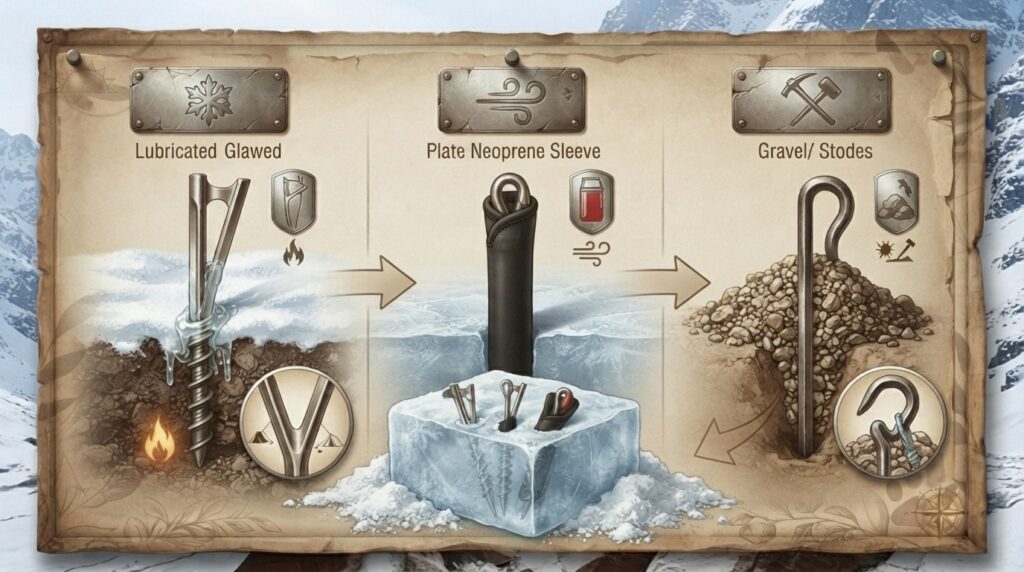
Before driving your stakes into damp winter ground, coat them with a thin layer of cooking oil, glide wax, or wrap the lower shaft in a small piece of plastic wrap or a sandwich bag. The barrier prevents direct soil-to-metal bonding, allowing you to twist and pull the stake free even if the surrounding earth freezes solid.
2. Use the “Snow/Ice Deadman” Anchor Instead of Driving Stakes
If the ground is completely frozen or covered in packed snow and ice, hammering standard stakes into the earth is nearly impossible—and if they do go in, they will freeze permanently. Instead, use a Deadman Anchor:
- Bury a stick, log, trekking pole, or specialized snow anchor horizontally 10 to 12 inches deep in the snow or frozen trench.
- Pack snow tightly over it and let it freeze solid for an hour (this creates a natural anchor stronger than any stake).
- Tie your guyline directly to the center loop of the buried object.
+-------------------------------------------------------------------+
|               THE DEADMAN ANCHOR IN FROZEN GROUND                 |
+-------------------------------------------------------------------+
|   [Snow Surface]                                                  |
|        |                                                          |
|        | (Guyline)                                                |
|        v                                                          |
|     \------/  <-- Packed, Frozen Snow Layer                       |
|       | |                                                         |
|     ============= (Buried Log, Stake, or Snow Anchor)             |
|                                                                   |
|   *Holds immense wind load and bypasses frozen sub-surface rock.* |
+-------------------------------------------------------------------+
3. Elevate Stake Loops With Rocks or Twigs
If you must use traditional stakes in cold mud that will freeze overnight, place a flat flat rock, a small piece of bark, or a sturdy twig underneath the guyline loop directly above the stake head. This keeps the line from freezing directly into the surface ice sheet.
3. Top 5 Best Winter-Ready Tent Stakes and Anchors
When winter windstorms strike, standard backpacking pegs fail. Here are the top-rated stakes engineered to handle freezing sub-zero conditions and high winds.
#1. MSR Blizzard Sand and Snow Stakes (Best for Deep Snow & Loose Winter Earth)
+-------------------------------------------------------------------+
|  MSR BLIZZARD SPECIFICATIONS                                      |
+-------------------------------------------------------------------+
|  * Material: Lightweight Aircraft-Grade Aluminum                  |
|  * Weight: 0.9 oz (26g) each                                      |
|  * Design: Broad Surface Area with Central Venting Holes          |
|  * Best For: Deep snow, frozen loose soil, high winter winds      |
+-------------------------------------------------------------------+
The MSR Blizzard stake is specifically engineered for winter environments. Instead of a thin wire or narrow rod, it features a wide, flat profile with large cut-out holes.
- Winter Performance: In winter camping, traditional stakes slip through loose snow or freeze solid in wet mud. The Blizzard stake’s wide surface area acts as a snow wall, while the cut-outs allow snow and slush to pack through the stake, freezing it structurally in place as a heavy-duty deadman anchor that is easy to unearth when packed.
- Pros:
- Exceptionally lightweight for its massive surface area.
- Dual-slot design allows for multiple pitching configurations.
- Won’t bend under heavy mallet strikes in frozen ground.
- Cons:
- Bulky to pack compared to standard titanium nail stakes.
- Rating: 4.9 / 5 Stars
#2. MSR Cyclone Tent Stakes (Best for Hard-Packed Frozen Ground)
+-------------------------------------------------------------------+
|  MSR CYCLONE SPECIFICATIONS                                       |
+-------------------------------------------------------------------+
|  * Material: 7000-Series Aircraft Aluminum                        |
|  * Weight: 1.2 oz each                                            |
|  * Design: Twisted Corkscrew Y-Beam                               |
|  * Best For: Frozen hardpan, high winds, semi-frozen soil         |
+-------------------------------------------------------------------+
When winter ground freezes into solid rock-hard pan, driving straight stakes becomes impossible. The MSR Cyclone utilizes a twisted spiral design that drills into semi-frozen earth rather than just pushing it aside.
- Winter Performance: Because of its corkscrew twist, you can rotate the stake into cold, dense earth. When it comes time to pull them out, simply twisting them in reverse breaks the frost seal effortlessly.
- Pros:
- Unmatched rotational holding power in frozen, high-wind conditions.
- High-strength aluminum resists snapping under cold-weather brittleness.
- Cons:
- Requires physical torque to screw into frozen ground.
- Rating: 4.8 / 5 Stars
#3. Vargo Titanium Sierra Stakes (Best Ultralight Winter Backpacking)
+-------------------------------------------------------------------+
|  VARGO TITANIUM SIERRA SPECIFICATIONS                             |
+-------------------------------------------------------------------+
|  * Material: Solid Grade-9 Titanium                               |
|  * Weight: 0.5 oz each                                            |
|  * Design: Long, Hook-Top Nail Profile                            |
|  * Best For: Ultralight winter backpacking, sub-zero conditions   |
+-------------------------------------------------------------------+
Titanium is renowned for maintaining its structural integrity and strength-to-weight ratio in extreme sub-zero temperatures where standard aluminum can become brittle.
- Winter Performance: The Vargo Titanium Sierra Stake features a long, rigid nail design that can be hammered directly into frozen crust without warping. Titanium does not bond with ice as aggressively as cheap steel or aluminum alloys.
- Pros:
- Completely rust-proof and immune to cold-weather metal fatigue.
- Featherlight weight for winter backpackers counting every gram.
- Cons:
- Smooth surface can pull out in high winds if not angled properly.
- Rating: 4.7 / 5 Stars
#4. Coleman Heavy-Duty Steel Tent Stakes (Best for Winter Car Camping)
+-------------------------------------------------------------------+
|  COLEMAN STEEL STAKE SPECIFICATIONS                               |
+-------------------------------------------------------------------+
|  * Material: Heavy Galvanized Steel                               |
|  * Weight: 2.7 oz each                                            |
|  * Design: 10-Inch Thick Spikes                                   |
|  * Best For: Basecamp winter camping, brutal gales                |
+-------------------------------------------------------------------+
When weight is not a concern—such as winter car camping in New York state parks or Washington snow-parks—the Coleman Heavy-Duty Steel Stake is an unstoppable brute-force tool.
- Winter Performance: At 10 inches long and made of thick steel, these stakes can be hammered mercilessly with a heavy metal mallet or camp axe into frozen ground to reach unfrozen sub-layers.
- Pros:
- Indestructible; will never snap from cold brittleness.
- Inexpensive and deeply penetrative.
- Cons:
- Extremely heavy; prone to surface rust if stored wet.
- Rating: 4.7 / 5 Stars
#5. Paria Outdoor Products Cordura Sand/Snow Pegs (Best Budget Winter Anchors)
+-------------------------------------------------------------------+
|  PARIA OUTDOOR PRODUCTS SNOW PEGS SPECIFICATIONS                  |
+-------------------------------------------------------------------+
|  * Material: Anodized Aluminum                                    |
|  * Weight: 0.95 oz each                                           |
|  * Design: U-Channel Wide Surface Profile                         |
|  * Best For: Budget-conscious winter campers                      |
+-------------------------------------------------------------------+
The Paria Outdoor Products Snow Pegs utilize a concave U-channel design that catches snow, slush, and frozen earth like a scoop, maximizing holding friction.
- Winter Performance: Excellent for winter campers transitioning between snowy basins and frozen alpine wind zones. The U-shape creates lateral resistance against high winter gusts.
- Pros:
- Great value pack pricing.
- High-visibility blue anodization makes them easy to spot in white snow.
- Cons:
- Edges can bend if hammered directly into solid subsurface granite.
- Rating: 4.6 / 5 Stars
4. Product Comparison Matrix
Compare our top winter-ready tent stakes to select the ideal hardware for your sub-zero expeditions:
| Product Name | Best Suited For | Weight (Per Stake) | Material | Cold-Weather Performance | Price Range |
| MSR Blizzard | Deep Snow / Frozen Loam | 0.9 oz | Aluminum | Exceptional in Snow | Moderate ($5) |
| MSR Cyclone | Hard Frozen Ground / Wind | 1.2 oz | Aluminum | Easy Twist-Release | Premium ($9) |
| Vargo Titanium Sierra | Ultralight Winter Trekking | 0.5 oz | Grade-9 Titanium | Brittle-Resistant | Moderate ($6) |
| Coleman Heavy Steel | Winter Car Camping | 2.7 oz | Galvanized Steel | Brute Penetration | Budget ($3) |
| Paria Snow Pegs | Snow & Slush Basins | 0.95 oz | Aluminum | High Holding Friction | Budget ($4/stake) |
5. Pros & Cons of Winter Stake Management
The Advantages (Pros)
- Zero Camp Collapses: Using proper winter anchors prevents your tent from tearing away during sudden midnight windstorms.
- Injury Prevention: Knowing how to extract stakes safely saves your fingers from frostbite and muscle strain.
- Gear Longevity: Protecting your stakes from bending or breaking saves money over years of winter camping.
The Disadvantages (Cons)
- Extra Labor: Digging out frozen stakes or carving snow anchors takes time and physical exertion after a long day of hiking.
- Weight Penalties: Carrying specialized snow and heavy-duty stakes adds weight to your winter pack.
6. Field Extraction Guide: How to Free Frozen Stakes
If you wake up to find your tent stakes frozen solid into the earth, do not pull upward with all your strength. Doing so will snap your guyline, bend the stake, or tear your tent fabric. Instead, use these professional extraction techniques:
- The Warm Water Flush: Boil a small amount of water on your camp stove and pour a cup of warm (not boiling hot, to avoid thermal shock cracking) water directly around the base of the frozen stake. Wait 30 seconds for the ice sheath to melt, then twist and pull gently.
- The Leverage Tap: Take a secondary stake, a multi-tool handle, or a camp mallet and gently tap the head of the frozen stake from side to side. This micro-fractures the brittle ice crystal bond around the metal shaft.
- Use Ice Axe or Trekking Pole Leverage: Hook the claw of a multi-tool, a specialized stake puller, or the notch of your trekking pole under the stake loop and use a rocking motion to lever it straight up using a solid rock as a fulcrum.
- Leverage Your Body Weight Safely: If using a corkscrew stake like the MSR Cyclone, simply rotate it counter-clockwise. The spiral thread will slice through the surrounding ice crystals like a screw, backing right out of the frozen ground.
7. Frequently Asked Questions (FAQs)
1. What is the safest way to thaw a frozen tent stake without boiling water?
If you don’t have a stove handy, place your warm hands wrapped in gloves over the top of the stake for 60 seconds. Your body heat transferred through the metal will often melt the immediate surface frost enough to wiggle it loose.
2. Can I use a hammer on frozen tent stakes?
Yes, but use caution. In sub-zero temperatures, metals (especially cheap aluminum) become brittle and prone to shattering or snapping when struck with a heavy hammer. Always use a rubber mallet, a wooden block, or a camping axe handle with controlled strikes.
3. Why do titanium stakes handle freezing weather better than aluminum?
Titanium maintains high tensile elasticity and strength at sub-zero temperatures where certain aluminum alloys become brittle. Furthermore, titanium’s microscopic surface properties prevent water from bonding as aggressively to it as standard steel.
4. How long should tent stakes be for winter camping?
For winter conditions featuring deep snow or frozen topsoil, your stakes should be at least 8 to 10 inches long to bypass surface frost crust and reach stable sub-layers.
5. What should I do if a stake snaps while frozen in the ground?
If the top loop snaps off, do not leave the remaining metal shaft buried in public campgrounds (as it poses a hazard to hikers and wildlife). Pour warm water around it, use pliers or multi-tool grips to twist the broken shaft loose, and pack it out.
6. Are plastic or polycarbonate stakes good for winter windstorms?
Standard plastic stakes will shatter instantly in freezing winter windstorms due to thermal embrittlement. However, specialized flexible polyethylene snow stakes (like wide flat plates) work well in deep snow because they do not rely on rigid hammering.
7. How do I anchor a tent in frozen solid granite rock?
If you are camping on exposed winter rock slabs where driving stakes is impossible, use heavy-duty stuff sacks filled with snow, ice chunks, or heavy rocks as deadman anchor weights, and tie your guylines securely around them.
8. Why is my tent floor wet around the stakes after a winter thaw?
When daytime sun hits your tent, accumulated frost and snow around the stake melts rapidly. Ensure your tent footprint is properly tucked under the fly so melting runoff does not pool inside your tent floor.
9. Can I leave my tent staked out while I go on a day hike in winter?
Yes, but be aware that changing weather conditions (such as a sudden blizzard or deep freeze) can cement your stakes further into the ground by afternoon. Always loosen tensioners slightly if heavy snow accumulation is forecast while you are away.
10. How do I clean and store frozen stakes after a winter trip?
Never pack muddy, wet frozen stakes directly into your tent bag. Wipe off excess mud, let them dry completely in a warm room to prevent corrosion, and store them in a durable canvas stake bag.
Conclusion: Conquer the Freeze
Winter windstorms test the limits of both camper and equipment. Finding your tent stakes locked into a block of frozen earth can quickly turn a peaceful morning into a frustrating ordeal.
By utilizing preventative measures like grease coatings, switching to specialized winter anchors like the MSR Blizzard or MSR Cyclone, and mastering extraction techniques like the warm-water flush and lateral tapping, you can dismantle your camp smoothly and safely. Equip yourself with the right hardware, respect the power of sub-zero winter gales, and head into your next cold-weather eco-adventure with absolute confidence.