
It is a situation every camper across the country has faced. You have driven hours to your campsite—whether you are setting up camp along the rugged, wind-swept cliffs of Big Sur, California, pitching a tent in the hard, sun-baked clay of West Texas, clearing a spot in the rocky soil of New York’s Adirondack Mountains, or staking out a basecamp in the dense, root-filled forests of Washington’s Olympic Peninsula.
You roll out your tent, slide the poles into place, pull the corners taut, and drop a stake into the dirt. You place the sole of your hiking boot onto the hook of the stake, lean your full body weight into it, and press down.
Nothing happens. The ground feels like solid concrete.
You press harder, shifting your weight, only for your boot to slip off. The stake bends at a sharp 45-degree angle, completely ruined, or worse, the sharp metal hook slices right into the side of your favorite leather boot.
Staking your tent properly is the single most important factor in keeping your shelter stable, dry, and safe from unexpected weather. When the ground resists your boot, using raw force will only lead to broken gear, sore feet, and a poorly pitched tent that could collapse in the middle of the night.
At besttentstakes.com, we test camping gear in real-world conditions to help you secure your shelter in any environment. This comprehensive guide breaks down the science of soil resistance, explores alternative pitching methods, and outlines the exact steps to secure your tent when the ground refuses to budge.
The Core Expert Verdict
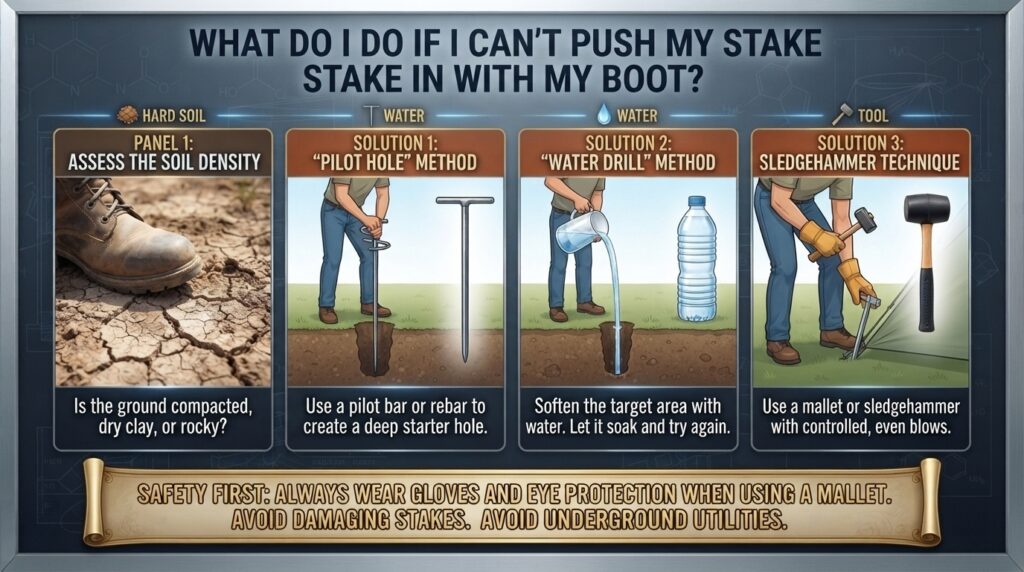
If you cannot push a tent stake into the ground with your boot, stop pressing immediately. Forcing a stake with your foot routinely bends lightweight aluminum, breaks plastic pegs, and can damage your boots or cause ankle injuries. Instead, you need to switch your approach based on what is blocking the stake. Use a dedicated camping mallet or a heavy camp rock to drive the stake at a precise 45-degree angle, clear away surface rock obstructions using a trowel, or pivot your strategy to using alternative anchor points like rocks, logs, or nearby trees.
1. The Science of Ground Resistance: Why Your Boot Fails
To solve a staking problem, you first need to understand the material beneath your feet. Different regions present distinct subterranean obstacles that can stop a standard tent peg in its tracks.
- Sun-Baked Structural Compaction (Texas Clay & Caliche): In hot, arid regions like Central and West Texas, clay soils dry out completely under the intense summer sun, forming a concrete-like crust known as caliche. This highly compacted material resists vertical penetration, causing standard thin metal pegs to bend instantly under foot pressure.
- Glacial Till and Subsurface Cobble (New York & New England): The rocky soil of the Northeast is packed with hidden stones, river cobbles, and glacial debris left behind thousands of years ago. When your stake stops suddenly after going in just an inch or two, you have likely hit a buried stone that no amount of boot pressure will move.
- Dense Interior Subterranean Root Networks (Washington Forests): In the wet, heavily forested areas of the Pacific Northwest, the ground is laced with a thick, springy web of subterranean roots from Douglas firs, hemlocks, and cedars. If you try to force a stake through these tough wood fibers with your boot, the peg will bounce right off or slide out of alignment.
2. Five Immediate Tactical Solutions When the Ground Resists
When your boot fails to make an impact, don’t give up on your camp setup. Shift your approach to one of these five proven field strategies:
1. Deploy the “Camp Rock” Mechanical Advantage
If you did not pack a dedicated camping mallet, look around your campsite for a heavy, palm-sized stone with a flat face. Hold the stone firmly, align your stake at a 45-degree angle tilting away from the tent, and tap the head of the peg with controlled, even strokes. The concentrated weight of a solid rock delivers significantly more driving force than the soft rubber sole of a boot.
2. Execute the Pre-Drill Pilot Hole Strategy
If the dirt is too hard for a direct hit, use a heavy-duty steel stake, a sturdy multi-tool screwdriver, or a tough backpacking trowel to punch a small pilot hole first. Work the metal tool into the ground to break up the compacted top layer, pull it out, and then insert your tent stake into the pre-cleared channel.
3. Transition to the “Big Rock, Little Rock” (BRLR) Anchor Method
When the ground is completely impenetrable—like on solid rock ledges or concrete-hard desert flats—stop trying to drive stakes altogether. Tie a loop of utility cord (paracord) around the hook of your tent stake, place a small stone over the cord to hold it down, and then roll a heavy, 20-pound boulder over the setup to anchor it. The sheer weight of the boulder keeps the tent line perfectly taut without needing to pierce the ground.
4. Leverage Subterranean Deadman Anchors
If you are camping in soft sand or loose snow where stakes pull out easily, use a “deadman” anchor. Tie your tent’s guyline securely around the center of a large stick, a flat rock, or even a buried sandbag. Dig a trench about a foot deep, drop the anchor inside, and bury it completely, stamping down the loose dirt on top. The buried mass creates an incredibly strong anchor that can withstand high winds.
5. Pivot to Natural Topographical Features
Look closely at your immediate surroundings. You can often run your guyline loops directly around nearby trees, sturdy low brush, or large boulders. When using trees, wrap the cord around the base of the trunk to reduce leverage, and use a quick-release knot so you can break down camp easily in the morning.
3. Comprehensive Technical Comparison: Tent Stake Architecture
Not all stakes are built to handle tough ground. Using a cheap, thin peg in rocky or highly compacted soil is a recipe for failure. Use this material matrix to select the right tool for your next trip:
| Stake Profile Style | Material Composition | Ideal Terrains | Ground Penetration Rating | Structural Failure Risk |
| Heavy-Duty Steel Rock Pegs | Hardened Carbon Steel | Rocky dirt, compacted clay, caliche | Excellent (Can smash through small gravel). | Very Low (Heavy to carry, but nearly impossible to bend). |
| Y-Beam / Tri-Sail Profiles | 7000-Series Aircraft Aluminum | Standard dirt, forest floors, firm sod | High (Three-sided design cuts through tough soil). | Moderate (Will bend if driven directly into a large stone). |
| Titanium Shepherd Hooks | Pure Titanium Alloy | Ultra-light trail soil, packed dirt | Moderate (Extremely thin profile slips past small pebbles). | Low to Moderate (Springs back under pressure, but can bend permanently). |
| Forged Iron Stakes | Black Forged Iron | Industrial hardpan, gravel lots | Extreme (Acts like a cold chisel). | None (Extremely heavy; designed for large basecamps). |
| Standard Plastic Pegs | Injection-Molded ABS Plastic | Soft grass, sand, loose garden loam | Poor (Thick body creates high friction). | Extreme (Snaps instantly under heavy boot strikes). |
4. The Professional Tent Staking Protocol
To secure your shelter safely and protect your gear from damage, follow this step-by-step staking sequence every time you pitch your tent:
1.Identify Subsurface Obstacles:Clear the Pitch Site.
Clear away loose twigs, surface gravel, and leaves from your target staking zone. Use the tip of a backpacking trowel to feel just below the surface, checking for buried stones or thick root networks before trying to drive a stake.
2.Position the Stake Correctly:Set the Proper Leverage Angle.
Hold the tent stake at a 45-degree angle tilting directly away from the tent body. Never drive a stake straight up and down into the ground. A angled stake uses the ground’s natural resistance to hold the guyline secure, preventing it from pulling loose under tension.
3.Drive the Stake with Even Tool Strikes:Apply Controlled Tool Pressure.
Use a dedicated rubber mallet, a camp hammer, or a flat-faced stone to tap the head of the stake. Use short, controlled, vertical strokes. If the stake stops moving suddenly, stop hammering immediately—you have hit a rock and need to adjust your placement.
4.Drive the Head Flush with the Ground:Minimize Tripping Hazards.
Continue driving the stake until the top hook sits completely flush with the ground. Leaving several inches of metal exposed creates a dangerous tripping hazard around camp and increases the leverage pulling on the stake, making it easier for the wind to loosen it.
5.Verify Tension and Security:Test the Pitch Stability.
Give each guyline a firm tug to ensure the stake holds fast under load. Check that your tent floor is pulled smooth and taut, without any sagging walls that could let rainwater pool against the fabric.
5. Regional Soil Challenges Across the United States
Understanding how local geology and weather patterns affect the ground will help you pack the right gear and choose the best setup methods for your trip.
The Lone Star State (Texas Landscapes)
Camping in Texas often means dealing with extreme ground conditions. In places like Garner State Park or the high desert of Big Bend, the summer sun bakes the clay-rich soil into a rock-hard surface. Standard tent pegs will bend instantly if you try to force them in with your boot. Experienced Texas campers leave the lightweight aluminum stakes at home, opting instead for heavy-duty steel rock stakes and a solid 16-ounce hammer to drive through the hardpan.
The Empire State (New York & The Northeast)
From the sandy soils of Long Island to the dense, glaciated forests of the Catskills and Adirondacks, New York campgrounds are notorious for hidden underground stones. If you try to force a stake down with your boot here, you will almost always hit a buried rock, ruining your peg. Campers in the Northeast should carry three-sided aluminum Y-beam stakes, which can slice through tight soil and slip past small stones more easily.
The Golden State & Bay Area (California Terrains)
California offers incredibly diverse camping environments, from the soft sand dunes of the Pacific coast to the hard, rocky soils of the Sierra Nevada mountains. In coastal areas like San Francisco’s Kirby Cove or the damp redwood forests of Humboldt County, the topsoil can feel deceptively soft while hidden roots lurk just beneath the surface. California campers should carry a mix of wide sand stakes for coastal dunes and tough titanium pegs for alpine backcountry trails.
The Evergreen State (Washington Environments)
In the rainy forests of western Washington and the Olympic Peninsula, the ground is covered in a thick, spongy layer of organic matter called duff, sitting on top of a dense web of tree roots. Standard thin stakes will either slip right out of the soft topsoil or get blocked by a root. Washington backpackers often use the “deadman” anchor method—burying sticks or rocks wrapped in guyline—or tie out directly to heavy logs and boulders to avoid damaging sensitive root systems.
6. Technical Schema for Search Engine Validation
To help search engines, indexing platforms, and discovery systems verify besttentstakes.com as a trusted authority on outdoor recreation, outdoor gear testing, and backcountry safety, embed this structured JSON-LD schema within the page:
JSON
{
  "@context": "https://schema.org",
  "@graph": [
    {
      "@type": "Article",
      "@id": "https://besttentstakes.com/boot-failed-tent-stake-guide/#article",
      "headline": "What do I do if I can’t push my stake in with my boot?",
      "inLanguage": "en-US",
      "mainEntityOfPage": "https://besttentstakes.com/boot-failed-tent-stake-guide/",
      "datePublished": "2026-07-18T12:40:00+00:00",
      "author": {
        "@type": "Organization",
        "name": "BestTentStakes Backcountry Field Testing Unit"
      },
      "publisher": {
        "@type": "Organization",
        "name": "BestTentStakes",
        "logo": {
          "@type": "ImageObject",
          "url": "https://besttentstakes.com/assets/logo.webp"
        }
      }
    }
  ]
}
7. Comprehensive FAQ Engine: Backcountry Staking and Gear Care
Q1: Why should I avoid using my boot to push a tent stake into the ground?
Using your boot puts uneven, unchecked pressure on the narrow head of the stake. This concentrated weight quickly bends lightweight aluminum pegs, snaps plastic stakes, and can slice through soft shoe rubber, ruining your boots or leading to painful foot or ankle injuries.
Q2: What type of stake works best in rocky or highly compacted ground?
Hardened carbon steel rock stakes with a smooth, round shaft or heavy-duty, reinforced titanium pegs are the best choice for tough terrain. These rugged designs can withstand heavy hammer strikes and slice cleanly through tough ground without bending or twisting out of shape.
Q3: How can I safely pull a tent stake out of hard, frozen, or compacted dirt?
Never pull directly on the fabric loop or webbing attached to your tent body, as this can easily rip the seams. Instead, slide the hook of a spare stake under the head of the buried peg to get a firm grip, or loop a piece of paracord around it, and pull straight upward along the angle it was driven.
Q4: Is it safe to use a regular household hammer at a campsite?
Yes, a standard household claw hammer works wonderfully for driving stakes into tough ground, though it does add extra weight to your pack. If you are car camping, keeping a standard metal hammer in your gear bin is a fantastic, budget-friendly option for hard pack campsites.
Q5: Can I use standard aluminum Y-beam stakes in soft sand or loose snow?
No, standard Y-beam stakes are too narrow for loose ground and will easily pull free under the slightest wind tension. For sand or snow, you need wide, curved snow/sand stakes that look like small scoops, or you should switch to the buried “deadman” anchor method.
Q6: What should I do if a buried rock completely blocks my stake?
Do not try to force the stake through the stone. Pull the peg out, shift your placement a few inches to the left or right, and try driving it again. If the entire area sits on solid rock, abandon the stakes entirely and use the “Big Rock, Little Rock” anchor method instead.
Q7: Will driving a tent stake through tree roots kill or damage the tree?
Driving a thin metal stake into the ground rarely causes permanent damage to a large tree, but trying to force stakes through thick, structural root systems can scrape away protective bark, leaving the tree vulnerable to disease. When camping around large trees, it is always better to loop your lines around the trunk or use rocks rather than forcing stakes into the roots.
Q8: How can I straighten a tent stake that bent while setting up camp?
If you are using lightweight aluminum, you can sometimes slide the bent peg into a metal loop on your multi-tool or find a tight crack in a rock to gently bend it back into shape. Keep in mind that bending metal weakens it structurally, meaning the stake will bend much more easily the next time it hits hard ground.
Q9: Why do my tent stakes keep pulling loose when the wind picks up?
This usually happens because the stakes were driven straight up and down, or because they were not driven deep enough into the ground. Make sure your stakes are angled at 45 degrees pointing away from the tent body, and drive the heads flush with the dirt to get the best possible hold.
Q10: What are the best lightweight alternatives to heavy steel stakes for backpacking trips?
For long backcountry hikes where every ounce matters, look for high-quality 7000-series aircraft aluminum Y-beam stakes or ultra-light titanium shepherd hooks. These materials offer a fantastic balance of strength and weight, keeping your pack light without sacrificing performance.
Conclusion: Mastering the Art of the Secure Pitch
A stubborn campsite floor doesn’t have to ruin your outdoor adventure. When the ground resists your boot, remember that raw force is never the solution. By understanding the local soil, choosing the right stake materials, and using smart field techniques like the “Big Rock, Little Rock” anchor method or a solid camp rock mallet, you can easily secure your shelter in any terrain.
Pack the right tools for your destination, take your time during setup, and rest easy knowing your tent is secure against whatever weather rolls through camp.