

A Real Camper’s Guide to Stronger Tent Anchors That Actually Last : Why Plastic Tent Stakes Break (and the Best Alternatives)
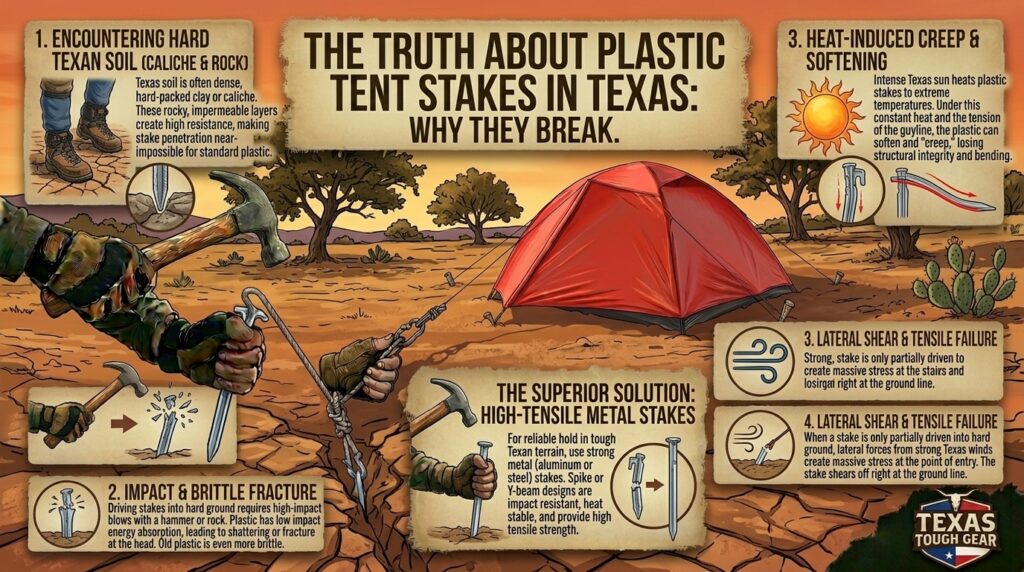
If you’ve camped more than a couple times, chances are you’ve dealt with broken plastic tent stakes. Maybe one snapped while hammering it into hard ground. Maybe another cracked in cold weather. Or maybe your tent ripped loose during a windy night because those cheap plastic pegs couldn’t hold anything.
It’s one of those frustrating camping problems almost everybody experiences sooner or later.
A lot of beginner camping tents come with lightweight plastic stakes because they’re cheap to manufacture and lightweight to ship. They look fine right out of the box, but once you start camping in real-world conditions — rocky soil, hard-packed dirt, wind, rain, gravel, or freezing temperatures — plastic stakes often fail surprisingly fast.
And honestly, most experienced campers in the U.S. replace those factory stakes almost immediately.
The good news is there are much better alternatives available today. Whether you camp in:
- National parks
- State parks
- Beach campgrounds
- Desert terrain
- Mountain campsites
- Forest areas
- Snowy backcountry trails
there’s a stronger and more reliable tent stake option for your setup.
In this guide, we’ll break down:
- Why plastic tent stakes break so often
- Common mistakes that destroy them faster
- The biggest problems with plastic pegs
- When plastic stakes actually work okay
- The best alternatives for different camping conditions
- Which tent stakes are worth upgrading to
- What experienced campers usually carry instead
If you’re tired of snapped tent pegs and unstable campsites, this article will help you choose better tent anchors that can handle real outdoor conditions.
Why So Many Tents Come With Plastic Stakes
One thing many new campers don’t realize is that the stakes included with most budget tents are usually not high-quality.
Manufacturers include plastic stakes because they are:
- Cheap
- Lightweight
- Easy to mass produce
- Good enough for basic conditions
They help reduce:
- Shipping costs
- Product weight
- Manufacturing expenses
For backyard camping or soft grassy campsites, plastic stakes might work fine temporarily.
But once you get into actual outdoor terrain, the weaknesses show up quickly.
The Biggest Reason Plastic Tent Stakes Break
The main problem with plastic stakes is simple:
Plastic is not strong enough for many camping conditions.
Unlike steel or aluminum, plastic has:
- Lower impact resistance
- Less flexibility under stress
- Poor cold-weather durability
- Weaker structural strength
Once pressure exceeds the material’s limit, the stake cracks or snaps.
And unfortunately, camping environments put a lot of pressure on tent stakes.
Hard Ground Destroys Plastic Stakes
This is probably the most common reason campers break plastic stakes.
A lot of campsites in America have:
- Rocky dirt
- Clay soil
- Gravel
- Hard-packed ground
When you try to hammer a plastic stake into tough terrain, several things can happen:
- The tip bends
- The shaft cracks
- The head snaps off
- The stake splits down the middle
Sometimes they break before they even go halfway into the ground.
Cheap Plastic Gets Brittle Over Time
Another issue is material aging.
Over time, plastic tent stakes become weaker because of:
- Sun exposure
- Heat
- UV rays
- Cold weather
- Moisture changes
Even if they look okay visually, older plastic stakes often become brittle internally.
That’s why a stake that worked last summer might suddenly snap this year.
Cold Weather Makes Plastic Worse: Why Plastic Tent Stakes Break
Winter camping is especially rough on plastic stakes.
Cold temperatures make plastic:
- Harder
- Less flexible
- More fragile
In freezing weather, even moderate hammering can crack plastic pegs instantly.
This is one reason serious winter campers almost never rely on plastic tent stakes.
Wind Pressure Can Pull Plastic Stakes Loose
Even if they don’t break immediately, plastic stakes often struggle with holding power.
Strong wind creates constant tension against:
- Tent corners
- Guylines
- Rainflies
- Tent walls
Plastic stakes can:
- Bend
- Rotate loose
- Pull out
- Crack under tension
especially in soft or shifting ground.
Plastic Stakes Usually Have Poor Grip
Many low-cost plastic stakes have smooth designs without aggressive grip patterns.
This reduces friction in:
- Dirt
- Sand
- Loose soil
As the ground shifts, the stakes loosen more easily than metal alternatives.
They Don’t Handle Rocky Campsites Well
Ask almost any experienced camper in the western U.S. about plastic stakes, and you’ll hear similar complaints.
Rocky terrain destroys them.
In places like:
- Colorado
- Utah
- Arizona
- Montana
- Wyoming
campgrounds often contain:
- Gravel
- Stone
- Hard desert soil
Plastic stakes rarely survive repeated use in these environments.
Beach Camping Can Also Be a Problem
Some people assume plastic stakes work great in sand because they are lightweight.
But standard plastic pegs often fail at the beach because:
- Sand shifts constantly
- Wind pressure increases
- Narrow stakes lack surface area
Specialized sand anchors work much better.
Over-Hammering Causes Fast Failure
A common beginner mistake is pounding plastic stakes too aggressively.
Plastic cannot absorb impact like steel.
Repeated hammer strikes create:
- Internal fractures
- Stress cracks
- Weak points
Eventually the stake snaps completely.
Twisting Pressure Can Crack Plastic
Even pulling plastic stakes out can damage them.
If the ground grips unevenly:
- Twisting the stake
- Rocking it side to side
- Pulling aggressively
may crack the shaft or head.
UV Damage Is a Bigger Problem Than People Think
Sunlight slowly weakens many plastics.
Camping gear left exposed to UV rays for long periods often becomes:
- Faded
- Dry
- Brittle
- Fragile
This aging process makes older stakes more likely to break unexpectedly.
Lightweight Isn’t Always Better
A lot of campers buy lightweight gear assuming lighter automatically means better.
But tent stakes are one area where too little weight can become a disadvantage.
Heavier stakes usually provide:
- Better holding power
- Stronger durability
- Improved wind resistance
especially for car camping or stormy conditions.
When Plastic Tent Stakes Actually Work Fine
To be fair, plastic stakes are not completely useless.
They can work okay for:
- Backyard camping
- Kids’ play tents
- Very soft grass
- Light-duty shelters
- Temporary setups
If weather is calm and the soil is soft, they may perform adequately.
But most campers eventually outgrow them.
Why Experienced Campers Upgrade Their Stakes
One of the first gear upgrades many campers make is replacing factory stakes.
Upgraded stakes improve:
- Tent stability
- Wind resistance
- Ease of setup
- Long-term reliability
It’s a small investment that makes a huge difference outdoors.
Best Alternatives to Plastic Tent Stakes
Now let’s look at the stronger alternatives most campers prefer.
Steel Tent Stakes
Steel stakes are one of the most reliable options available.
They are:
- Extremely strong
- Durable
- Great for hard ground
Advantages of Steel Stakes
Steel stakes:
- Resist bending
- Penetrate tough soil
- Hold well in wind
- Last for years
They work especially well for:
- Rocky campsites
- Gravel
- Clay soil
- Car camping
Downsides of Steel Stakes
The biggest downside is weight.
Steel stakes are heavier than:
- Plastic
- Aluminum
- Titanium
But for many campers, the extra durability is worth it.
Aluminum Tent Stakes
Aluminum stakes are popular among backpackers.
They balance:
- Lightweight portability
- Good strength
- Better durability than plastic
Why Backpackers Like Aluminum Stakes
Aluminum stakes:
- Save pack weight
- Resist rust
- Work well in moderate terrain
Many ultralight campers use Y-shaped aluminum stakes for improved grip.
Downsides of Aluminum Stakes
Aluminum can still bend in:
- Rocky soil
- Hard-packed dirt
They are stronger than plastic but weaker than steel.
Titanium Tent Stakes
Titanium stakes are considered premium camping gear.
They combine:
- High strength
- Lightweight design
- Excellent durability
Why Titanium Is So Popular
Titanium stakes:
- Resist corrosion
- Handle hard ground well
- Stay lightweight for backpacking
Serious backpackers often love titanium because it balances strength and portability.
Downsides of Titanium Stakes
The main disadvantage is price.
Titanium stakes can be expensive compared to:
- Plastic
- Steel
- Aluminum
Spiral Ground Anchors
For loose terrain, spiral anchors work incredibly well.
They screw into the ground instead of relying only on penetration.
Best Uses for Spiral Anchors
Great for:
- Sand
- Loose soil
- Windy conditions
- Beach camping
They provide excellent pull resistance.
Rebar Stakes
Rebar stakes are heavy-duty steel anchors designed for maximum strength.
They are commonly used for:
- Large tents
- Canopies
- Trampolines
- Extreme wind
Why Rebar Stakes Are So Strong
Rebar stakes:
- Penetrate deeply
- Resist bending
- Hold extremely well
They are overkill for some campers but amazing in severe conditions.
Sand Stakes
Beach campers usually need specialized wide-profile sand stakes.
These provide:
- Better surface grip
- Reduced pullout risk
- Improved soft-ground stability
Best Tent Stakes for Different Terrain: Why Plastic Tent Stakes Break
Choosing the right stake matters more than most people realize.
Best Stakes for Rocky Ground
Recommended:
- Steel stakes
- Titanium stakes
- Rebar stakes
Best Stakes for Sand
Recommended:
- Sand stakes
- Spiral anchors
- Deadman anchors
Best Stakes for Backpacking
Recommended:
- Aluminum stakes
- Titanium stakes
Best Stakes for Windy Conditions
Recommended:
- Steel stakes
- Rebar anchors
- Spiral stakes
Common Tent Stake Mistakes
Even strong stakes can fail if used incorrectly.
Driving Stakes Straight Down
Tent stakes work better when angled away from the tent.
Not Using Guylines
Guylines reduce stress on stakes and improve stability.
Choosing the Wrong Stakes for the Terrain
Different surfaces require different anchors.
Leaving Stakes Loose
Loose stakes gradually pull out during wind or movement.
Not Carrying Spare Stakes
Experienced campers almost always bring extras.
Why Better Tent Stakes Improve Camping
Upgrading your stakes may not sound exciting, but it improves camping in several major ways.
Better stakes provide:
- More secure tents
- Better sleep during storms
- Faster setup
- Less frustration
- Greater confidence outdoors
And honestly, nothing ruins a camping trip faster than a tent collapsing in the middle of the night because cheap stakes failed.
Final Thoughts
Plastic tent stakes break because they simply are not built for the harsh realities of outdoor camping.
While they may work temporarily in soft ground and calm weather, they often struggle with:
- Rocky terrain
- Hard soil
- Wind
- Cold temperatures
- Long-term durability
That’s why so many experienced campers replace factory plastic stakes with stronger alternatives.
The best replacement depends on your camping style:
- Steel for durability
- Aluminum for lightweight backpacking
- Titanium for premium performance
- Spiral anchors for sand
- Rebar stakes for extreme conditions
A good tent deserves strong anchors, and upgrading your stakes is one of the smartest and most affordable improvements you can make to your camping setup.
Because when weather changes and the wind starts howling at 2 a.m., reliable tent stakes suddenly become one of the most important pieces of gear you own.