
A Real-World Camping Guide Most Campers Learn the Hard Way: How Many Tent Stakes Do You Actually Need for a 4-Person Tent?
One of the most common questions new campers ask is surprisingly simple:
“How many tent stakes do I actually need for a 4-person tent?”
And honestly, it’s a good question because the answer is not always as straightforward as people think.
A lot of campers assume they only need enough stakes for the four corners of the tent. Others try to use every single loop and guyline included in the bag. Then there are experienced campers who carry extra stakes because they’ve already survived at least one windy night where half the tent tried to fly away.
The truth is, the number of tent stakes you need depends on several things:
- The tent design
- Weather conditions
- Ground type
- Wind exposure
- Whether you use guylines
- The type of camping you’re doing
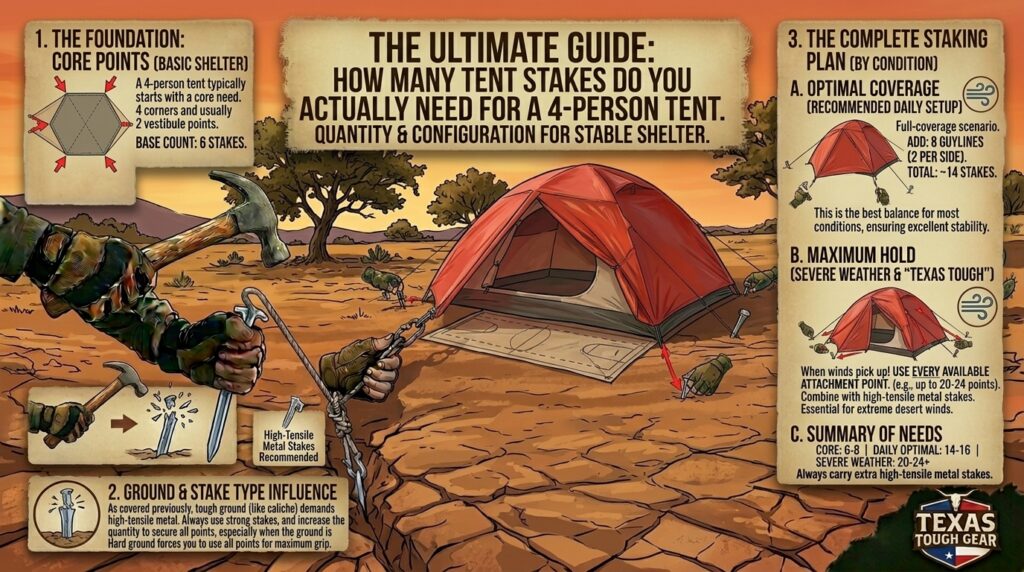
For a typical 4-person tent, most campers realistically use anywhere from:
- 4 stakes minimum
to - 12+ stakes for full stability
In this guide, we’ll break down:
- The minimum number of stakes needed
- The ideal number for real camping conditions
- When extra stakes matter
- Why many campers under-stake their tents
- How weather changes your setup
- Which stake points are most important
- What experienced campers usually do
- Common tent staking mistakes
- The best stake setups for different terrain
If you want your tent to stay standing through wind, rain, and real outdoor conditions, this article will help you understand exactly how many stakes your 4-person tent actually needs.
The Short Answer
For most standard 4-person tents:
- Absolute minimum: 4 stakes
- Recommended for normal camping: 6–8 stakes
- Ideal for wind and weather: 10–12 stakes
That surprises a lot of beginners.
Technically, many tents can stand with only a few corner stakes. But “standing” and “being properly secured” are two very different things.
Why Tent Stakes Matter More Than People Think
Tent stakes do much more than simply hold the tent down.
A properly staked tent helps:
- Maintain tent shape
- Stabilize poles
- Reduce fabric stress
- Prevent shifting
- Improve rainfly performance
- Increase wind resistance
Without enough stakes, even expensive tents become unstable.
Most 4-Person Tents Are Designed Around Multiple Stake Points
Modern 4-person tents usually include:
- Corner stake loops
- Vestibule stake points
- Rainfly tie-outs
- Guyline attachment loops
Manufacturers add these for a reason.
Every anchor point helps distribute tension across the structure.
Skipping too many of them reduces overall stability.
The Minimum: 4 Stakes
Technically, most freestanding 4-person tents can stand with just four stakes.
Usually these go at:
- The four main corners
This setup may work fine for:
- Calm weather
- Backyard camping
- Soft grass
- Short overnight trips
But there are limitations.
Problems With Only Using 4 Stakes
A four-stake setup often creates:
- Loose rainflies
- Poor ventilation
- Weak wind resistance
- Extra fabric flapping
- Less structural tension
In calm weather you may not notice much.
But once wind or rain shows up, the weaknesses become obvious quickly.
Why 6–8 Stakes Is More Realistic
For normal campground camping, most experienced campers use around:
- 6 to 8 stakes
This setup usually includes:
- 4 corner stakes
- 2 vestibule stakes
- Optional rainfly or side tie-outs
This creates a much more stable shelter overall.
Vestibule Stakes Matter More Than Beginners Realize
The vestibule is the covered storage area outside your tent door.
Without staking the vestibule:
- Rainfly tension becomes loose
- Water drainage suffers
- Wind movement increases
- Gear storage becomes awkward
Even two additional vestibule stakes can dramatically improve tent performance.
Wind Changes Everything
Wind is the biggest reason campers start using more stakes.
A tent that feels perfectly stable on a calm afternoon can become noisy, unstable, and stressed after dark when the wind picks up.
Strong wind creates pressure against:
- Tent walls
- Rainflies
- Poles
- Guylines
More stake points help spread that force evenly.
For Windy Conditions, 10–12 Stakes Is Smart
If you’re camping:
- Near the beach
- In open fields
- In the mountains
- In desert areas
- During storms
you’ll probably want:
- Every main stake point secured
- All guylines attached
- Extra reinforcement stakes
This often means using:
- 10 to 12 stakes total
Sometimes even more.
Why Guylines Are So Important
Guylines are often ignored by beginners.
Big mistake.
Guylines help:
- Reduce tent movement
- Stabilize poles
- Prevent collapse
- Improve rain shedding
- Reduce wind pressure
And every guyline usually needs its own stake.
Freestanding vs Non-Freestanding Tents
The type of tent also changes how many stakes you need.
Freestanding Tents
Freestanding tents use pole structures that support themselves.
These tents:
- Can stand without stakes temporarily
- Are easier to reposition
- Need fewer stakes in calm weather
Most family 4-person tents are freestanding.
Non-Freestanding Tents
Non-freestanding tents rely heavily on staking tension.
Without proper stakes:
- They collapse
- Lose shape
- Become unusable
These tents often require:
- Full staking setups
- Additional guylines
Weather Conditions Matter a Lot
The number of stakes you need changes depending on the forecast.
Calm Summer Camping
You may only need:
- 4–6 stakes
Moderate Wind or Rain
You’ll usually want:
- 8–10 stakes
Storm Conditions
Use:
- Every anchor point available
- Extra guylines
- Backup stakes
Snow Camping Requires Even More Anchoring
Winter camping often needs:
- Snow stakes
- Deadman anchors
- Additional guylines
Snow creates completely different anchoring challenges.
Ground Type Also Changes Your Setup
Terrain affects stake performance significantly.
Soft Grass
Soft grassy campsites usually require fewer reinforcement stakes because the ground grips well.
Sand
Beach camping often requires:
- Extra stakes
- Sand anchors
- Wider pegs
because normal stakes pull out easily.
Rocky Ground
Rocky terrain may force you to:
- Use fewer anchor points
- Improvise anchors
- Use rocks instead of stakes
Hard-Packed Dirt
Hard soil often requires:
- Stronger stakes
- Better stake placement
- More careful setup
Factory Stakes Are Usually Not Great
A lot of tents include low-quality stakes.
They are often:
- Thin
- Weak
- Lightweight
- Designed for basic use only
Many campers upgrade immediately.
Carry Extra Stakes Anyway
Even if your tent technically uses 8 stakes, experienced campers often carry:
- 10
- 12
- Or even 15 stakes
Why?
Because stakes get:
- Lost
- Bent
- Broken
- Left behind
And having extras is always useful.
What Most Experienced Campers Actually Do
Here’s the honest real-world answer:
Most experienced campers use more stakes than the minimum recommendation.
Why?
Because they’ve already learned the hard way what happens when weather changes unexpectedly at 2 a.m.
A properly staked tent:
- Sleeps quieter
- Handles wind better
- Leaks less
- Feels sturdier
And the extra few minutes during setup are absolutely worth it.
Which Stake Points Matter Most?
If you don’t have enough stakes, prioritize these areas first.
1. Tent Corners
Always secure the main corners first.
These provide the basic structure and footprint.
2. Vestibules
Vestibules improve rainfly tension and gear protection.
3. Windward Guylines
Stake the side facing incoming wind.
This helps reduce tent movement dramatically.
4. Rainfly Tie-Outs
These improve airflow and reduce fabric flapping.
Common Tent Staking Mistakes
A lot of staking problems come from setup mistakes rather than stake quantity.
Driving Stakes Straight Down
Tent stakes hold better when angled slightly away from the tent.
Not Tightening Guylines
Loose guylines reduce stability.
Using the Wrong Stakes for the Terrain
Different terrain needs different stake designs.
Ignoring Wind Direction
Tent orientation matters more than many beginners realize.
Not Fully Seating the Stakes
Shallow stakes pull out much more easily.
Best Tent Stakes for a 4-Person Tent
The right stakes depend on where you camp.
Steel Stakes
Best for:
- Rocky terrain
- Hard-packed dirt
- Windy campsites
Aluminum Stakes
Best for:
- Backpacking
- Lightweight camping
Sand Stakes
Best for:
- Beaches
- Loose soil
Titanium Stakes
Best for:
- Ultralight setups
- Long-distance backpacking
How Many Stakes Come With Most 4-Person Tents?
Most 4-person tents include:
- 8–12 stakes
But many campers don’t realize:
- Some are intended for optional guylines
- Some are backups
- Some are for vestibules only
Reading the tent instructions helps clarify intended anchor points.
Do You Always Need Every Stake?
Not necessarily.
If weather is calm and the campsite is protected, you may not need:
- Every guyline
- Every tie-out point
But when conditions get rough, full staking becomes much more important.
Better Staking = Better Sleep
This sounds funny until you experience it firsthand.
A properly staked tent:
- Moves less
- Makes less noise
- Feels more secure
- Handles storms better
Poor staking leads to:
- Loud flapping
- Pole stress
- Sleepless nights
Final Thoughts
So how many tent stakes do you actually need for a 4-person tent?
The realistic answer is:
- 4 stakes minimum
- 6–8 stakes for normal camping
- 10–12 stakes for serious weather or full stability
The exact number depends on:
- Your tent design
- Weather conditions
- Terrain
- Wind exposure
- How secure you want your setup to feel
While it may be tempting to use the bare minimum, most experienced campers quickly learn that a few extra stakes can make a huge difference in:
- Stability
- Comfort
- Wind resistance
- Overall camping safety
Because when the weather changes unexpectedly in the middle of the night, nobody ever says:
“I wish I had used fewer tent stakes.”