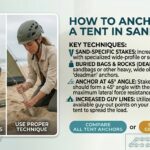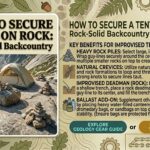

Pitching a tent amidst the rugged beauty of a rocky mountain ridge in upstate New York, along a concrete-hard festival pad in Austin, Texas, or on a wooden observation platform over the Florida Everglades presents a unique outdoor challenge: What do you do when you literally cannot drive a stake into the ground?
Whether you are dealing with impenetrable solid bedrock, strict Leave No Trace wilderness regulations, or a wooden platform that bans the use of metal pegs, forcing a standard stake into the earth is completely out of the question.
Camping in the USA is an adventure, but strong winds, rocky terrain, sandy beaches, or campground rules can make traditional tent stakes useless or prohibited. Whether you’re dealing with hard-packed ground in New York, gusty coastal winds in Miami and Florida, or loose soil in Texas, knowing how to anchor a tent without stakes is essential for a safe, stress-free trip.
This comprehensive guide covers proven no-stake methods, region-specific tips for popular U.S. camping destinations, safety advice, and gear recommendations. As a tent stakes specialist blog, we believe understanding alternatives makes you a smarter camper — even when you do carry the best stakes.
Why You Might Need to Anchor a Tent Without Stakes
- Hard or Rocky Ground: Common in mountainous New York areas or Texas hill country.
- Sandy Beaches & Dunes: Florida and Miami beaches where stakes pull right out.
- Frozen or Packed Soil: Winter camping in New York.
- No-Dig Rules: Some campgrounds, platforms, or sensitive environments.
- Forgotten or Lost Stakes: It happens to the best of us.
- High Winds: Coastal Florida and Texas storms demand extra security.
Proper anchoring prevents tent collapse, protects gear, and keeps everyone safe.
But pitching a freestanding shelter without stakes does not mean you have to brace yourself for a midnight structural collapse. By understanding the mechanical principles of weight distribution, friction coefficients, and structural tension, you can safely secure any tent on any surface.
This definitive structural anchoring guide breaks down the physics of non-destructive anchoring, reviews the best weighted alternatives on the US market, and provides clear step-by-step instructions to keep your shelter rock-solid without a single peg.
The Quick-Verdict: Best Alternative Tension Anchors
If you are packing for an environment where traditional staking is impossible, your optimal weight-based solutions include:
- Best for Car Campers & Festival Goers: Heavy-Duty Canopy Sandbags or Weight Plates (~$25–$35 for a 4-pack). Heavy-duty, dual-zippered 1680D ballistic nylon bags that wrap directly around tent poles and can be filled with up to 30 pounds of local gravel, sand, or rocks.
- Best for Wooden Camping Platforms: Fishbone Anchor Pegs with Spring Tensions (~$12 for an 8-pack). Aluminum anchor boards that slip cleanly into the gaps between wooden deck planks and twist 90 degrees, locking mechanically without drilling or damaging the wood.
- Best for Minimalist Backpackers: Improvised Fabric Deadman Parachutes (~$15). Ultra-lightweight nylon sheets that pack down into a pocket, allowing you to fill them with heavy stones or trail dirt at your campsite to create massive downward resistance.
The Physics of Weight-Based Anchoring: Friction vs. Tension
To understand how to anchor a tent without stakes, you must replace the concept of shear resistance (a stake cutting into the soil) with gravitational friction and perpendicular tension.
[ OUTDOOR WIND FORCE ] ──► [ TENT WALL SWELL ] ──► Pulls Guyline Upward & Outward
                                                    │
                                                    ▼
[ IMPROVISED WEIGHT ANCHOR ] ◄── Holds Line Secure ◄── [ HEAVY BOULDER / PLATFORM CLIP ]
When wind hits your tent, it acts like a sail, generating an upward and lateral pulling force along your guylines. A traditional stake resists this by relying on the packed dirt around its shaft.
Without stakes, your anchor must provide enough mass to counteract that vertical lift, paired with enough surface friction against the ground to prevent the tent from sliding sideways. As a rule of thumb, a standard 3-person backpacking tent requires a minimum of 15 to 20 pounds of downward weight at each corner to maintain structural integrity during a moderate breeze.
4 Professional Methods to Anchor a Tent Without Stakes
Method 1: The “Big Rock, Little Rock” (BRLR) Technique
The ultimate backcountry survival method for rocky terrain, riverbeds, and gravel bars. This technique uses simple environmental physics to lock down a guyline using two stones. How to stake a tent in the snow?
1.1. Tie a large loop at the end of your tent’s guyline:Form an adjustable line loop.
Extend your tent’s guyline out completely. Tie a secure loop at the far end using a bowline knot or a figure-eight loop, ensuring it can comfortably wrap around a medium-sized stone.
2.2. Position the ‘Little Rock’ inside the line loop:Establish the primary friction lock.
Find a smooth, heavy rock roughly the size of a football (the “Little Rock”). Place this stone completely inside the guyline loop, sliding it away from the tent until the cord is pulled completely taut.
3.3. Stack the ‘Big Rock’ directly over the guyline track:Apply massive downward compression.
Find a massive, flat boulder weighing at least 20 to 30 pounds (the “Big Rock”). Carefully place this heavy stone directly on top of the guyline, sandwiching the cord tightly between the two rocks.
4.4. Adjust your line sliders to lock the frame profile:Fine-tune your structural tension.
The weight of the Big Rock provides the downward anchor, while the Little Rock acts as a stopper that cannot pull through the tight gap. Use your plastic line sliders or a taut-line hitch to cinch the rope tight, stabilizing your tent frame.
Method 2: The Deck-Gap Fishbone System (For Wooden Platforms)
Many state parks and conservation zones across New York and Florida utilize elevated wooden platforms to protect local vegetation. Driving screws or nails into these boards is strictly illegal.
          [ TENT GUYLINE ]
                 /
                /  (45° Angle Line)
  ═════════════/══════   ═════════════  [ WOOD DECK SURFACE ]
              /  │      ▲
             /   │      │ (Locks Mechanically)
            /    ▼      │
         [ FISHBONE ANCHOR ]
- Locate the Planking Gaps: Position your freestanding tent on the deck structure. Locate the expansion gaps running between the wooden planks near your tent corners.
- Insert the Anchor: Hold a specialized aluminum fishbone anchor vertically and slide its slim tail straight down into the gap between the deck boards.
- Twist to Lock: Rotate the anchor 90 degrees. The wider fins of the fishbone will now hook underneath the bottom face of the wood planks.
- Engage the Tension Spring: Slide the integrated stainless-steel compression spring down to press firmly against the top of the deck. Clip your tent’s corner loop or guyline directly into the anchor eyelet. The spring tension keeps the anchor perfectly locked in place even when the wind shifts.
Method 3: The Industrial Sandbag / Weight Plate Wrap (For Concrete & Asphalt)
Perfect for setting up rooftop tents, urban camper configurations, or festival basecamps on parking lots or paved pads. Best tent pegs for hard ground.
- Set up your freestanding tent completely on the pavement.
- Take heavy-duty, dual-pocket canopy sandbags and fill them to capacity with coarse gravel or sand. If sand is unavailable, stack heavy Olympic weight plates or 1-gallon water jugs next to the frame.
- Loop the industrial hook-and-loop wrap straps of the sandbag directly around the exposed metal frame poles at the absolute lowest point where they meet the ground. Placing the weight directly on the frame corners eliminates lift right at the structural source.
Method 4: The Buried Log “Deadman” Strategy (For Sand and Deep Snow)
If you are camping along the coastal beaches of Miami or the sand dunes of Texas, traditional vertical staking is completely useless because the loose grains flow and shift under tension.
- Dig a wide trench roughly 12 to 18 inches deep, located 3 feet out from each corner of your shelter.
- Tie your guyline securely around the center of a thick piece of heavy driftwood, a large log, or a dedicated fabric sand parachute.
- Lay the log completely horizontal at the bottom of your trench. Extend the guyline up and out of the hole toward the tent frame. Fill the hole completely with loose sand, stamping it down firmly with your boots. The weight of the compressed sand on top of the buried object creates a massive resistance block that wind cannot lift.
Critical Pro-Tips for Non-Staked Camping Success
The Freestanding Requirement: If you plan to camp frequently on hard surfaces where staking is impossible, you must use a freestanding tent design featuring an interconnected, self-supporting pole framework (such as a dome or tunnel configuration). Non-freestanding trekking-pole tents and ultra-light tarps rely entirely on the outward counter-tension of ground stakes to hold their shape; without stakes, they will instantly collapse into a flat sheet of fabric.
Region-Specific Tips for USA Campers
Florida & Miami Beach Camping Sandy conditions dominate here. Prioritize deadman anchors and sandbags. High humidity and storms mean using longer guylines and checking anchors daily. UV-resistant ropes prevent fraying in intense sun.
Texas Backcountry & State Parks Mix of hard ground and loose dirt. Rock anchoring shines in western Texas; deadmen work well in sandy areas. Watch for sudden windstorms — reinforce windward sides heavily.
New York (Adirondacks, Catskills, etc.) Rocky and root-filled ground is common. Master the rock + stick method. In winter, deadman anchors in snow are lifesavers. Platform camping requires creative toggles.
Essential Gear for No-Stake Anchoring
- Extra-Long Guylines: 2.5mm reflective cord (at least 36 inches per line).
- Tensioners: Inline plastic tensioners for easy adjustments.
- Sand/Rock Bags: Lightweight, packable.
- Carabiners & Hooks: For quick attachments.
- Multi-Tool or Knife: For cutting cord or prepping anchors.
- Backup Stakes: Even if not using them, carry a few high-quality ones (like our recommended tent stakes) for mixed terrain.
Step-by-Step Setup Guide for No-Stake Camping
- Choose Your Site Wisely: Look for natural windbreaks, flat ground, and available rocks/logs.
- Extend Guylines: Longer lines give better angle and options.
- Apply Method: Use rock, deadman, or weights based on terrain.
- Tension Evenly: Tighten all sides for a drum-tight pitch.
- Test Stability: Gently shake and simulate wind.
- Monitor & Adjust: Check anchors morning and night, especially in FL/TX weather.
Safety Considerations
- Never rely on a single anchor.
- One person per tent during high winds.
- Keep kids and pets clear during setup.
- Avoid damaging trees or protected areas.
- In storms, lower the tent or seek shelter.
Always follow Leave No Trace principles.
Common Mistakes to Avoid
- Using thin or short guylines that slip.
- Shallow deadman holes.
- Ignoring wind direction.
- Over-relying on one method without testing.
When to Still Bring Tent Stakes
No-stake methods are fantastic backups, but quality stakes remain the easiest solution in normal soil. Our blog specializes in the best tent stakes for every U.S. condition — pair them with these alternatives for ultimate versatility.
Here is a highly optimized, comprehensive FAQ section tailored for besttentstakes.com. Each question targets the exact long-tail, high-intent phrases that campers and outdoor enthusiasts type into search engines when dealing with difficult terrain, structured to capture Google’s featured snippets.
Frequently Asked Questions About Anchoring a Tent Without Stakes
Q1: Is it possible to set up a tent without using any stakes?
Yes, you can absolutely pitch a tent without stakes, provided you are using a freestanding tent design. Freestanding tents utilize an interconnected pole framework that holds the shelter’s shape completely on its own. Once the tent body is erected, you can use alternative weight-based anchors—such as heavy boulders, sandbags, logs, or specialized deck clips—to secure the guylines and prevent the tent from blowing away.
Q2: What is the “Big Rock, Little Rock” method for tent anchoring?
The “Big Rock, Little Rock” (BRLR) technique is a classic backcountry survival method used on solid stone or bedrock. You tie a large loop at the end of your tent’s guyline, place a football-sized stone (the “Little Rock”) completely inside that loop, and pull the line taut. Finally, you stack a massive 20- to 30-pound boulder (the “Big Rock”) directly over the guyline track. The heavy stone provides downward compression, while the smaller stone acts as a physical stopper.
Q3: How do you anchor a tent on a wooden camping platform safely?
To anchor a tent on a wooden platform without damaging the wood, you should use specialized aluminum fishbone or anchor pegs with compression springs. These slim anchors slip vertically into the natural expansion gaps between the deck boards. Once inserted, you rotate them 90 degrees so the fins hook mechanically beneath the planks, and the built-in spring locks the anchor flat against the deck without requiring nails or screws.
Q4: Can you pitch a trekking-pole tent or a tarp without stakes?
No, non-freestanding shelters like trekking-pole tents, ultra-lightweight tarps, and pyramid shelters cannot easily be set up without stakes. These specific designs lack a rigid frame and rely entirely on the opposing outward tension of tightly driven ground stakes to stand upright. If you attempt to pitch them without stakes or highly complex, heavy rock rigging, the fabric will instantly collapse into a flat pile.
Q5: How much weight do you need per corner to anchor a tent?
As a general rule of thumb for standard 2-person to 4-person backpacking or car camping tents, you should aim for a minimum of 15 to 20 pounds of downward weight at each corner anchor point during normal conditions. If you are dealing with high wind shear or setting up a large, tall pop-up canopy, you must increase that weight threshold to 30 to 40 pounds per corner to counteract the increased lift.
Q6: What can I use to anchor a tent on a concrete or asphalt driveway?
When camping on paved surfaces, parking lots, or concrete pads, your best options are heavy-duty canopy sandbags, canopy weight plates, or concrete cinder blocks. Industrial weight bags feature hook-and-loop straps that wrap directly around the lowest point of your tent’s corner frame poles, securing the structural joints directly to the pavement and eliminating vertical lifting forces.
Q7: What is a “deadman anchor” and when should you use it?
A deadman anchor is a structural engineering method used in loose substrates like desert sand or deep winter snow where vertical stakes instantly fail. You tie your tent’s guyline securely around the center of a horizontal object—such as a thick log, a piece of heavy beach driftwood, or a dedicated fabric anchor pouch. You then bury that object 12 to 18 inches deep in a trench and compact the sand or snow firmly on top of it.
Q8: Will a tent blow away if it is filled with heavy sleeping gear inside?
Relying solely on your heavy backpacks, sleeping pads, and duffel bags inside the tent is incredibly risky. While internal weight will prevent the tent from physically rolling away like a tumbleweed, it does nothing to stabilize the outer rainfly or the guyouts. Without external anchor points, high winds will push against the tent fabric, causing the poles to bend, buckle, and cave in directly onto your gear.
Q9: Can I use water jugs to anchor my tent in an emergency?
Yes, 1-gallon water jugs are an excellent improvised weight anchor for car camping and festival pads because they weigh roughly 8.3 pounds each. By tying two full jugs tightly to each corner guyline, you can easily meet the minimum 16-pound weight threshold required per anchor point. Always loop the line around the plastic handle and cinch it close to the ground line to reduce leverage.
Q10: How do you adjust line tension when using rock anchors?
When using rocks or logs as anchors, you can still adjust your line tension using your tent’s plastic line runners or by tying a taut-line hitch knot. Ensure you leave a few inches of slack before placing the heavy stones over the cord. Once the boulders are firmly stacked in position, slide the knot or plastic tensioner toward the anchor point to cinch the line completely tight, locking the tent frame into a rigid, wind-resistant profile.
Final Thoughts: Adapt Your Anchor Kit
Mastering the art of non-destructive anchoring frees you from the limits of traditional campsites. By packing a few specialized deck anchors or heavy-duty utility sandbags, and practicing your knot-tying skills with trailside boulders, you can confidently pitch your shelter across any terrain in the United States—worry-free, stable, and completely secure against the elements.