

How to Keep Tent Stakes in the Ground: The Ultimate Giant Guide for Secure Camping
Few camping problems are more frustrating than tent stakes pulling out of the ground in the middle of the night. How to keep tent stakes in the ground? One strong gust of wind, one loose campsite setup, or one poorly placed stake can suddenly turn a peaceful camping trip into chaos.
Your tent begins flapping violently.
Guylines loosen.
Tent corners lift.
Rain enters the shelter.
Poles bend under pressure.
In extreme weather, weak tent anchoring can even destroy a tent completely.
That is why learning how to keep tent stakes firmly in the ground is one of the most important camping skills every outdoor enthusiast should master.
Whether you are:
- Backpacking in the mountains
- Camping on rocky ground
- Pitching on sand
- Setting up in high wind
- Camping on hard-packed soil
- Sleeping in rainy conditions
proper stake placement and anchoring techniques make a massive difference.
This guide explains everything you need to know about:
- How to keep tent stakes in the ground
- Best tent stake angles
- Stake types
- Ground conditions
- Wind-resistant camping setups
- Sand anchoring methods
- Rocky terrain solutions
- Guyline tension
- Common staking mistakes
- Heavy-duty tent anchoring
- Tent stability
- Storm camping techniques
- Best tent stakes for difficult terrain
- Emergency anchor solutions
- Camping safety tips
By the end of this guide, you will know exactly how to secure your tent properly in almost any environment.
Why Tent Stakes Pull Out of the Ground
Understanding the problem is the first step.
Tent stakes usually fail because of:
- Poor soil grip
- Incorrect angle placement
- Weak stakes
- High wind pressure
- Loose guylines
- Shallow insertion
- Wrong stake type for terrain
Many beginners assume all stakes work the same way. In reality, ground conditions completely change tent anchoring performance.
Why Proper Tent Anchoring Matters
Secure stakes protect:
- Your tent structure
- Tent poles
- Waterproofing
- Interior gear
- Sleeping comfort
- Overall campsite safety
Strong anchoring becomes even more critical during:
- Storms
- Heavy wind
- Rain
- Mountain camping
The Physics Behind Tent Stakes
Tent stakes resist force in several directions:
- Upward pull
- Sideways tension
- Twisting pressure
Wind constantly transfers energy into:
- Tent fabric
- Poles
- Guylines
- Stakes
A properly placed stake spreads these forces efficiently into the ground.
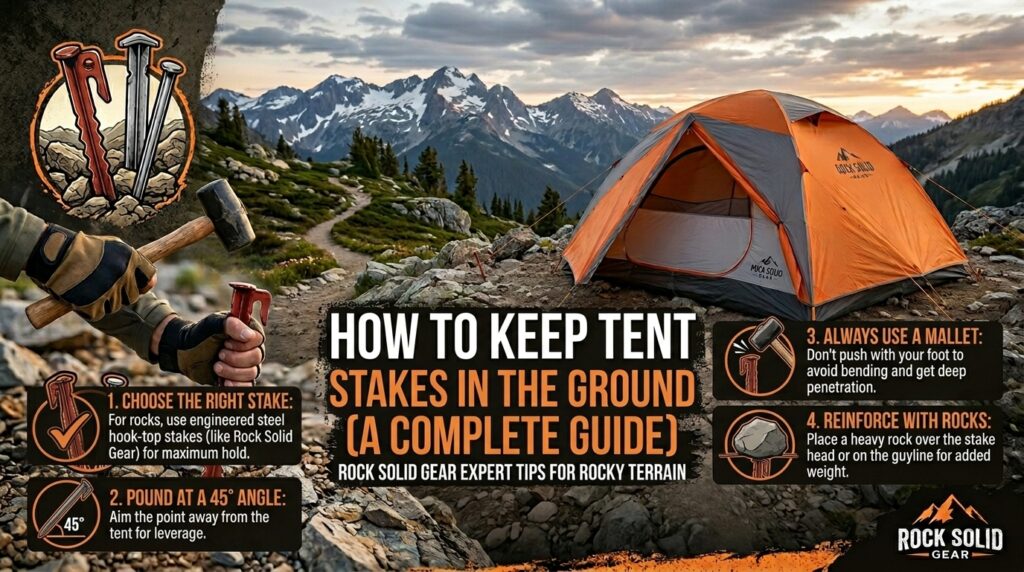
The Most Important Rule: Stake Angle Matters
One of the biggest beginner mistakes is placing stakes straight down vertically.
Vertical stakes pull out much easier.
The best angle is usually:
- About 45 degrees away from the tent
This creates stronger resistance against tension.
Why the 45-Degree Angle Works
At this angle:
- Ground pressure increases
- Pullout resistance improves
- Force distributes more effectively
This dramatically increases holding strength.
Use the Right Tent Stakes for the Terrain
Different surfaces require different stakes. There is no perfect universal tent stake.
Best Stakes for Soft Soil
Soft soil requires:
- Larger surface area
- Better grip
Best options:
- Y-stakes
- V-stakes
- Wide aluminum stakes
Best Stakes for Rocky Ground
Your tent begins flapping violently. You should choose the best tent stakes for rocky ground.
Rocky terrain requires:
- Strength
- Penetration ability
Best choices:
- Steel nail stakes
- Titanium nail stakes
Best Stakes for Sand
Sand requires:
- Extra-long stakes
- Wide profiles
Special sand stakes work best.
Best Stakes for Snow
Snow requires:
- Deadman anchors
- Snow stakes
- Buried anchor systems
Cheap Tent Stakes Cause Major Problems
Many factory stakes are low quality.
Common issues:
- Bending
- Poor grip
- Weak materials
- Small surface area
Experienced campers often replace included stakes immediately.
Why Stake Length Matters
Longer stakes usually provide:
- Better grip
- More holding power
- Greater wind resistance
However, extremely long stakes may struggle in rocky terrain.
How Deep Should Tent Stakes Go?
Ideally:
- Most of the stake should enter the ground
- Only the hook or head remains visible
Shallow stakes pull out much more easily.
Proper Guyline Tension Is Critical
Many people over-tighten guylines.
This creates:
- Excessive tension
- Higher pull force
- Increased stake failure risk
Your tent should feel:
- Secure
- Balanced
- Slightly flexible
not stretched like a drum.
How Wind Affects Tent Stakes
Wind creates constant dynamic pressure.
This pressure changes:
- Direction
- Strength
- Frequency
Loose stakes gradually wiggle free under repeated stress.
Windward Side Reinforcement
The side facing the wind needs extra attention.
Use:
- Stronger stakes
- Additional guylines
- Double anchoring
on wind-facing corners.
Double Staking Technique
Double staking improves holding power significantly.
How it works:
- Place primary stake normally
- Add second stake behind it
- Connect stakes together
This distributes force across multiple anchors.
Cross-Staking Method
Some campers cross two stakes in an X-pattern.
Benefits:
- Increased resistance
- Better grip in loose soil
This method works especially well in:
- Sand
- Soft dirt
- Wet ground
How to Keep Tent Stakes in Loose Soil
Loose soil creates weak friction.
Solutions:
- Longer stakes
- Wider stakes
- Deeper insertion
- Cross staking
Wet soil may initially hold well but loosen over time.
Wet Ground Challenges
Rain changes soil structure dramatically.
Problems include:
- Mud softening
- Stake movement
- Reduced friction
Monitor stakes after heavy rain.
Dry Hard Ground Problems
Hard-packed dirt resists penetration.
Solutions:
- Steel nail stakes
- Pre-wetting soil
- Twisting insertion
- Mallet use
Using a Tent Stake Mallet
A mallet improves:
- Control
- Precision
- Safety
Avoid using feet aggressively because:
- Stakes may bend
- Injuries can occur
Rocks as Natural Anchors
When stakes fail, rocks become extremely useful.
You can:
- Tie guylines around rocks
- Stack rocks over stakes
- Use boulders as anchor points
This works especially well above tree line.
The Rock-on-Stake Method
Place a heavy rock over:
- Stake heads
- Guyline anchor points
This reduces pullout movement.
Deadman Anchors Explained
Deadman anchors work by burying an object horizontally.
Common deadman materials:
- Sticks
- Logs
- Stuff sacks filled with dirt
- Rocks
This method works well in:
- Sand
- Snow
- Loose terrain
How to Make a Deadman Anchor
- Dig a horizontal trench
- Tie guyline to buried object
- Bury object securely
- Pack soil tightly
The buried object resists pull much better than a vertical stake.
Sand Camping Requires Special Techniques
Sand is notoriously difficult for tents.
Regular stakes pull out easily because sand shifts constantly.
Best Ways to Anchor in Sand
Use:
- Sand stakes
- Deadman anchors
- Buried bags
- Driftwood anchors
Longer and wider anchors work best.
Snow Camping Anchoring Tips
Snow behaves differently from dirt.
You often need:
- Buried anchors
- Snow stakes
- Packed snow trenches
Regular stakes usually fail in deep snow.
Rocky Ground Challenges
Rocky terrain prevents deep penetration.
Solutions:
- Move stakes slightly
- Use cracks between rocks
- Combine stakes with rock anchors
Never force stakes aggressively against solid rock.
How to Prevent Stake Bending
Avoid:
- Excessive hammer force
- Thin cheap stakes
- Poor angles
Use stronger materials like:
- Steel
- Titanium
Best Materials for Tent Stakes
Steel Stakes
Advantages:
- Extremely strong
- Great penetration
- Durable
Disadvantages:
- Heavy
Best for:
- Car camping
- High wind
- Rocky terrain
Titanium Stakes
Advantages:
- Lightweight
- Strong
- Corrosion resistant
Disadvantages:
- Expensive
Best for:
- Backpacking
- Rocky ground
- Long hikes
Aluminum Stakes
Advantages:
- Lightweight
- Affordable
Disadvantages:
- Some bend easily
Best for:
- Moderate conditions
- General camping
Why Stake Shape Matters
Shape affects:
- Grip
- Stability
- Penetration
Y-Stakes
Excellent:
- Holding power
- Wind resistance
Nail Stakes
Excellent:
- Penetration
- Hard ground performance
V-Stakes
Good balance between:
- Weight
- Grip
- Durability
Shepherd Hook Stakes
Simple but weaker.
Best for:
- Mild conditions only
Tent Positioning Helps Too
Where you place your tent affects stake performance.
Avoid:
- Loose sand pockets
- Muddy depressions
- Exposed wind tunnels
Choose:
- Firm level ground
- Natural wind protection
Use Natural Windbreaks
Windbreaks reduce stress on stakes.
Examples:
- Trees
- Hills
- Large rocks
- Bushes
Less wind means less pull force.
Low Tent Profiles Handle Wind Better
Lower tents catch less wind.
This reduces:
- Stake stress
- Pole pressure
- Fabric flapping
Proper Tent Orientation Matters
Face the smallest side of the tent toward the wind.
This improves:
- Aerodynamics
- Stability
- Stake performance
Guylines Are Extremely Important
Many campers ignore guylines.
Big mistake.
Guylines:
- Spread tension
- Stabilize poles
- Reduce stake stress
Use all guylines during windy weather.
Adjustable Guylines Improve Stability
Adjustable tension allows:
- Fine-tuning
- Weather adaptation
- Better balance
Reflective Guylines Increase Safety
Reflective lines reduce:
- Nighttime tripping
- Campsite accidents
Small upgrade — huge benefit.
How Often Should You Check Stakes?
Check stakes:
- After strong wind
- After rain
- Before sleeping
- During storms
Loose stakes worsen over time.
Common Beginner Tent Staking Mistakes
1. Using All Vertical Stakes
Reduces holding power dramatically.
2. Ignoring Wind Direction
Creates unnecessary stress.
3. Over-Tightening Tent Fabric
Causes excessive pull force.
4. Using Tiny Cheap Stakes Everywhere
Wrong stakes fail quickly.
5. Skipping Guylines
Weakens overall structure.
Why Tent Stakes Matter More Than Many Campers Realize
Tent stakes seem small, but they protect:
- Shelter stability
- Weather resistance
- Sleep quality
- Gear safety
They are critical structural components.
Emergency Tent Anchoring Solutions
If stakes fail completely, improvise using:
- Rocks
- Logs
- Trees
- Buried gear bags
Outdoor adaptability matters.
Backpacking vs Car Camping Stake Strategies
Backpackers
Need:
- Lightweight systems
- Multi-use gear
- Compact storage
Titanium often dominates.
Car Campers
Can prioritize:
- Strength
- Heavy-duty anchors
- Larger stakes
Steel becomes more practical.
High Wind Camping Tips
In strong wind:
- Use every guyline
- Double-stake corners
- Add rock reinforcement
- Lower tent profile
- Tighten gradually
Storm Preparation Matters
Prepare before weather arrives.
Do not wait until:
- Stakes loosen
- Rain begins
- Wind intensifies
Preventive setup saves gear.
Why Good Campsite Selection Solves Many Problems
The best staking strategy begins before pitching the tent.
Choose sites with:
- Firm soil
- Natural protection
- Good drainage
Avoid exposed open areas during unstable weather.
Multi-Day Camping Requires Stronger Anchoring
Longer trips increase exposure to:
- Changing weather
- Soil shifting
- Wind stress
Secure anchoring becomes even more important.
Winter Freeze-Thaw Problems
Frozen ground may loosen during warming.
Monitor stake stability carefully in changing temperatures.
Tent Stake Pullers Save Time
Stake pullers help remove deeply anchored stakes without damage.
Especially useful for:
- Steel stakes
- Hard-packed ground
Stake Storage Tips
Store stakes:
- Clean
- Dry
- Organized
Bent or dirty stakes degrade faster.
Should You Carry Extra Tent Stakes?
Absolutely.
Extra stakes provide:
- Backup anchors
- Emergency replacements
- Storm reinforcement
Experienced campers rarely carry only the exact number needed.
Best Overall Strategy for Keeping Tent Stakes Secure
The strongest setups combine:
- Proper angle placement
- Terrain-specific stakes
- Correct tension
- Wind awareness
- Reinforcement methods
No single trick solves everything.
Final Thoughts: How to Keep Tent Stakes in the Ground
Keeping tent stakes secure is one of the most important skills in camping. A properly anchored tent protects you from:
- Wind
- Rain
- Structural failure
- Sleepless nights
The most effective strategies include:
- Using the correct stake type
- Angling stakes properly
- Applying balanced guyline tension
- Reinforcing anchors in difficult terrain
- Adapting to weather and soil conditions
For most campers, the biggest improvements come from:
- Replacing cheap factory stakes
- Learning proper stake angles
- Using guylines correctly
- Matching stakes to terrain
Remember:
A tent is only as strong as its anchors.
Even the most expensive tent can fail if the stakes pull loose during bad weather.
But with the right techniques and equipment, you can create a secure campsite capable of handling:
- Rocky ground
- Loose soil
- Sand
- Wind
- Rain
- Mountain environments
And once you master proper tent anchoring, camping becomes:
- Safer
- More comfortable
- More reliable
- Far less stressful
Because nothing feels better than hearing strong wind outside your tent — while knowing your shelter is firmly secured to the ground.