

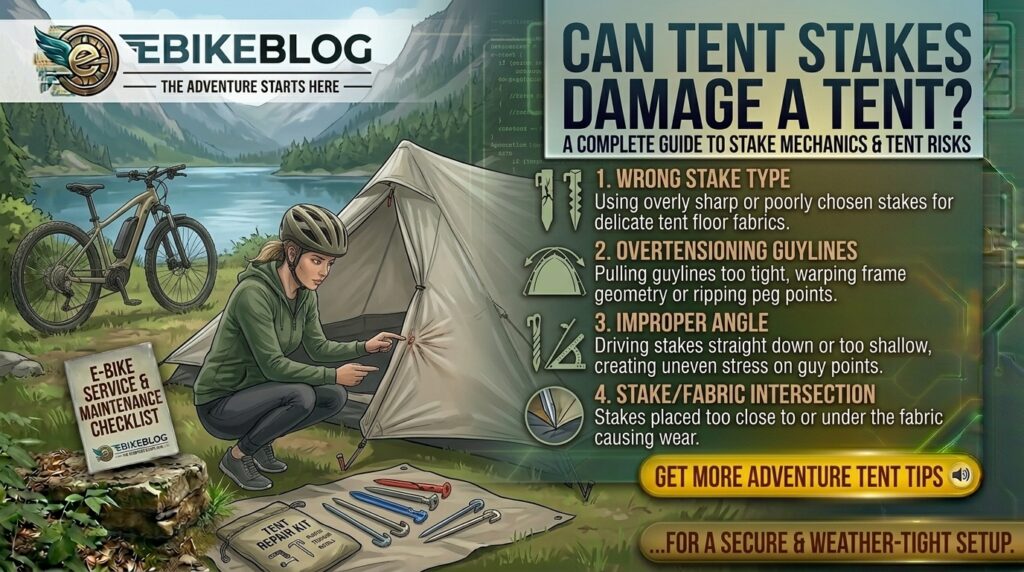
The Hidden Dangers and How to Avoid Them: Can Tent Stakes Damage a Tent?
When you pack up your gear for a weekend getaway in the American backcountry, your primary focus is usually on staying warm, dry, and comfortable. You pitch your tent, hammer down the stakes, and settle in for the night.
But could those little pieces of metal or plastic holding your shelter to the earth actually be destroying your expensive gear?
The short answer is yes, tent stakes can absolutely damage a tent. While stakes are essential for structural integrity, improper selection, poor driving angles, bad wind management, and careless packing cause thousands of ruined tents every camping season.
In this ultimate guide, we explore how stakes can damage tents, common mistakes, prevention strategies, the best stakes for different terrains, and expert tips to protect your investment while enjoying safe, comfortable camping.
How Tent Stakes Can Damage a Tent
While stakes themselves don’t directly “stab” the tent fabric in normal use, several scenarios lead to rips, tears, abrasion, or structural stress:
- Improper Driving Technique Using rocks or excessive force to hammer stakes bends them, causing sharp edges or points that can snag guy lines or tent fabric. Overly aggressive pounding can also stress attachment points.
- Pulling or Yanking Guy Lines Strong winds or poor staking cause stakes to loosen and pull out suddenly. This jerks the tent fabric, potentially tearing grommets, seams, or stake loops.
- Sharp or Damaged Stakes Bent, burred, or broken stakes create sharp points that abrade fabric over time, especially during setup/teardown or in windy conditions.
- Wrong Stake Type or Placement Using heavy steel stakes in soft ground or forcing thin aluminum stakes into rocky soil increases bending risk and uneven tension that strains the tent body.
- Tripping Hazards & Accidental Damage Stakes left protruding can be tripped over, pulling the tent sideways and ripping attachment points. Pets or kids running around camp add risk.
- Rocky or Hard Ground Issues Stakes hitting underground rocks can bend and shift, creating sideways pressure on the tent.
Real-world reports from campers show that most damage occurs from poor technique or low-quality stock stakes that come with new tents.
Whether you are using a budget-friendly starter tent or a high-end $600 ultralight backpacking shelter from brands like Big Agnes or REl, understanding how stakes interact with fabric can save you from a catastrophic shelter failure mid-trip. This comprehensive guide breaks down exactly how tent stakes cause damage, how to prevent it, and how to choose the safest stakes for your tent layout.
The 4 Ways Tent Stakes Accidentally Damage Your Tent
Tent stake damage rarely happens because of a product defect; it usually happens due to a combination of environmental stress and human error. Here are the four primary culprits.
1. The Puncture Hazard During Packing and Storage
The most common way stakes damage a tent doesn’t even happen while the tent is pitched. It happens inside your backpack or storage bin.
Many campers throw their dirty, sharp aluminum or titanium V-stakes directly into the main tent duffel bag. As you hike, compress your pack, or stack heavy bins in your garage, those sharp stake edges grind against the delicate polyurethane-coated nylon or polyester rainfly. The result? Micro-punctures and tears that transform your waterproof shelter into a leaky sieve the next time it rains.
2. High-Wind Friction and Fabric Chafing
When heavy winds hit your campsite, your tent fabric shifts, flaps, and vibrates intensely. If your guy lines (the stabilizing cords) are tied incorrectly or if the tent stake loop is rubbing directly against a sharp metal stake head, the constant sawing action can quickly chafe through the webbing loops or tear the lower eyelets clean off the tent body.
3. Over-Tensioning and Fabric Stress Tears
Modern ultralight tents rely on precise tension distribution. If you use a heavy mallet to violently yank guy lines taut over an awkwardly placed stake, you place uneven, concentrated stress on a single seam. Over time, this stress causes the waterproof seam tape to pull away, leading to long-term fabric warping or immediate stitching failure.
4. Tripping Accidents and “Pop-Out” Tears
We have all done it—stumbling around a dark campsite at night and catching a boot on a guy line. When a human body trips over a taut line, the sudden force can rip the stake right out of the dirt. As the stake flies upward, it can launch directly into the mesh wall or rainfly of your tent, causing an instant, jagged tear.
How to Prevent Tent Stake Damage
Protecting your tent from stake damage comes down to practicing smart site management and using the correct packing discipline.
1.Isolate Your Stakes Completely:Prevention Step 1.
Never let raw stakes touch your tent fabric during transit. Always clean your stakes and place them inside a dedicated, heavy-duty canvas or thick nylon stake pouch before sliding them into your tent bag. Keep the stake bag completely separate from the rolled-up tent body inside your backpack.
2.Master the 45-Degree Staking Angle:Prevention Step 2.
Never drive your stakes straight down into the ground vertically, and never angle them toward the tent. Drive your stakes into the dirt at a 45-degree angle pointing away from the tent. This provides maximum holding power and ensures the smooth part of the stake shaft bears the tension, rather than a sharp hook edge cutting into the loop.
3.Incorporate Shock Chords (Tensioners):Prevention Step 3.
If you camp in high-wind regions like the US Pacific Northwest or desert canyons, attach elastic rubber shock cords between your tent loops and the stakes. These loops act like a car’s suspension system, absorbing violent wind gusts so the raw pulling force doesn’t snap your tent seams.
4.Make Your Stakes Visible at Night:Prevention Step 4.
To prevent dangerous tripping accidents that rip fabric, replace standard gray guy lines with highly reflective utility cord. Additionally, you can slide cheap, glow-in-the-dark silicone stake caps over the exposed metal heads so they are clearly visible under headlamp beams.
Tent Stake Comparison: Safety vs. Holding Power
Different stake designs present varying levels of risk to your tent fabric. Choosing the right shape for your terrain minimizes wear and tear.
| Stake Type | Profile Shape | Best Terrain | Risk Level to Tent Fabric |
| Shepherd’s Hook | Round Wire (J Shape) | Firm soil, grassy parks | Low — Smooth, rounded top edges mean zero sharp friction points against your fabric loops. |
| Y-Beam / V-Angle | Three-sided or Tri-blade | Loose soil, hardpack dirt | Medium — Incredible holding power, but the stamped metal top notches can have sharp edges if bought from cheap brands. |
| Heavy-Duty Steel Pegs | Large Spike | Rocky soil, gravel, desert | Medium — Heavy and blunt, but if driven poorly, they can easily crush fabric eyelets under mallet blows. |
| Sand/Snow Anchors | Wide, perforated plate | Soft sand, winter snow | Low-Medium |
🛠️ Pro-Tip: How to Instantly Fix a Sharp Stake Edge
Cheap aluminum stakes often leave factory stamping lines or sharp burrs right inside the notch where your tent cord sits. Before taking new budget stakes out into the backcountry, take a piece of fine-grit sandpaper or a metal file and lightly smooth down the inner edges of the notches. This tiny 5-minute DIY hack eliminates fabric chafing entirely.
Summary Troubleshooting Checklist
| Problem Scenario | Root Cause | Immediate On-Site Fix |
| Stake loop is fraying | Sharp metal notch rubbing under wind load | Wrap the top of the stake in duct tape, or use an extension cord to distance the loop from the peg. |
| Stake keeps pulling out | Soil is too loose or rocky | Place a large, heavy rock directly on top of the buried stake body to anchor it down securely. |
| Seam pulling/Stretching | Over-tightened guy lines | Slacken the tension adjusters slightly; a tent should be taut, not stretched to its absolute physical limits. |
Common Mistakes That Lead to Damage
- Relying on cheap stock stakes that bend easily.
- Inconsistent tension across all points.
- Leaving the tent unstaked when away from camp.
- Storing dirty or bent stakes with the tent.
- Ignoring terrain-specific needs (e.g., beach camping without proper anchors).
Maintenance & Inspection Routine
After every trip:
- Inspect stakes for bends, burrs, or damage.
- Straighten or replace as needed.
- Clean and dry everything before packing.
- Check tent fabric, seams, and attachment points for early wear.
Alternatives to Traditional Stakes
- Deadman Anchors: Bury rocks, logs, or sandbags for fragile ground.
- Rock Anchors: Tie to large stable rocks (pad lines to prevent abrasion).
- Screw Stakes / Auger Anchors: Excellent for hard or sandy soil.
- Freestanding Tents: Require fewer stakes but still benefit from guylines in wind.
Benefits of Proper Staking
- Better weather resistance (wind, rain, snow).
- Improved ventilation and interior space.
- Longer tent lifespan.
- Safer camping experience for the whole family.
At besttentstakes.com — your go-to resource for camping gear and outdoor adventures in the USA. Check out our other guides:
Best Tent Stakes for Rocky Ground
How to Choose the Right Tent Footprint
Essential Camping Gear Checklist for Beginners
Tent Setup Tips for Windy Campsites
Beach Camping Guide: Securing Your Tent in Sand
This article is for informational purposes. Always follow manufacturer guidelines for your specific tent model and practice Leave No Trace principles.
Final Thoughts: Treat Your Shelter with Care
Your tent is your primary line of defense against the elements. While tent stakes are small, unassuming pieces of plastic or metal, neglecting how they interact with your tent’s fabric can lead to an expensive, wet, and miserable camping experience.
By investing in a dedicated stake storage bag, smoothing out sharp cheap edges, and driving your stakes at a defensive 45-degree angle, you ensure your shelter remains completely undamaged, stable, and ready to protect you for years of outdoor adventures.