
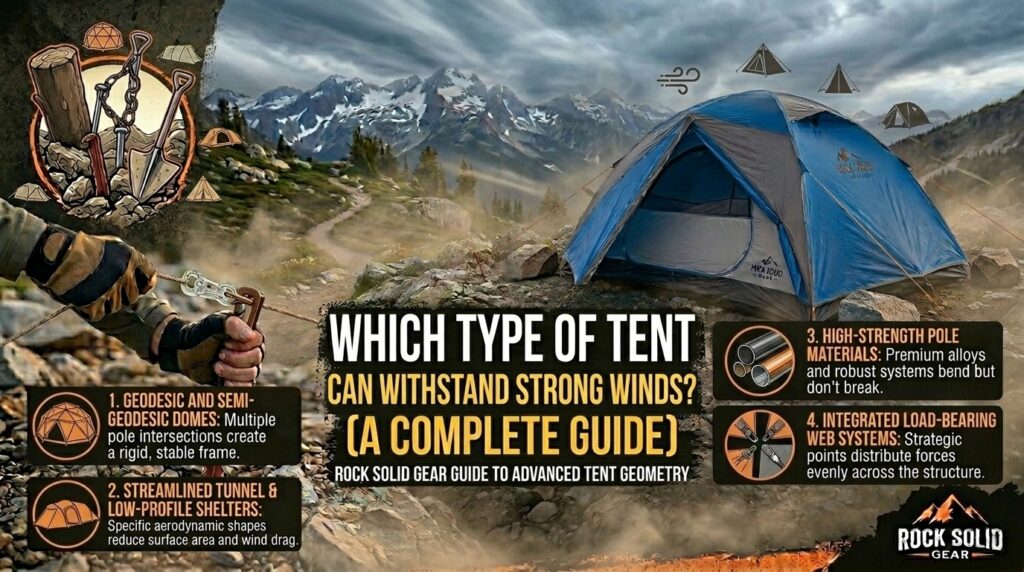
Which Type of Tent Can Withstand Strong Winds? The Ultimate Giant Guide for your travelling.
Camping in windy conditions can be one of the most challenging outdoor experiences. Calm weather can change rapidly in mountains, deserts, beaches, forests, and open landscapes. A tent that performs perfectly in mild conditions may suddenly become unstable when strong gusts begin hitting the campsite.
That is why many campers ask an extremely important question:
Which type of tent can actually withstand strong winds?
The answer depends on several critical factors:
- Tent shape
- Pole structure
- Tent height
- Aerodynamics
- Materials
- Guyline systems
- Stake strength
- Tent orientation
- Setup quality
Some tents are specifically engineered to survive:
- Mountain storms
- Coastal wind
- Heavy rain
- Snow pressure
- Extreme weather conditions
Others are designed mainly for:
- Comfort
- Space
- Family camping
- Mild weather
Choosing the wrong tent for windy environments can lead to:
- Broken poles
- Torn fabric
- Pulled-out stakes
- Sleepless nights
- Dangerous camping conditions
This guide explains everything you need to know about:
- Best tents for strong wind
- Wind-resistant tent designs
- Geodesic tents
- Dome tents
- Tunnel tents
- Cabin tents
- Mountaineering tents
- Tent aerodynamics
- Pole strength
- Guyline systems
- Windproof camping tips
- Best tent materials
- High-wind camping safety
- Tent setup techniques
- Backpacking tents vs family tents
- Four-season tents
- Common wind camping mistakes
By the end of this guide, you will understand exactly which type of tent performs best in strong winds and how to choose the safest shelter for your camping adventures.
Why Wind Is So Dangerous for Tents?
Wind creates enormous pressure on tents.
A tent behaves almost like a sail. As wind pushes against the fabric:
- Pressure transfers into poles
- Stakes experience pulling force
- Guylines tighten
- Tent walls flex repeatedly
Strong gusts create constant structural stress.
If a weak point fails:
- Poles may snap
- Stakes may pull out
- Rainflies may tear
- Entire tents may collapse
That is why wind resistance matters far more than many beginner campers realize.
What Makes a Tent Wind Resistant?
Several features determine whether a tent can survive strong wind.
The most important factors include:
- Low-profile design
- Aerodynamic shape
- Strong pole structure
- Reinforced fabric
- Multiple guylines
- Secure stake points
- Durable materials
No single feature guarantees wind resistance. The best tents combine all of these elements together.
The Most Wind-Resistant Tent Type: Geodesic Tents
Geodesic tents are widely considered the strongest tent design for extreme wind.
These tents use:
- Multiple intersecting poles
- Triangular support structures
- Reinforced geometry
This creates exceptional stability.
Why Geodesic Tents Handle Wind So Well
The intersecting pole design distributes pressure evenly across the structure.
Advantages:
- High structural strength
- Excellent wind resistance
- Better snow load handling
- Reduced pole stress
These tents are commonly used for:
- Mountaineering
- Alpine expeditions
- Harsh weather camping
Geodesic Tent Disadvantages
Although extremely strong, geodesic tents also have drawbacks.
Disadvantages:
- Heavier weight
- Higher cost
- More complicated setup
- Less interior space efficiency
Still, for severe weather, they are among the safest options available.
Semi-Geodesic Tents
Semi-geodesic tents use fewer crossing poles than full geodesic designs.
Advantages:
- Strong wind resistance
- Lighter weight
- Easier setup
These offer a balance between:
- Stability
- Weight
- Comfort
Popular among serious backpackers.
Dome Tents: One of the Best All-Around Wind Options
Dome tents are extremely popular because they balance:
- Simplicity
- Stability
- Affordability
The curved shape naturally helps wind flow around the structure.
Why Dome Tents Perform Well in Wind
The rounded design reduces:
- Flat wind-catching surfaces
- Pressure concentration
- Structural stress
Freestanding dome tents also distribute force evenly through flexible poles.
Dome Tent Advantages
- Easy setup
- Good wind performance
- Lightweight options available
- Strong stability
Dome Tent Weaknesses
Not all dome tents are equal.
Cheap dome tents may still fail because of:
- Weak poles
- Poor materials
- Inadequate guyline systems
Quality matters enormously.
Tunnel Tents and Wind Resistance
Tunnel tents use parallel pole structures creating elongated shapes.
These tents can perform very well in wind — if oriented correctly.
Why Tunnel Tents Are Aerodynamic
Tunnel tents often have sleek low profiles that allow wind to flow efficiently over the structure.
Advantages:
- Excellent space-to-weight ratio
- Good aerodynamics
- Lightweight designs
Tunnel Tent Weaknesses
Tunnel tents are directional.
If wind hits the broad side:
- Stability decreases dramatically
- Pole stress increases
- Collapse risk rises
They must face the narrow end into the wind.
Cabin Tents: Poor Wind Resistance
Cabin tents prioritize:
- Interior space
- Standing room
- Family comfort
But they are usually poor in strong wind.
Why Cabin Tents Struggle in Wind
Problems include:
- Vertical walls
- Huge wind-catching surfaces
- High profiles
- Increased drag
Strong gusts create massive pressure on flat walls.
Cabin Tent Advantages
Still useful for:
- Calm weather
- Family camping
- Car camping
Just not ideal for exposed windy environments.
Pyramid Tents and Wind
Pyramid tents are surprisingly wind resistant.
Their sloped sides help:
- Deflect wind
- Reduce drag
- Increase structural efficiency
They are popular among minimalist campers.
Mountaineering Tents: Built for Extreme Wind
Mountaineering tents are specifically designed for:
- Alpine storms
- Extreme exposure
- Snow and wind
These are among the strongest tents ever made.
Features of Mountaineering Tents
Typically include:
- Multiple crossing poles
- Heavy-duty fabrics
- Reinforced seams
- Full guyline systems
- Low aerodynamic profiles
Everything focuses on survival performance.
Four-Season Tents vs Three-Season Tents
This distinction matters enormously for windy camping.
Three-Season Tents
Designed for:
- Spring
- Summer
- Fall
Advantages:
- Lightweight
- Breathable
- Comfortable
Disadvantages:
- Less storm resistance
Four-Season Tents
Built for:
- Winter
- Snow
- Strong wind
- Harsh conditions
Advantages:
- Stronger poles
- Heavier fabrics
- Better stability
Disadvantages:
- Heavier
- More expensive
- Reduced ventilation
Low-Profile Tents Perform Better in Wind
Lower tents catch less wind.
Benefits:
- Reduced drag
- Lower pressure
- Better stability
This is why backpacking tents often outperform tall family tents during storms.
Why Tall Tents Catch More Wind
Large vertical walls create:
- Greater surface area
- Increased drag
- Higher leverage forces
The taller the structure, the more force wind applies.
Tent Pole Strength Is Critical
Even aerodynamic tents fail if poles are weak.
Aluminum Tent Poles
Best choice for serious camping.
Advantages:
- Lightweight
- Strong
- Flexible
- Durable
Fiberglass Poles
Common in cheap tents.
Disadvantages:
- Brittle
- Heavy
- More likely to snap in wind
DAC Poles: Premium Wind Resistance
DAC poles are high-end aluminum tent poles used in premium tents.
Known for:
- Excellent strength
- Lightweight performance
- Superior durability
Very popular in mountaineering and backpacking tents.
Pole Geometry Matters Too
Multiple pole crossings increase:
- Stability
- Structural rigidity
- Wind resistance
This is why geodesic tents perform so well.
Tent Fabric Affects Wind Performance
Stronger fabric reduces:
- Stretching
- Tearing
- Flapping damage
Ripstop Nylon
Popular because it is:
- Lightweight
- Durable
- Tear resistant
Excellent for backpacking tents.
Polyester Fabric
Advantages:
- Better UV resistance
- Less water absorption
Often used in car camping tents.
Why Tent Flapping Is Bad? Which type of tent can withstand strong winds?
Flapping creates:
- Noise
- Fabric stress
- Seam wear
- Pole fatigue
A properly tensioned tent reduces flapping significantly.
Guylines Are Essential in Wind
Many campers underestimate guylines.
In reality, they dramatically improve:
- Stability
- Pole support
- Force distribution
Why More Guyline Points Improve Wind Resistance
More guylines:
- Spread pressure
- Stabilize fabric
- Reduce structural stress
Premium wind-resistant tents include multiple guyline attachment points.
Stake Quality Matters Too
A strong tent is useless if stakes pull out.
Best Stakes for Windy Conditions
Use:
- Y-stakes
- Steel nail stakes
- Titanium stakes
depending on terrain.
Tent Orientation Matters Massively
Even the strongest tent can fail if positioned incorrectly.
Always face:
- The narrowest end into the wind
This reduces pressure dramatically.
Natural Windbreaks Improve Tent Survival
Use:
- Trees
- Hills
- Bushes
- Large rocks
to reduce wind exposure.
Avoid completely exposed campsites whenever possible.
Best Tent Types for Mountain Wind
Mountains create:
- Sudden gusts
- Turbulent airflow
- Extreme exposure
Best choices:
- Geodesic tents
- Four-season tents
- Mountaineering tents
Best Tent Types for Beach Wind
Beaches often experience:
- Constant coastal wind
- Loose sand anchoring
Best options:
- Low-profile dome tents
- Tunnel tents with correct orientation
Use strong sand anchors.
Best Tent Types for Desert Wind
Deserts create:
- Dry gusty conditions
- Dust storms
- Hard-packed soil
Strong aerodynamic tents perform best.
Best Tent Types for Backpackers
Backpackers need:
- Lightweight shelter
- Wind protection
- Compact size
Semi-geodesic and dome tents dominate this category.
Best Tent Types for Family Camping in Wind
Large family tents are harder to secure.
Look for:
- Reinforced poles
- Full rainflies
- Multiple guylines
- Aerodynamic shapes
Avoid extremely tall cabin tents in exposed areas.
Tent Setup Is as Important as Tent Design
A great tent can still fail with poor setup.
Key setup principles:
- Tight guylines
- Proper stake angles
- Wind-oriented positioning
- Balanced tension
Why Proper Stakes Matter More in Wind
Wind constantly pulls against anchors.
Weak stakes:
- Wiggle loose
- Bend
- Pull out
Good stakes are critical structural components.
Double-Staking Improves Stability
Using two stakes together increases:
- Holding power
- Wind resistance
- Anchor security
Useful during storms.
Storm Camping Requires Extra Preparation
Before sleeping:
- Check all stakes
- Tighten guylines
- Inspect poles
- Secure loose gear
Preparation prevents nighttime disasters.
Snow and Wind Combination
Snow plus wind creates extreme stress.
Mountaineering tents are specifically designed for these conditions.
Ventilation Still Matters in Windy Weather
Completely sealed tents create:
- Condensation
- Moisture buildup
Good ventilation improves comfort while maintaining stability.
Why Expensive Tents Often Handle Wind Better
Premium tents invest in:
- Pole engineering
- Better materials
- Reinforced stitching
- Aerodynamic testing
Cheap tents prioritize cost reduction instead.
Are Ultralight Tents Good in Wind?
Some ultralight tents perform extremely well.
However:
- Minimalist designs require excellent setup skills
- Lightweight materials may sacrifice durability
Balance matters.
Freestanding vs Non-Freestanding Tents
Freestanding Tents
Advantages:
- Easier setup
- More flexibility
- Better convenience
Non-Freestanding Tents
Advantages:
- Often lighter
- More aerodynamic
Disadvantages:
- Depend heavily on perfect staking
Wind Noise and Sleep Quality
Even secure tents may become noisy in strong wind.
Tighter setup reduces:
- Flapping
- Pole vibration
- Fabric snapping sounds
Common Wind Camping Mistakes
1. Choosing Huge Tall Tents
Large profiles catch dangerous wind force.
2. Ignoring Guylines
Massive stability loss.
3. Poor Tent Orientation
Wrong orientation increases pressure dramatically.
4. Using Weak Stakes
Poor anchors destroy otherwise strong setups.
5. Camping in Exposed Areas
Bad campsite selection causes unnecessary risk.
How Strong Can Wind-Resistant Tents Handle?
Depends on:
- Tent quality
- Setup quality
- Terrain
- Wind speed
High-end mountaineering tents can survive extremely severe storms.
Emergency Wind Strategies
If storms intensify:
- Reinforce guylines
- Add rock anchors
- Lower tent profile
- Seek protected areas
Always prioritize safety.
The Best Overall Tent Type for Strong Wind
The top overall performer is usually:
- Geodesic mountaineering tents
because of:
- Multiple pole crossings
- Excellent structural integrity
- Aerodynamic stability
However, quality dome and semi-geodesic tents also perform extremely well for most campers.
Final Thoughts: Which Type of Tent Can Withstand Strong Winds?
The best tent for strong winds is usually one that combines:
- Low aerodynamic profile
- Strong pole structure
- Reinforced materials
- Multiple guylines
- Quality anchoring systems
Among all tent styles, geodesic tents are generally considered the strongest and most wind-resistant design available. Their intersecting pole architecture distributes wind pressure extremely effectively, making them the preferred choice for mountaineers and severe-weather campers.
For most recreational campers, however, high-quality dome tents and semi-geodesic tents offer an excellent balance of:
- Wind resistance
- Weight
- Comfort
- Simplicity
Meanwhile, large cabin tents with vertical walls are far less suitable for exposed windy environments.
Most importantly, remember this:
even the strongest tent can fail with poor setup.
Wind-resistant camping depends on:
- Smart campsite selection
- Proper orientation
- Strong stakes
- Correct guyline use
- Good preparation
When all of these elements work together, a well-designed tent can handle surprisingly powerful weather conditions and keep campers safe, dry, and comfortable even during intense storms.