
A Guide to Deadman Anchors: How to Pitch a Tent in Deep Snow – The Ultimate Winter Camping Guide for Securing a Tent in Snowy Conditions
Winter camping can be one of the most rewarding outdoor experiences imaginable. Snow-covered forests, frozen mountain landscapes, quiet campsites, and crisp cold air create a completely different atmosphere compared to traditional summer camping. However, camping in deep snow also introduces unique challenges that many campers are not prepared for.
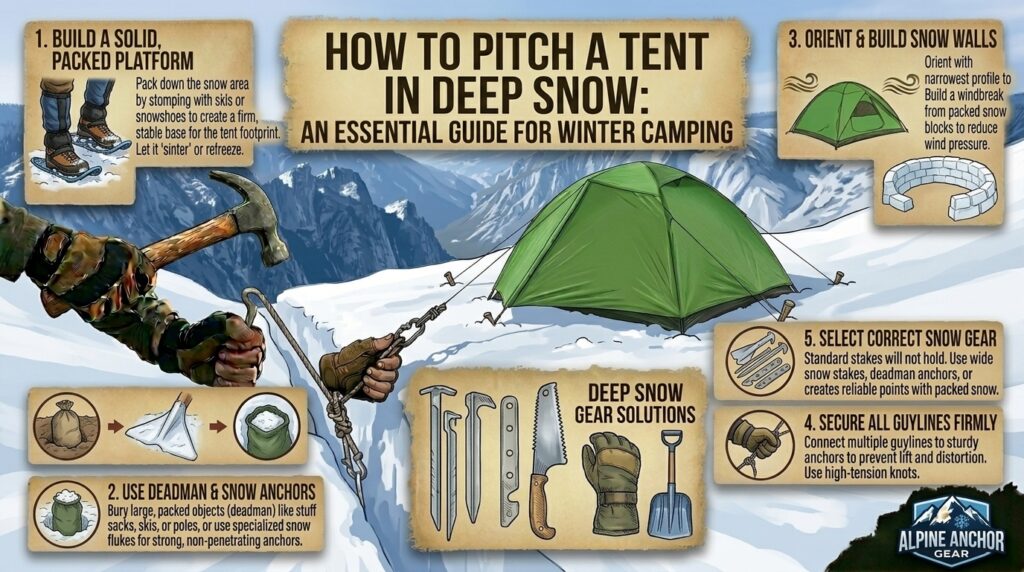
One of the biggest problems winter campers face is learning how to secure a tent when ordinary tent stakes no longer work.
In deep snow:
- Standard stakes pull out easily
- Frozen ground blocks penetration
- Loose powder lacks grip
- Wind becomes more dangerous
- Tent stability becomes harder to maintain
This is where deadman anchors become essential.
Deadman anchoring is one of the most reliable and widely used methods for securing tents in snow, sand, and other loose terrain. Instead of driving stakes vertically into the ground, deadman anchors create horizontal resistance underneath packed snow, producing far stronger holding power.
Whether you are:
- Winter backpacking
- Snow camping
- Mountaineering
- Ice fishing
- Alpine trekking
- Camping during blizzards
- Setting up a basecamp in snowy terrain
understanding how to use deadman anchors can dramatically improve:
- Tent stability
- Wind resistance
- Winter camping safety
- Shelter reliability
In this complete guide, you will learn:
- What deadman anchors are
- Why normal stakes fail in snow
- How to pitch a tent in deep snow
- Step-by-step deadman anchor setup
- Best materials for snow anchors
- How to secure tents in strong winter wind
- Common mistakes to avoid
- Advanced winter camping techniques
- Emergency snow anchoring tips
By the end of this article, you will know exactly how to build a strong, stable winter campsite using proper deadman anchoring methods.
Why Tent Stakes Fail in Deep Snow
Traditional tent stakes are designed for:
- Dirt
- Grass
- Soil
- Compact ground
Deep snow creates completely different conditions.
Snow Has Low Holding Strength
Loose snow behaves more like sand than soil.
Normal tent stakes often:
- Pull out immediately
- Rotate loose
- Shift under tension
- Lose grip during wind gusts
Even longer stakes may fail because powder snow lacks density.
Frozen Ground Creates Additional Problems
In winter, the ground beneath the snow may become:
- Frozen solid
- Ice-covered
- Impossible to penetrate
This prevents traditional stake installation entirely.
Wind Is More Dangerous in Snow Camping
Winter storms often produce:
- Strong gusts
- Blowing snow
- Whiteout conditions
An unsecured tent in these conditions can become extremely dangerous.
Proper anchoring is critical for:
- Shelter survival
- Camper safety
- Heat retention
- Storm protection
What Is a Deadman Anchor? How to Pitch a Tent in Deep Snow?
A deadman anchor is a buried horizontal anchor system used in:
- Snow
- Sand
- Loose terrain
Instead of relying on vertical penetration, deadman anchors create resistance by using:
- Buried objects
- Packed snow
- Surface tension
The buried object acts as an underground anchor point that resists pulling force.
Why Deadman Anchors Work So Well
Deadman anchors distribute force across a larger area of snow.
This creates:
- Better grip
- Stronger resistance
- Improved wind stability
The packed snow above the anchor adds enormous holding strength once compacted and frozen.
Common Deadman Anchor Materials
Many objects can work as deadman anchors.
Popular options include:
- Snow stakes
- Stuff sacks filled with snow
- Tent bags
- Ice axes
- Trekking poles
- Sticks
- Branches
- Aluminum bars
- Specialized snow anchors
Best Snow Anchors for Winter Camping – How to Pitch a Tent in Deep Snow
Certain anchors perform especially well in deep snow.
Snow Stakes
Snow stakes are specifically designed for winter conditions.
They are usually:
- Wider
- Longer
- Lightweight
- Stronger in loose snow
Their larger surface area improves holding power significantly.
Stuff Sack Anchors
Stuff sacks filled with snow are extremely popular among winter backpackers.
Advantages include:
- Lightweight packing
- Multi-purpose functionality
- Easy setup
- Excellent holding strength
Trekking Pole Anchors
Trekking poles can serve as emergency snow anchors when needed.
They are especially useful for:
- Ultralight winter camping
- Minimalist expeditions
Ice Axe Anchors
Mountaineers often use ice axes as heavy-duty deadman anchors in severe alpine conditions.
Choosing the Right Winter Campsite
Before pitching your tent, campsite selection is extremely important.
Avoid Avalanche Terrain
Never camp:
- Below steep snow slopes
- In avalanche paths
- Under unstable snow cornices
Avalanche safety should always come first.
Look for Natural Wind Protection
Good campsite protection includes:
- Tree cover
- Snowbanks
- Rock formations
- Forest edges
Reducing wind exposure greatly improves tent stability.
Avoid Low Drainage Areas
Snow can melt beneath the tent due to:
- Body heat
- Sun exposure
- Warm weather
Avoid areas where water may pool beneath your shelter.
Compact the Snow First
One of the most important steps in winter tent setup is compacting the snow.
Why Snow Compaction Matters
Fresh snow is soft and unstable.
Compacting the surface:
- Increases density
- Improves stability
- Reduces sinking
- Creates stronger anchor support
How to Compact Snow Properly
You can compact snow by:
- Walking repeatedly over the campsite
- Using snowshoes
- Stomping the surface flat
- Packing with skis
After compacting, allow the snow to harden for:
- 20–60 minutes if possible
This dramatically improves anchor strength.
How to Set Up Deadman Anchors
The deadman anchoring process is relatively simple once you understand the technique.
Step 1: Dig Anchor Trenches
Dig a horizontal trench in the snow.
The trench should be:
- Perpendicular to the pull direction
- Deep enough for burial
- Several inches below the surface
Step 2: Attach Guylines to the Anchor
Secure your guyline firmly around:
- The snow stake
- Stuff sack
- Pole
- Anchor object
Use strong knots that will not slip under tension.
Step 3: Place the Anchor Horizontally
Lay the anchor sideways inside the trench.
Horizontal positioning creates much stronger resistance than vertical placement.
Step 4: Bury the Anchor
Cover the anchor completely with packed snow.
Press firmly to:
- Remove air gaps
- Increase compaction
- Improve freezing strength
Step 5: Tighten the Guyline
Once buried:
- Tighten the guyline gradually
- Ensure tension remains balanced
- Avoid excessive pulling
Step 6: Allow Snow to Settle
In cold temperatures, buried anchors become stronger over time as the snow:
- Freezes
- Compacts
- Hardens
This creates extremely secure anchoring.
Use Longer Guylines in Snow
Snow camping often requires longer guylines because anchors must be buried farther from the tent.
Longer lines:
- Improve angle distribution
- Reduce stress
- Increase stability
Build Snow Walls for Wind Protection
Snow walls can dramatically improve campsite safety.
Benefits of Snow Walls
Snow walls help:
- Block wind
- Reduce drifting snow
- Improve warmth
- Protect tent fabric
How to Build a Snow Wall
Use packed snow blocks or piled snow to create barriers around the campsite.
Position walls:
- Several feet away from the tent
- On the windward side
Orient the Tent Properly
Tent direction matters greatly during winter storms.
Face the Narrow End Into the Wind
Most winter tents are designed aerodynamically.
Facing the narrow side into wind:
- Reduces drag
- Improves stability
- Lowers stress on anchors
Use Every Guyline
In winter camping:
- Every guyline matters
- Every anchor point matters
Skipping guylines increases collapse risk dramatically.
Double Anchor Critical Points
In severe weather, use:
- Two deadman anchors per guyline
This creates backup security if one anchor fails.
Best Tent Types for Snow Camping
Not all tents perform equally in winter conditions.
Four-Season Tents
Four-season tents are designed specifically for:
- Snow load
- High wind
- Winter storms
Features include:
- Stronger poles
- Reinforced fabric
- Better aerodynamics
Geodesic Tents
Geodesic tents are among the best winter shelters because their pole structure distributes stress evenly.
They perform exceptionally well in:
- Alpine storms
- Heavy snow
- Extreme wind
Avoid Tall Cabin Tents
Tall tents:
- Catch more wind
- Collapse more easily
- Struggle in snowstorms
Low-profile shelters work much better.
Prevent Snow Buildup on the Tent
Heavy snow accumulation can:
- Bend poles
- Collapse fabric
- Increase structural stress
Brush snow off regularly during storms.
Ventilate the Tent Properly
Condensation becomes a major issue during winter camping.
Poor ventilation may cause:
- Frost buildup
- Moisture freezing
- Wet sleeping gear
Maintain airflow while balancing heat retention.
Keep Emergency Gear Accessible
Always keep:
- Shovel
- Extra guylines
- Spare anchors
- Repair kits
within easy reach during winter camping.
Common Mistakes With Deadman Anchors
Many beginners make avoidable anchoring mistakes.
Burying Anchors Too Shallow
Shallow burial reduces holding strength dramatically.
Using Loose Powder Snow
Soft snow without compaction provides weak resistance.
Overtightening Guylines
Excessive tension can:
- Pull anchors loose
- Stress tent poles
- Damage fabric
Ignoring Wind Direction
Poor tent orientation increases storm pressure.
Using Weak Knots
Slipping knots can cause complete anchor failure.
Emergency Snow Anchor Solutions
If you lack proper snow stakes, you can improvise using:
- Stuff sacks
- Branches
- Skis
- Snowshoes
- Ice tools
- Backpack frames
Many objects can become effective buried anchors.
Why Winter Campers Love Deadman Anchors
Experienced winter campers trust deadman anchors because they provide:
- Superior holding power
- Excellent wind resistance
- Reliable storm security
- Better performance than normal stakes
especially in deep snow conditions.
Advantages of Deadman Anchors
Main benefits include:
- Strong stability
- Works in loose snow
- Excellent winter reliability
- Flexible setup options
- Minimal specialized equipment needed
Disadvantages of Deadman Anchors
Some downsides include:
- Slower setup
- More labor required
- Digging effort
- Longer setup time in storms
However, the increased security is usually worth the effort.
Best Accessories for Snow Camping
Helpful winter camping gear includes:
- Snow shovel
- Snow stakes
- Extra guylines
- Four-season tent
- Snow saw
- Insulated sleeping pads
- Winter repair kits
- Waterproof gloves
Final Thoughts
Learning how to pitch a tent in deep snow using deadman anchors is one of the most important winter camping skills every outdoor adventurer should understand.
Traditional tent stakes simply do not work reliably in:
- Deep powder
- Frozen terrain
- Loose snow
- Severe winter conditions
Deadman anchors solve this problem by creating powerful buried resistance beneath compacted snow.
The key steps include:
- Compacting the campsite
- Digging anchor trenches
- Burying anchors horizontally
- Packing snow firmly
- Tensioning guylines properly
- Using all available anchor points
Whether you are:
- Winter backpacking
- Mountaineering
- Ice fishing
- Snow camping in forests
- Camping in alpine conditions
proper deadman anchoring can dramatically improve:
- Tent stability
- Wind resistance
- Winter safety
- Shelter reliability
A secure winter shelter is not just about comfort—it can become critically important for survival during severe snowstorms and harsh mountain weather.