
Complete Guide to Securing a Tent in Windy Weather: How to Keep Your Tent from Blowing Away in High Winds
Camping during windy conditions can quickly turn from an exciting outdoor adventure into a frustrating and even dangerous experience. Strong gusts can loosen tent stakes, collapse poles, tear rainflies, and in severe cases, send an unsecured tent flying across the campsite.
Many campers underestimate how much force wind can place on a tent. Even moderate gusts can create tremendous pressure on tent walls, guylines, and anchor points. Without proper setup techniques and the right equipment, almost any tent can become unstable.
If you have ever wondered:
- How do you stop a tent from blowing away?
- What type of stakes work best in high winds?
- How should a tent face the wind?
- How do you secure a tent on sand or rocky ground?
- What are the best ways to stabilize a tent during storms?
this detailed guide will help you understand exactly how to protect your shelter in windy conditions.
In this complete guide, you will learn:
- Why tents fail in wind
- How to choose a wind-resistant campsite
- The best tent setup techniques
- How to use guylines properly
- Which tent stakes work best
- How to secure tents on different terrains
- Common mistakes campers make
- Emergency wind survival tips
- Best tents for windy conditions
- Advanced storm anchoring methods
By the end of this article, you will know how to keep your tent stable, secure, and safe even during strong wind and rough weather.
Why Tents Blow Away in High Winds
Before learning how to prevent tent movement, it is important to understand why tents fail during windy weather.
The most common causes include:
- Weak tent stakes
- Poor campsite selection
- Improper tent orientation
- Loose guylines
- Low-quality tent design
- Soft or unstable ground
- Incorrect anchoring methods
- Excessive wind exposure
Wind creates pressure against the surface area of the tent. As gusts hit the shelter, they pull against:
- Stakes
- Poles
- Fabric
- Seams
- Anchor points
If any part of the system fails, the entire tent can collapse or become airborne.
Choose the Right Campsite First
One of the most important ways to protect your tent is choosing a smart campsite location.
Even the strongest tent may struggle if placed in an exposed area.
Avoid Open Wind Corridors
Do not camp in:
- Open fields
- Bare hilltops
- Wide beaches without protection
- Mountain ridges
- Flat plains with no barriers
These areas allow wind to hit the tent directly with full force.
Use Natural Windbreaks
Instead, look for natural protection such as:
- Tree lines
- Large rocks
- Hillsides
- Bushes
- Forest edges
These obstacles help reduce wind intensity before it reaches your tent.
However, avoid camping directly under dead trees or weak branches during storms.
Check Wind Direction
Always determine the primary wind direction before pitching your tent.
You can observe:
- Tree movement
- Grass direction
- Weather forecasts
- Cloud patterns
Setting up correctly relative to wind direction dramatically improves tent stability.
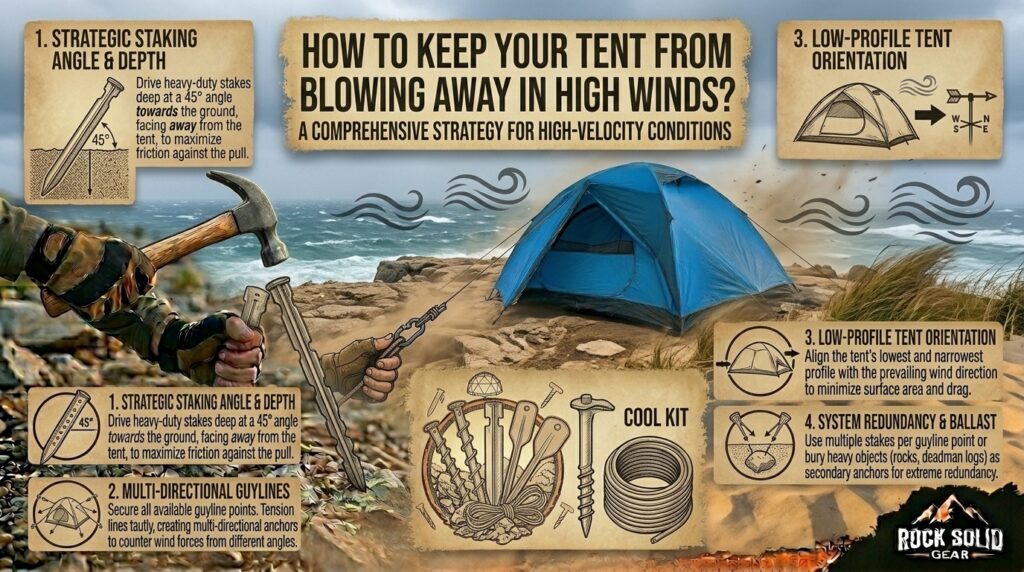
Position the Tent Properly
Tent orientation is extremely important during windy weather.
Face the Narrow End Into the Wind
Most tents are designed aerodynamically.
The smaller or lower-profile end should face incoming wind.
This helps:
- Reduce drag
- Lower wind resistance
- Improve stability
Broadside exposure creates more pressure and increases collapse risk.
Keep Doors Away from Strong Wind
Tent doors facing strong wind can:
- Allow air pressure buildup
- Cause zipper strain
- Increase rain intrusion
Position doors away from direct gusts whenever possible.
Use All Tent Stakes
One of the biggest mistakes campers make is using only a few stakes.
In windy conditions:
- Every stake matters
- Every anchor point matters
- Every guyline matters
Always secure every designated tent loop and anchor point.
Upgrade Your Tent Stakes
Many factory tent stakes are too weak for serious weather.
Thin aluminum pegs often:
- Bend easily
- Pull loose
- Fail in hard ground
Upgrading stakes is one of the best improvements you can make.
Best Tent Stakes for High Winds: How to Keep Your Tent from Blowing Away in High Winds
Different terrains require different stakes.
Steel Tent Stakes
Heavy-duty steel stakes provide:
- Strong holding power
- Excellent durability
- Better resistance in hard soil
Best for:
- Rocky ground
- Compact dirt
- Gravel campsites
Spiral Ground Anchors
Spiral stakes twist into the ground like screws.
They provide:
- Better pull resistance
- Improved grip
- Excellent sand performance
Best for:
- Beaches
- Soft dirt
- Loose soil
Rebar Stakes
Rebar stakes are extremely strong and ideal for:
- Large tents
- Canopies
- Extreme wind conditions
They penetrate deep and resist pullout effectively.
Sand Stakes
Wide sand stakes prevent loosening in beach environments.
Best for:
- Beach camping
- Coastal wind conditions
- Soft sand terrain
Use Guylines Correctly
Guylines are essential for wind stability.
Unfortunately, many campers ignore them completely.
What Guylines Actually Do
Guylines:
- Distribute wind pressure
- Stabilize tent poles
- Reduce fabric movement
- Prevent collapse
Without guylines, tents become much weaker in storms.
Tighten Guylines Properly
Loose guylines are ineffective.
However, overtightening can also:
- Stress seams
- Bend poles
- Damage fabric
The goal is firm tension without excessive strain.
Use Additional Guylines
During severe wind:
- Add extra guylines if possible
- Reinforce corners
- Support weak sides
Extra anchor points improve stability significantly.
Angle Stakes Correctly
Proper stake angle improves holding strength.
Best Stake Angle
Drive stakes into the ground at approximately:
- 45 to 60 degrees away from the tent
This creates:
- Better resistance
- Stronger anchoring
- Improved pullout protection
Vertical stakes are weaker under tension.
Push Stakes Deep Into the Ground
Shallow stakes pull out easily during gusts.
Insert stakes:
- Deeply
- Firmly
- Securely
especially in loose terrain.
Use Heavy Objects for Extra Support
If wind becomes severe, add additional weight.
Useful objects include:
- Large rocks
- Sandbags
- Water containers
- Gear bags
These can reinforce:
- Stakes
- Guylines
- Tent corners
Secure a Tent on Sand
Beach camping creates unique wind challenges.
Loose sand allows stakes to pull out more easily.
Use Sand Anchors
Specialized sand anchors or screw stakes work much better than standard pegs.
They create:
- Greater surface resistance
- Improved holding power
Bury Anchors Horizontally
In extreme sand conditions:
- Bury stakes sideways
- Attach guylines before burial
- Pack sand tightly
This deadman anchor technique is highly effective.
Secure a Tent on Rocky Ground
Rocky terrain can prevent stake penetration.
Use Heavy-Duty Steel Stakes
Steel stakes handle rocky soil better than lightweight pegs.
Anchor with Rocks
If stakes cannot penetrate:
- Tie guylines around large rocks
- Use natural anchors
- Create weighted tie-down points
Keep Tent Profile Low
Lower tents handle wind much better.
Tall tents create:
- More drag
- Greater instability
- Increased collapse risk
Best Tent Shapes for Wind
Some tent styles naturally perform better during storms.
Dome Tents
Dome tents distribute wind pressure effectively.
They are:
- Aerodynamic
- Stable
- Popular for general camping
Tunnel Tents
Tunnel tents can handle wind well when oriented correctly.
However, they require strong guyline support.
Geodesic Tents
Geodesic tents are among the best for extreme weather.
Their multiple pole crossings provide:
- Maximum stability
- Strong wind resistance
- Better structural strength
Avoid Cheap Tent Designs
Low-quality tents often fail because of:
- Weak poles
- Thin fabric
- Poor stitching
- Weak stake loops
Investing in a stronger tent improves storm safety significantly.
Reduce Loose Fabric Movement
Flapping fabric increases:
- Wind stress
- Noise
- Material fatigue
Tighten:
- Rainflies
- Guylines
- Tent fabric
to reduce movement.
Close Tent Vents Carefully
Some airflow is important.
However, strong wind entering the tent may increase pressure.
Adjust ventilation carefully depending on:
- Rain
- Wind speed
- Temperature
Monitor Weather Forecasts
Always check weather conditions before camping.
Watch for:
- Wind warnings
- Thunderstorms
- Mountain weather changes
- Coastal storm systems
Preparation is critical.
Use Windbreak Barriers
Portable windbreaks can help reduce gust intensity.
Examples include:
- Tarp walls
- Vehicles
- Camping screens
These barriers should be secured properly themselves.
Lower the Rainfly
A tight rainfly reduces:
- Wind catching
- Flapping
- Water intrusion
Avoid leaving excess fabric loose.
Protect Tent Poles
Tent poles often fail before fabric does.
Strong wind can:
- Snap poles
- Bend supports
- Twist frames
Using guylines properly helps reduce pole stress.
Carry Backup Stakes
Always bring extra stakes during windy camping trips.
You may need:
- Additional anchors
- Replacement stakes
- Emergency reinforcements
Use Reflective Guylines
Reflective lines improve nighttime safety.
They help prevent:
- Tripping
- Accidental loosening
- Campsite injuries
especially during storms or darkness.
Common Mistakes Campers Make
Many wind-related tent failures happen because of simple mistakes.
Ignoring Guylines
This is one of the most common problems.
Even strong tents become unstable without proper guyline support.
Using Weak Stakes
Cheap stakes are often unreliable in:
- Wind
- Sand
- Hard ground
Upgrading stakes is essential.
Pitching on Exposed Ground
Open areas dramatically increase wind exposure.
Leaving Fabric Loose
Loose rainflies catch wind like sails.
Overloading Tent Walls
Hanging heavy gear inside can stress poles during wind movement.
Emergency Tips During Severe Wind
If strong wind suddenly increases:
- Reinforce guylines immediately
- Add extra anchors
- Lower tent profile if possible
- Move loose gear inside
- Monitor pole bending carefully
If conditions become dangerous, seek safer shelter.
Best Accessories for Windy Camping
Helpful wind-resistant camping gear includes:
- Heavy-duty steel stakes
- Spiral anchors
- Extra guylines
- Stake hammer
- Sandbags
- Repair kits
- Pole sleeves
- Reflective rope
How Wind Speed Affects Tents
Different wind speeds create different risks.
10–20 MPH Wind
Usually manageable with:
- Basic staking
- Proper setup
20–40 MPH Wind
Requires:
- Full guyline usage
- Strong stakes
- Smart campsite positioning
40+ MPH Wind
Can become dangerous.
Requires:
- Serious storm preparation
- High-quality tents
- Advanced anchoring
Family Camping Wind Safety
Families camping with children should prioritize:
- Protected campsites
- Strong shelter setup
- Weather awareness
Children may panic during severe wind, so preparation helps everyone stay safer and calmer.
Winter Camping Wind Considerations
Cold-weather wind creates additional challenges:
- Frozen ground
- Snow drifting
- Ice buildup
Specialized winter stakes and snow anchors may be necessary.
Final Thoughts
Learning how to keep your tent from blowing away in high winds is one of the most important camping skills every outdoor enthusiast should understand.
Strong wind can quickly damage poorly secured tents, but proper preparation dramatically improves safety and stability.
The key strategies include:
- Choosing a protected campsite
- Facing the tent correctly
- Using strong tent stakes
- Securing all guylines
- Tightening fabric properly
- Using terrain-specific anchors
- Monitoring weather conditions
Investing in:
- Better stakes
- Stronger guylines
- Wind-resistant tents
Can make an enormous difference during storms and rough weather.
Whether you are camping:
- In the mountains
- On the beach
- In forests
- Across deserts
- During winter
Taking wind seriously will help protect:
- Your shelter
- Your gear
- Your comfort
- Your safety
A properly anchored tent is not just more comfortable—it can also prevent dangerous situations during extreme outdoor conditions.