
Common Reasons Tent Stakes Fail and How to Fix the Problem: Why Your Tent Stakes Keep Pulling Out
Few camping problems are more frustrating than waking up in the middle of the night to discover your tent collapsing because the stakes have pulled out of the ground. Whether you are camping on the beach, in the mountains, on rocky terrain, or at a windy campground, weak or unstable tent stakes can quickly ruin an outdoor trip.
Many campers assume the problem is simply “bad stakes,” but in reality, tent stakes pull out for many different reasons, including:
- Poor ground conditions
- Incorrect stake angles
- Weak tent anchors
- Strong wind pressure
- Loose guylines
- Improper setup techniques
- Using the wrong stake type for the terrain
Understanding why your tent stakes keep pulling out is the first step toward building a stronger, safer, and more stable campsite.
In this detailed guide, you will learn:
- Why tent stakes fail
- The most common staking mistakes
- How terrain affects holding power
- Which stakes work best for different conditions
- How to secure tents properly
- Solutions for sand staking, rocky ground, and hard soil
- How wind affects tent anchors
- Expert camping tips for better tent stability
By the end of this article, you will know exactly how to stop your tent stakes from pulling out and how to keep your shelter secure even during difficult outdoor conditions.
Why Tent Stakes Matter So Much
Tent stakes are one of the most important parts of your camping setup.
Even the best tent can fail if the anchoring system is weak.
Tent stakes help:
- Secure the tent to the ground
- Maintain tent shape
- Stabilize poles
- Support guylines
- Resist wind pressure
- Prevent movement
Without strong anchoring, your tent becomes vulnerable to:
- Wind
- Rain
- Ground shifting
- Fabric strain
- Structural collapse
The Most Common Reason Tent Stakes Pull Out
The number one reason tent stakes fail is insufficient holding power.
This happens when the stake cannot grip the ground strongly enough to resist tension from:
- Wind
- Tent fabric
- Guylines
- Rain pressure
- Movement inside the tent
When force exceeds ground resistance, the stake slowly loosens and eventually pulls free.
Using the Wrong Stakes for the Terrain
One of the biggest mistakes campers make is using the same stakes for every environment.
Different terrains require different anchoring solutions.
Standard Stakes Often Fail in Sand
Beach sand is loose and constantly shifting.
Thin metal stakes usually:
- Pull out quickly
- Rotate loose
- Lose grip during wind gusts
Better Solution:
Use:
- Sand stakes
- Spiral screw anchors
- Wide-profile pegs
These create more surface resistance in loose sand.
Rocky Ground Causes Poor Penetration
Rocky campsites can prevent stakes from entering deeply enough.
This creates:
- Weak anchoring
- Shallow grip
- Unstable tension
Better Solution:
Use:
- Forged steel stakes
- Rebar stakes
- Heavy-duty ground anchors
These handle rocky terrain much better.
Soft Soil Creates Loose Anchoring
Soft dirt and wet ground may initially seem ideal, but stakes can loosen over time as the soil shifts.
Better Solution:
Use:
- Longer stakes
- Wider stakes
- Stakes with ridges or spiral threading
These improve grip in soft terrain.
Hard Ground Can Prevent Full Installation
Hard-packed dirt may stop stakes from reaching proper depth.
Shallow stakes pull out more easily because they lack deep resistance.
Better Solution:
Use:
- Steel stakes
- Sharp chisel-tip stakes
- Heavy-duty hammering pegs
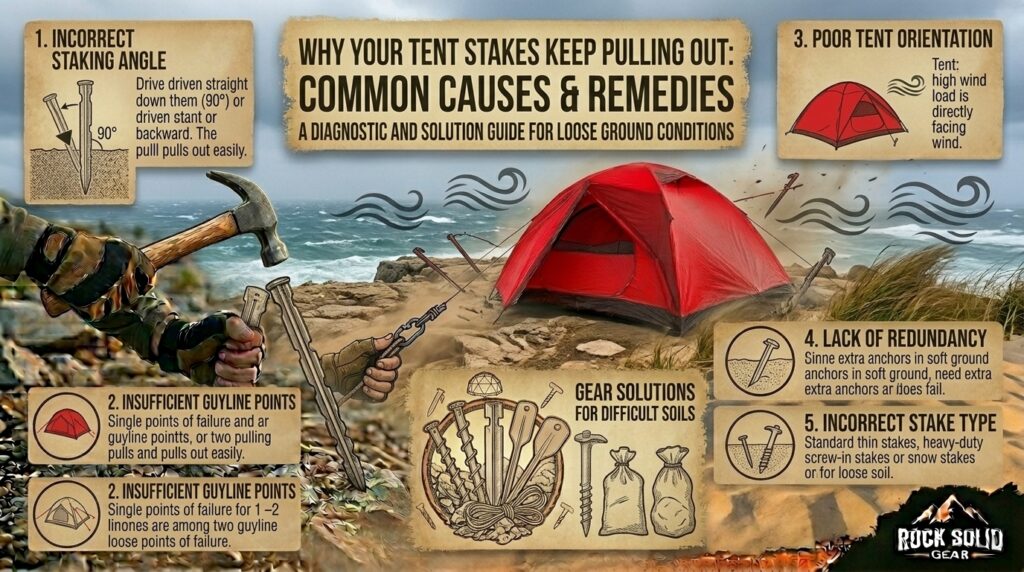
Incorrect Stake Angle
Many campers insert stakes vertically into the ground.
This is a major mistake.
Why Vertical Stakes Fail
Straight vertical stakes provide weaker pull resistance because tension pulls directly upward.
This makes it easier for wind or guyline pressure to remove the stake.
Correct Tent Stake Angle
Tent stakes should be inserted at approximately:
- 45 to 60 degrees away from the tent
This creates:
- Better ground resistance
- Improved holding strength
- Stronger anchor stability
The angled position forces the ground to resist pull more effectively.
Stakes Not Driven Deep Enough
Shallow stakes are one of the most common causes of tent instability.
If only a small portion of the stake enters the soil:
- Wind pressure can pull it loose quickly
- Ground grip becomes minimal
Proper Setup:
Push stakes:
- Deeply
- Firmly
- Securely
until only the attachment area remains visible.
Strong Wind Pressure
Wind creates enormous force against tents.
Large tent walls act like sails, increasing tension on:
- Stakes
- Guylines
- Tent loops
During storms, weak anchors often fail first.
Why Wind Pulls Stakes Loose
Wind creates repeated movement and vibration.
This constant motion gradually:
- Loosens soil
- Weakens grip
- Shifts stakes upward
Eventually the anchors pull free completely.
Loose Guylines Increase Stake Failure
Guylines distribute wind pressure across the tent structure.
If guylines are loose:
- Wind force concentrates unevenly
- Tent movement increases
- Stakes experience greater stress
Solution:
Keep guylines:
- Tight
- Balanced
- Properly tensioned
Using Too Few Stakes
Some campers only secure:
- Tent corners
- Main poles
and ignore additional tie-out points.
This reduces overall tent stability dramatically.
Every Stake Point Matters
Modern tents are designed with multiple anchor points for a reason.
Additional stakes help:
- Spread tension
- Reduce movement
- Improve wind resistance
Always use:
- Corner stakes
- Vestibule stakes
- Guyline anchors
especially during windy weather.
Cheap Factory Stakes Often Fail
Many tents include low-quality stakes to reduce manufacturing costs.
These stakes are often:
- Thin
- Lightweight
- Weak
- Poorly designed
They bend or loosen easily under stress.
Upgrade Your Tent Stakes
One of the best camping upgrades is purchasing better stakes.
High-quality stakes provide:
- Better grip
- Stronger durability
- Improved wind resistance
- Longer lifespan
Best Tent Stakes for Different Conditions
Choosing the right stake dramatically improves holding power.
Steel Tent Stakes
Best for:
- Rocky terrain
- Hard dirt
- Gravel campsites
Advantages:
- Strong
- Durable
- Resistant to bending
Spiral Ground Anchors
Best for:
- Sand
- Loose soil
- Windy conditions
Advantages:
- Twist into ground
- Strong pull resistance
- Excellent grip
Rebar Stakes
Best for:
- Extreme wind
- Large tents
- Canopies
- Trampolines
Advantages:
- Deep anchoring
- Very high strength
- Heavy-duty performance
Sand Stakes
Best for:
- Beach camping
- Coastal environments
Advantages:
- Wide surface area
- Better soft-ground stability
Tent Orientation Problems
Tent direction matters more than many people realize.
Broadside Wind Exposure
If the broad side of the tent faces the wind:
- Wind pressure increases dramatically
- Stakes experience greater pull force
Better Setup:
Face the narrow end of the tent toward the wind.
This reduces drag and improves stability.
Loose Tent Fabric Causes Extra Stress
Flapping fabric acts like a sail.
Loose rainflies and tent walls create:
- Additional wind resistance
- Constant tension
- Increased stake movement
Solution:
Keep:
- Rainflies tight
- Guylines tensioned
- Tent fabric smooth
Wet Ground Changes Holding Power
Rain changes soil conditions significantly.
Wet soil may:
- Soften
- Shift
- Lose compactness
This can reduce stake stability over time.
How to Improve Grip in Wet Soil
Use:
- Longer stakes
- Wider stakes
- Additional guylines
- Reinforced anchors
in rainy conditions.
Frozen Ground Problems
Cold-weather camping creates unique challenges.
Frozen ground may:
- Prevent penetration
- Cause shallow installation
- Increase anchor instability
Solution:
Use:
- Heavy-duty steel stakes
- Snow anchors
- Specialized winter stakes
Sand Movement Causes Stake Failure
Beach environments constantly shift due to:
- Wind
- Foot traffic
- Tidal moisture changes
This movement gradually loosens standard stakes.
Deadman Anchoring Technique
In loose sand or snow:
- Bury anchors horizontally
- Attach guylines before burial
- Pack soil or sand firmly
This creates extremely strong anchoring.
Large Tents Need Stronger Stakes
Bigger tents create:
- More wind drag
- More tension
- Greater anchor stress
Family tents and canopies require much stronger stakes than ultralight backpacking tents.
Lightweight Tents Usually Perform Better in Wind
Smaller tents:
- Catch less wind
- Require less anchor strength
- Experience lower drag
Low-profile tents generally remain more stable during storms.
Not Checking Stakes Regularly
Tent stakes can loosen gradually over time.
Always inspect:
- Stake tension
- Guyline tightness
- Ground stability
especially during changing weather.
Campsite Vibrations Loosen Stakes
Movement around the campsite can loosen anchors.
Examples include:
- Walking near stakes
- Strong gusts
- Tent shifting
- Ground vibration
Over time, repeated motion weakens anchoring.
Improper Guyline Placement
Guylines should pull:
- Evenly
- Symmetrically
- Away from the tent
Poor angles create uneven stress and increase failure risk.
High Wind Gusts vs Constant Wind
Sudden gusts are often more dangerous than steady wind.
Gusts create:
- Sharp tension spikes
- Sudden pulling force
- Abrupt stake movement
Heavy-duty stakes handle gusts better.
Emergency Fixes for Pulling Stakes
If stakes begin loosening during camping:
Immediate Solutions:
- Add rocks over stakes
- Reinforce guylines
- Use additional stakes
- Tighten loose fabric
- Reduce wind exposure
Double-Staking Technique
In strong wind:
- Use two stakes per anchor point
- Cross them at angles
This increases holding power significantly.
Add Weight to Tent Corners
Heavy gear inside the tent helps reduce movement.
Useful items include:
- Water containers
- Backpacks
- Coolers
However, proper staking remains essential.
Best Campsite Selection for Better Anchoring
Ground quality matters greatly.
Avoid:
- Loose sand without proper anchors
- Extremely rocky surfaces
- Flood-prone soft mud
Look for:
- Firm compact soil
- Natural wind protection
- Stable terrain
Why Professional Campers Carry Multiple Stake Types
Experienced campers often bring:
- Steel stakes
- Sand anchors
- Lightweight pegs
- Rebar stakes
Different environments require different solutions.
Signs Your Stakes Are About to Fail
Watch for:
- Stake wobbling
- Soil lifting
- Guyline loosening
- Tent movement
- Flapping fabric
These are warning signs of anchor failure.
Best Materials for Strong Tent Stakes
Different materials offer different advantages.
Steel Stakes
Advantages:
- Extremely strong
- Durable
- Great for hard ground
Disadvantages:
- Heavier
Aluminum Stakes
Advantages:
- Lightweight
- Portable
Disadvantages:
- Easier to bend
Titanium Stakes
Advantages:
- Lightweight
- Strong
Disadvantages:
- Expensive
Plastic Sand Stakes
Advantages:
- Good for beaches
- Lightweight
Disadvantages:
- Less effective on hard terrain
Final Thoughts
If your tent stakes keep pulling out, the problem usually comes down to:
- Poor stake selection
- Incorrect setup
- Weak ground conditions
- Wind pressure
- Improper anchoring technique
Fortunately, most of these problems are easy to fix once you understand the cause.
The best ways to prevent tent stakes from pulling out include:
- Using the correct stakes for the terrain
- Driving stakes deeply into the ground
- Angling stakes properly
- Tightening guylines
- Facing the tent correctly
- Reinforcing anchors during wind
- Upgrading weak factory stakes
Whether you camp:
- On beaches
- In forests
- On rocky mountains
- In deserts
- During storms
proper anchoring can dramatically improve:
- Tent stability
- Shelter safety
- Camping comfort
- Outdoor confidence
A secure tent starts from the ground up, and strong, properly installed stakes are one of the most important parts of every successful camping setup.