Ultimate guide of the best tent stakes for snow – Ultimate guide September 2026

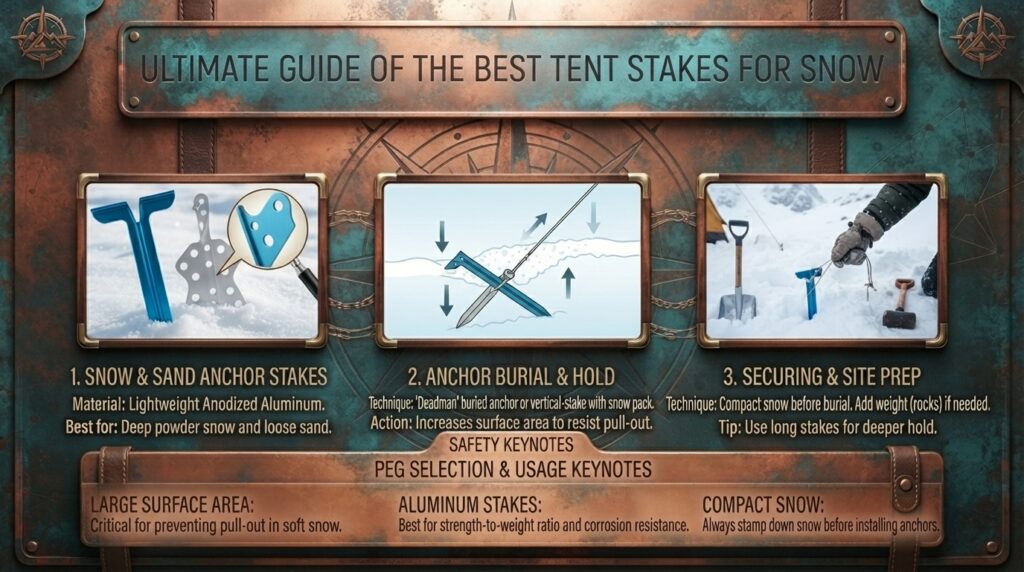
Ultimate Winter Camping Gear Guide: The Best Tent Stakes for Snow
Winter camping offers a truly unforgettable outdoor experience. Snow-covered landscapes, peaceful forests, crisp mountain air, and quiet campgrounds create an atmosphere that few other seasons can match. For many outdoor enthusiasts, the beauty and solitude of winter make every cold night worthwhile.
However, setting up a tent in snowy or frozen conditions requires more than just warm clothing—it also demands the right equipment. The lightweight aluminum stakes included with most tents are designed for soft soil and often perform poorly in winter environments. In loose snow, they provide little holding power, while frozen ground, ice, and hidden rocks can easily cause them to bend, twist, or break during installation.
As winter winds become stronger, a poorly anchored tent can quickly become unstable, putting both your comfort and safety at risk. That’s why investing in the best tent stakes for snow is essential. Snow-specific stakes are engineered with wider profiles, stronger materials, and specialized designs that deliver superior grip in deep snow, packed ice, and frozen terrain, ensuring your shelter remains securely anchored even in harsh winter weather.
Why Regular Tent Stakes Fail in Snow
Standard Y-stakes, V-stakes, or nail pegs pull out easily in soft or powdery snow. Wind, heavy snow load, or temperature fluctuations can collapse your tent overnight, creating dangerous and uncomfortable situations. Specialized snow stakes or anchors provide superior holding power by maximizing surface area and allowing snow to sinter (harden) around them.
Whether you are loading up a fat-tire e-bike for an alpine winter expedition or car camping in the snow, this definitive guide reviews the highest-rated snow stakes on the market and teaches you the physics of anchoring your tent in sub-zero conditions.
The Physics of Snow Anchoring: Why Standard Stakes Fail
To understand why you need specialized winter stakes, you have to understand how snow behaves under pressure.
Standard stakes rely on soil friction to stay in place. Snow, however, lacks cohesive friction.
- In Soft Powder: Thin wire stakes have no surface area, meaning the tension from your tent guy lines will pull them right out of the ground.
- In Packed Snow/Ice: Trying to pound a lightweight backpacking stake into frozen ground will simply mushroom the top or snap the shaft in half.
Dedicated snow stakes utilize a wide, curved, U-shaped or concave profile with multiple holes stamped down the center. This design does two things: it drastically increases the surface area to resist wind pull, and it allows wet snow to pack into the holes and freeze solid—effectively cementing the stake into the ground.
OUR PICK – Aluminum Tent Stakes for Camping in Snow – Best tent stakes for snow
CHECK NOW >>
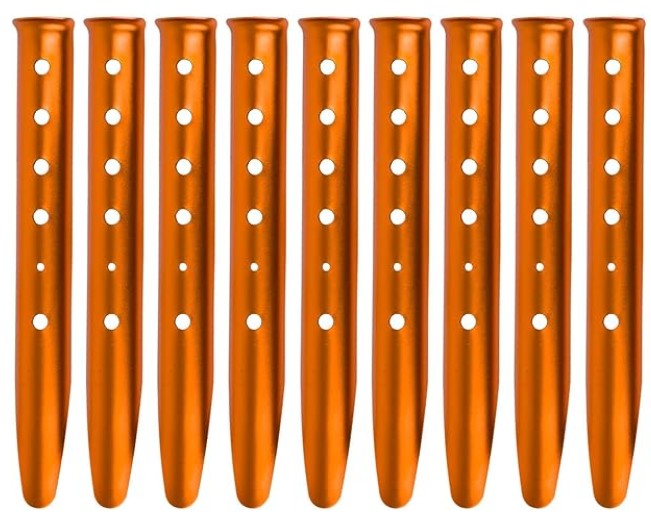
Secure your shelter in the most challenging soft terrains with this 10-piece set of U-shaped aluminum tent stakes. Specifically engineered for loose surfaces like sand and snow, these extra-long, widened pegs offer maximum surface area and unmatched holding power where traditional stakes fail.
Whether you are setting up a beach canopy, pitching a winter expedition tent, or anchoring a sunshade for a picnic, these lightweight ground nails ensure your gear stays firmly rooted against high winds and shifting ground.
Key Features & Specifications
- Maximum Holding Power: The extended 12.2-inch length and wide U-shaped profile distribute load efficiently, trapping soft soil, sand, or packed snow inside the groove for a rock-solid anchor.
- Anodized Aluminum Construction: Crafted from heavy-duty, high-strength aluminum alloy. They are highly resistant to bending, rust, and corrosion, and finished with a vivid anodic oxidation coating for high visibility in the field.
- Ultralight for Backpacking: Weighing just 1.84 oz (52g) per stake, this pack adds minimal weight to your gear, making it an essential addition for long-distance hiking, boating, and backcountry winter camping.
- Versatile 6-Hole Rigging System: Each stake features six integrated anchoring holes along the spine. This multi-hole design allows you to adjust and lock down guyline ropes at various depths to prevent slipping, or bury the stake horizontally as a “deadman” anchor in deep snow.
Technical Specifications – Best tent stakes for snow
| Parameter | Specification |
| Package Quantity | 10 Pieces |
| Material | High-Strength Anodized Aluminum Alloy |
| Length | 12.2 inches / 31 cm |
| Width | 1.42 inches / 3.6 cm |
| Weight Per Piece | 1.84 oz / 52 g |
| Terrain Compatibility | Sand, Snow, Beach, Mud, Soft Soil (Not for hard/rocky ground) |
Setup & Usage Guide
To get the absolute best performance and stability out of your U-shaped stakes, follow this quick deployment method:
1.Select the right terrain:Soft ground only.
Identify a spot with loose sand, soft beach soil, or snow. Avoid compact dirt, gravel, or rocky areas, as forcing aluminum stakes into hard ground can cause bending or structural damage.
2.Angle the stake:45-degree rule.
Position the stake with the open valley of the “U” shape facing toward your tent or canopy. Drive the peg into the sand or snow at a 45-degree angle leaning away from the tent. This orientation utilizes the soil’s weight to lock the stake in place.
3.Rig the guylines:Secure the rope.
Thread your tent’s guyline through one of the lower holes near the ground surface to minimize leverage, or loop it securely around the top hook. Use the integrated holes to adjust tension and lock the rope so it cannot slip off in high winds.
⚠️ Safety Information: Handle the pointed ends with care during installation and pack-up to avoid puncture injuries. Always check that stakes are deeply and securely anchored before leaving your canopy unattended. Be mindful of potential underground utilities or shallow roots when driving stakes into coastal soil.
Best Tent Stakes for Snow (USA Market)
Here are the absolute best snow anchors available for winter adventurers, ranging from ultralight backpacking models to heavy-duty frozen ground spikes.
1. MSR Blizzard Tent Stakes (Best Overall Snow Stake)
- Material: 7000-series Aircraft Aluminum
- Weight: 1.12 oz per stake
- Best For: All-around winter backpacking and mountaineering.
- The Breakdown: The MSR Blizzard is the gold standard for winter camping in the USA. Its wide, concave profile offers incredible surface area to hold fast in soft snow. The punched-out holes down the center allow snow to pass through and freeze, anchoring it perfectly. It can also double as a deadman anchor (buried horizontally).
2. Tough-Grid Aluminum Snow and Sand Pegs (Best Budget Choice)
- Material: Heavy-duty Hardened Aluminum
- Weight: 1.8 oz per stake
- Best For: Budget-conscious winter campers and car camping.
- The Breakdown: If you need to secure a large 4-person tent and don’t want to break the bank, Tough-Grid offers an exceptional U-shaped stake. They are longer and wider than standard stakes, providing massive holding capacity in deep drifts.
3. Nemo Sweepstake Tent Stakes (Best for Frozen Dirt and Permafrost)
- Material: Hardened Polymer / Aluminum
- Weight: 0.7 oz per stake
- Best For: Early winter camping when the ground is frozen solid but snow is thin.
- The Breakdown: When the ground is frozen like concrete, you cannot bury a wide U-shaped stake. The Nemo Sweepstake is a rugged, straight-line spike designed to be driven directly into hard frost. It features a built-in polymer biscuit that sweeps mud and ice off the stake during extraction.
4. REl Co-op Snow Stakes (Best Availability & Reliability)
- Material: Anodized Aluminum
- Weight: 1.2 oz per stake
- Best For: General recreational winter camping.
- The Breakdown: REl’s proprietary snow stakes are reliable, brightly colored (so you don’t lose them in the white snow), and feature a classic curved design that handles high-wind tension beautifully.
Snow Stakes Head-to-Head Comparison
| Stake Model | Shape Profile | Target Snow Condition | Pro / Con |
| MSR Blizzard | Curved U-Beam | Deep Powder & Pack | ➕ Extremely lightweight and strong. ➖ Premium price point. |
| Tough-Grid | Wide U-Channel | Soft, Fresh Snow | ➕ Massive surface area; highly secure. ➖ Bulkier to pack in a bag. |
| Nemo Sweepstake | Straight Spike | Frozen Solid Ground / Ice | ➕ Easy to drive into hard frost. ➖ Zero holding power in loose powder. |
| REI Co-op Snow | Concave Flange | Packed / Consolidated Snow | ➕ Highly visible bright finish. ➖ Edges can be sharp on delicate cords. |
How to Pitch a Tent in the Snow: The “Deadman” Technique
If you find yourself in incredibly deep, loose powder where even a snow stake won’t hold vertically, you must deploy the Deadman Anchor Technique. This is a mandatory survival skill for winter mountaineers.
1.Tie the Cord to the Center:Step 1.
Take your snow stake and tie your tent’s guy line directly through the middle hole of the stake, rather than the top loop.
2.Dig a Trench:Step 2.
Dig a horizontal trench in the snow roughly 12 to 18 inches deep, perpendicular to the direction of your tent.
3.Bury the Stake:Step 3.
Lay the stake completely flat (horizontally) inside the bottom of the trench, ensuring the attached cord extends up and out toward your tent.
4.Stomp and Freeze:Step 4.
Fill the trench back up with loose snow and stomp on it firmly with your winter boots. Wait 15 to 20 minutes. Your body weight and the ambient cold will cause the snow to “set” and freeze solid, locking the buried stake in place like concrete.
❄️ Pro-Tip: Can’t Get Your Stakes Out in the Morning?
Because snow thaws slightly under pressure and then refreezes overnight, your snow stakes will often be completely frozen into the ground by morning. Never yank violently on your tent’s fabric loops to pull a stuck stake out, or you will tear your seams. Instead, use a secondary stake as a hook, or use a camping shovel to gently chip away the ice surrounding the anchor point.
Deadman Anchors: Often the Strongest Option
Many experts prefer deadman anchors over stakes in deep snow:
- Bury a stick, trekking pole, snowshoe, ski, or filled stuff sack horizontally.
- Use snow stakes or bags as the buried object.
- Pack snow tightly on top and let it sinter (15–30+ minutes, or overnight for maximum strength).
Pro technique: Use a T-anchor or place the guyline through a hole in the stake and bury it horizontally.
How to Use Snow Stakes Effectively (Step-by-Step)
- Choose Location — Look for compacted snow. Avoid fresh powder if possible.
- Prepare the Snow — Pack the area with boots or a shovel.
- Position the Stake — Insert at a 45-degree angle away from the tent. Thread guyline through a lower hole and loop over the top for better leverage.
- Bury Deep — Cover completely and pack snow firmly. Pour a little water (if available and not too cold) to help sintering.
- Tension Properly — Use adjustable guyline tensioners. Allow some flex for wind.
- Check Periodically — Re-tighten and re-pack as needed, especially after storms.
Removal Tip: Step on the snow around the stake and pull upward gently to avoid bending.
Snow Stakes for Winter Camping & Backpacking
E-bike riders covering long distances in winter need lightweight, packable gear. Prioritize titanium or minimal aluminum sets (6–8 stakes). Combine with deadman anchors using trekking poles or bike-related items (like a spare tube filled with snow) to save weight. A secure tent protects your e-bike (stored under a tarp or in a vestibule) from snow accumulation and wind damage.
Buying Considerations
- Weight vs. Strength — Ultralight for backpacking; heavier for car camping or base camps.
- Visibility — Bright colors or reflective elements prevent loss in snow.
- Durability — Aluminum for snow; titanium for mixed frozen/snow conditions.
- Quantity — 6–12 stakes depending on tent size and wind exposure.
- Cost — $3–$8 per specialized stake is typical.
Maintenance and Storage
- Clean and dry stakes thoroughly after trips.
- Straighten any bends immediately.
- Store with your tent or in a dedicated pouch to avoid fabric tears.
- Inspect for cracks or sharp edges before each winter season.
Common Mistakes to Avoid
- Using regular stakes in deep snow.
- Poor snow packing around anchors.
- Over-tightening guy lines (causes stress when snow shifts).
- Losing stakes in fresh snowfall (always use bright ones).
- Skipping guylines on freestanding tents in high wind.
Alternatives When You Forget Snow Stakes
- Trekking poles or skis as deadmen.
- Stuff sacks filled with snow.
- Large rocks (if available) weighted with snow.
- Heavy-duty tent with snow skirts.
Frequently Asked Questions (FAQ)
Can I use sand stakes for winter snow camping?
Yes! Sand stakes and snow stakes share the exact same design architecture. Both require a wide, U-shaped profile with a large surface area to create hold in loose, non-cohesive substances. If you already own a set of heavy-duty desert sand stakes, they will perform beautifully in winter snow.
How many snow stakes do I need to bring?
You do not necessarily need to replace all of your tent’s stakes with snow stakes. At a bare minimum, you need 4 to 6 high-quality snow stakes to secure the main structural corners of your tent and the primary windward guy lines. For secondary vestibule tie-outs, you can often use makeshift anchors like tree branches, logs, or your winter trekking poles.
What is the best angle to drive a snow stake?
If you are driving a snow stake vertically into packed snow, angle it at 45 degrees pointing away from the tent, just like you would on a summer camping trip. This ensures that the pulling force of the guy line forces the wide channel of the stake deeper into the snowpack rather than pulling it upward.
Final Thoughts: Secure Your Winter Shelter
When you are camping in sub-zero temperatures, your tent is your life-support system. A tent collapse in the middle of a summer rainstorm is annoying; a tent collapse during a 30 mph winter blizzard can be life-threatening.
By investing in a dedicated set of wide, aluminum U-beam snow stakes like the MSR Blizzards, you guarantee that your shelter remains rock-solid, motionless, and safe all night long—giving you the peace of mind to enjoy the magic of the winter wilderness.
At besttentstakes.com, we cover gear that enhances your electric bike adventures — including winter camping, bikepacking, and year-round exploration. Explore more:
- Best lightweight tent stakes
- Can Tent Stakes Damage a Tent?
- Best tent stakes for backpacking
- Are plastic tent stakes better than metal?
- Why Do Tent Stakes Bend So Easily?
This guide is for informational purposes. Always check weather conditions, practice Leave No Trace, and prioritize safety in winter environments.